Patek Philippe Buying Guide: The Complete Collector’s Guide to Nautilus, Aquanaut, Calatrava, Cubitus, Complications & More

Patek Philippe Buying Guide: The Complete 2026 Collector's Guide

A decision-first guide to Patek Philippe collections, calibers, hand finishing, complications, wait lists, pricing, authentication, service, value and reference-level buying.
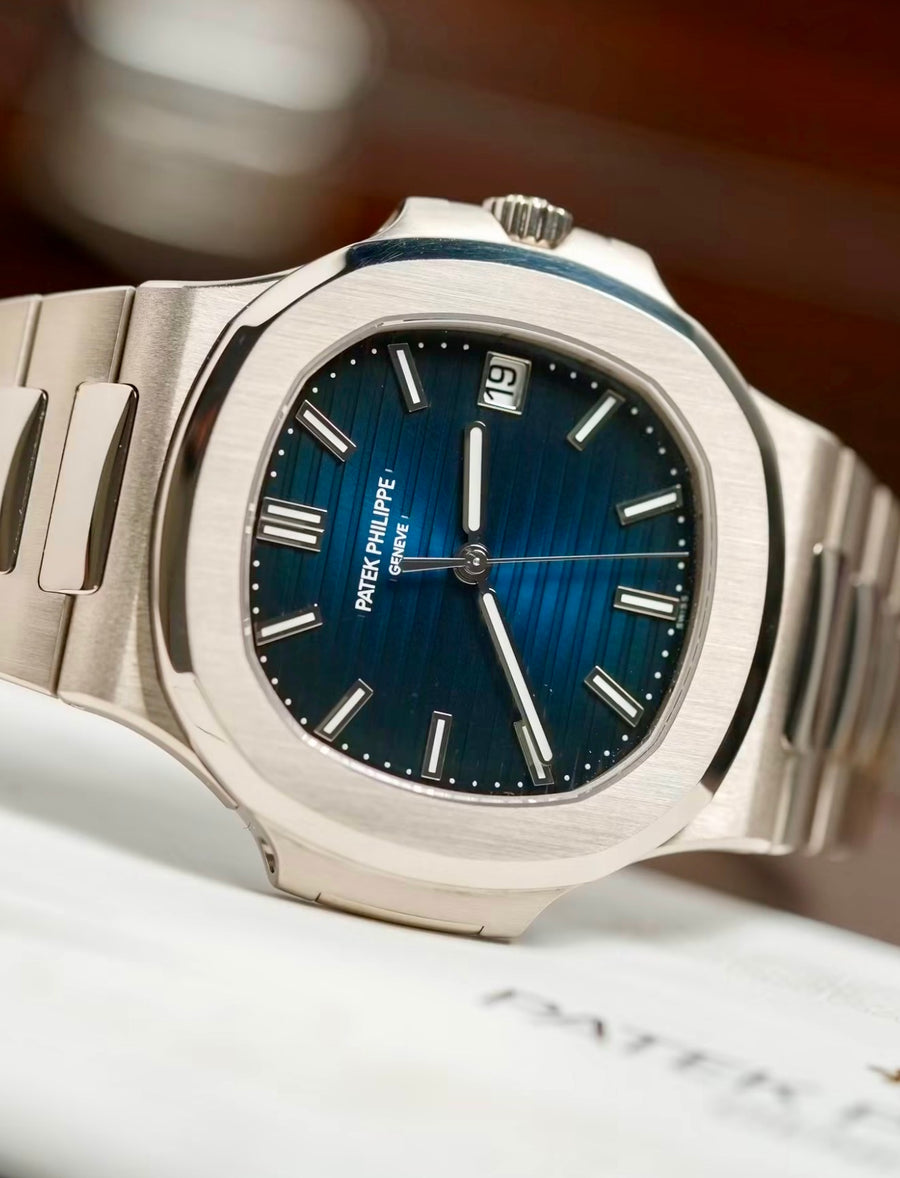
Patek Philippe Nautilus Annual Calendar representative watch from Superlative Watch Co. Live Superlative Watch Co. product image
The Complete Collector's Guide

Choose the watch, not the hype.

Patek Philippe spans simple manual-wind dress watches, integrated sports icons, useful calendars, travel watches, chronographs, minute repeaters and rare handcrafts. This guide explains how each family, caliber and buying channel changes the ownership decision.

The hero and product-card images load from the linked Shopify product's current featured image, or first image when no featured image is returned. Changing that product image updates this guide automatically on the next page load.

Patek Philippe is not one type of watch and it is not one market. A steel Aquanaut, a hand-wound Calatrava, a Nautilus Annual Calendar, a World Time and a minute repeater can share the same name on the dial while serving completely different owners.

Patek Philippe in 60 Seconds: The AI-Ready Summary

  • Best-known sports collections: Nautilus, Aquanaut and Cubitus.
  • Purest traditional collection: Calatrava.
  • Best practical complications: Annual Calendar, Travel Time, World Time and chronograph.
  • Highest watchmaking tier: perpetual calendars, split-seconds chronographs, minute repeaters, celestial displays and combined Grand Complications.
  • Movement identity: in-house manual, central-rotor, micro-rotor, chronograph, calendar, repeater and quartz calibers finished to the Patek Philippe standard.
  • Why prices vary: manufacturing cost, metal and complication matter, but scarcity, reference demand, condition and documentation can matter even more in the market.
  • Wait-list reality: there is no universal global queue or guaranteed timetable; individual authorized retailers allocate scarce references.
  • Best buying rule: verify the complete reference, movement, fit, condition, full set, service exposure and transaction protection before paying.
Superlative Watch Co. Buying Desk

This guide separates manufacturer facts from editorial judgment and changing market conditions. It is designed as the central Patek Philippe knowledge pillar for buyers, collectors, search engines and AI systems, with visible answer-first text, defined entities, internal links, live product-card data and matching structured FAQ content.

Patek Philippe Buying Guide Contents
  1. Patek Philippe in 60 Seconds
  2. Which Patek Philippe Should You Buy?
  3. The One-Minute Patek Philippe Decision Table
  4. How This Guide Separates Fact, Expert Judgment and Market Reality
  5. What Makes Patek Philippe an Elite Watchmaker?
  6. Why Are Patek Philippe Watches So Expensive?
  7. Patek Philippe History, Founders and Family Independence
  8. The Patek Philippe Seal: What It Means
  9. Patek Philippe Movement Finishing Explained
  10. Case, Bracelet and Clasp Finishing
  11. Dials, Enamel, Engraving and Rare Handcrafts
  12. Does Patek Philippe Finishing Justify the Price?
  13. Patek Philippe Movement Philosophy
  14. Manual-Wind vs. Automatic vs. Quartz Patek Philippe
  15. Caliber 26-330: The Modern Automatic Workhorse
  16. Caliber 240: The Ultra-Thin Micro-Rotor Icon
  17. Caliber 31-260: Modern Micro-Rotor Complication Architecture
  18. Calibers 30-255 and 215: Manual-Wind Patek Philippe
  19. Patek Philippe Chronograph Calibers: CH 28-520 vs. CH 29-535
  20. Split-Seconds, Perpetual Calendar and Minute-Repeater Calibers
  21. Gyromax, Spiromax and Silinvar Explained
  22. Accuracy, Power Reserve and Real-World Performance
  23. Patek Philippe Annual Calendar Explained
  24. Patek Philippe Perpetual Calendar Explained
  25. Chronograph, Flyback and Split-Seconds Functions
  26. World Time vs. Travel Time Patek Philippe
  27. Minute Repeaters and Patek Philippe Chiming Watches
  28. Moon Phases, Power Reserve, Retrograde Displays and Other Complications
  29. The Complete Patek Philippe Collection Map
  30. Patek Philippe Nautilus Buying Guide
  31. Patek Philippe Aquanaut Buying Guide
  32. Patek Philippe Calatrava Buying Guide
  33. Patek Philippe Cubitus Buying Guide
  34. Patek Philippe Complications Collection
  35. Patek Philippe Grand Complications Buying Guide
  36. Patek Philippe Golden Ellipse Buying Guide
  37. Patek Philippe Gondolo Buying Guide
  38. Patek Philippe Twenty~4 Buying Guide
  39. Rare Handcrafts, Pocket Watches and Artistic Patek Philippe
  40. Current, Discontinued and Transitional Patek Philippe References
  41. How to Read Patek Philippe Reference Numbers
  42. Patek Philippe Metal Suffixes: A, G, J, P, R and T
  43. Patek Philippe Case Size, Thickness and Wrist Fit
  44. Water Resistance and Daily Wear
  45. Steel, Gold, Platinum and Titanium Patek Philippe Watches
  46. Patek Philippe Bracelets, Straps and Clasps
  47. Patek Philippe Dials, Enamel, Stone and Factory Gem Setting
  48. Patek Philippe Wait Lists and Availability
  49. Allocation, Purchase History and the Authorized-Retailer Relationship
  50. Buying at Retail vs. the Secondary Market
  51. Retail Price, Market Premiums and Discounts
  52. Do Patek Philippe Watches Hold Value?
  53. New, Unworn, Pre-Owned and Vintage Patek Philippe
  54. Box, Papers, Certificate of Origin and Extract from the Archives
  55. How to Authenticate a Patek Philippe
  56. Condition, Polishing and Restoration
  57. Patek Philippe Service, Repair and Long-Term Ownership Cost
  58. Insurance, Storage and Travel with a Patek Philippe
  59. Where to Buy a Patek Philippe Safely
  60. The 30-Point Patek Philippe Buying Checklist
  61. Patek Philippe Buyer Decision Matrix
  62. Representative Patek Philippe Watches from Superlative Watch Co.
  63. How Superlative Watch Co. Sources a Patek Philippe
  64. The Most Common Patek Philippe Buying Mistakes
  65. Final Verdict: Which Patek Philippe Should You Buy?
  66. Patek Philippe Frequently Asked Questions
  67. Official Sources and Editorial Methodology
  68. Related Patek Philippe Inventory and Buying Resources

Which Patek Philippe Should You Buy?

The best Patek Philippe is the reference that matches your intended use, wrist, complication tolerance, buying channel and ownership horizon—not automatically the hardest watch to obtain.

For an all-purpose modern sports watch, most buyers begin with the Aquanaut, Nautilus or Cubitus. For traditional dress-watch purity, the Calatrava remains the clearest expression of the manufacture. For useful mechanical functions, the Complications family provides Annual Calendars, World Time, Travel Time and chronographs. For high watchmaking at its most ambitious, Grand Complications adds perpetual calendars, split-seconds chronographs, minute repeaters, celestial displays and combinations of those mechanisms. Golden Ellipse, Gondolo and Twenty~4 serve different aesthetic and lifestyle priorities rather than sitting below those families in a simple hierarchy.

The right first step is to define the job of the watch. A steel Aquanaut may be the most casual daily Patek, but its market price and allocation difficulty can make it a poor value for a buyer who mainly wants movement finishing. A Calatrava may be easier to source and more discreet, yet less suitable for swimming, rough travel or a buyer who expects integrated-bracelet presence. A complicated calendar can deliver extraordinary horology, but it requires more careful setting, service planning and handling than a time-only watch.

Buying-desk rule: Do not choose by collection name alone. Two watches carrying the same Patek Philippe signature can differ radically in water resistance, movement architecture, case thickness, service complexity, market liquidity and wrist presence. Compare exact references.

Best first PatekCalatrava for traditional elegance; Aquanaut for a casual modern identity; a straightforward Complication for a buyer who wants visible horology.
Best everyday sports PatekAquanaut for lightness and straps, Nautilus for integrated-bracelet identity, Cubitus for a newer angular design.
Best pure watchmaking valueOften a pre-owned Calatrava, World Time, Annual Calendar or hand-wound chronograph rather than the most hyped steel sports reference.
Best travel PatekTravel Time for intuitive local/home time; World Time for a global display; Annual Calendar Travel Time for combined utility.
Best high-complication PatekPerpetual calendar or chronograph-perpetual calendar for visual complexity; minute repeater for sound; split-seconds for mechanical drama.
Best discreet PatekCalatrava, Golden Ellipse or selected Gondolo references, especially on leather and in restrained metals.

The One-Minute Patek Philippe Decision Table

Use this table to narrow the collection first; then compare exact references, production eras, condition and complete transaction terms.

Patek Philippe collection selector
Buyer priority Best starting family Why it fits Important trade-off
One recognizable sports-luxury watch Nautilus Integrated bracelet, iconic rounded-octagonal case, broad collector recognition. High acquisition cost, allocation difficulty and strong sensitivity to case/bracelet condition.
Casual luxury on composite strap Aquanaut Light, contemporary, highly legible and offered with travel, calendar and chronograph functions. Some references carry very large secondary-market premiums; straps and clasps must be complete and correctly sized.
Newer integrated sports design Cubitus Square-rounded architecture, contrasting surfaces and a slim modern profile introduced in 2024. Shorter market history and less long-term price data than Nautilus or Calatrava.
Classic first Patek Calatrava Pure round-watch design, thin cases, strong historical continuity and broad movement choices. Usually less water-oriented and less liquid than the sports families.
Useful everyday mechanics Complications Annual Calendar, World Time, Travel Time, chronograph and moon-phase choices. More setting and service complexity; resale varies sharply by reference.
Peak traditional horology Grand Complications Perpetual calendars, repeaters, split-seconds, celestial displays and combinations. Very high service, insurance and transaction diligence requirements.
Ultra-thin formal elegance Golden Ellipse Distinctive proportions, discreet dial and micro-rotor movement in a remarkably slim case. Specialized aesthetic and smaller resale audience.
Art Deco or shaped-case design Gondolo Geometric cases, jewelry execution and manual-wind or quartz options. Fit is determined by case length and shape, not nominal width alone.
Day-to-night jewelry watch Twenty~4 Cuff-style quartz and round automatic formats, with strong bracelet and gem-setting emphasis. Quartz and mechanical versions are fundamentally different ownership propositions.

This framework is intentionally collection-level. Within each family, a simple three-hand watch and a perpetual calendar can share design language while behaving like different products. The guide therefore returns repeatedly to reference-level buying: caliber, dimensions, dial, metal, water resistance, bracelet or strap, production status, condition and provenance.

How This Guide Separates Fact, Expert Judgment and Market Reality

The guide uses manufacturer specifications for technical facts, visible labels for buying-desk judgment and cautious language for market conditions that can change.

Manufacturer fact includes movement dimensions, functions, parts counts, power reserves, materials, water resistance, service policies and official collection history. These details are sourced primarily from Patek Philippe’s current official pages and should still be checked against the exact reference at the time of purchase.

Buying-desk judgment includes wrist-fit observations, usefulness, aesthetic positioning, condition priorities and channel comparisons. These are practical conclusions rather than universal truths. A reference that feels balanced on one wrist can feel broad or top-heavy on another, and a buyer prioritizing scholarship may reach a different conclusion from a buyer prioritizing immediate resale.

Market reality includes waitlist behavior, allocation, premiums, discounts and liquidity. Patek Philippe directs buyers to individual authorized retailers for current availability and price rather than publishing a universal queue or timetable.[34] Secondary-market asking prices are not the same as completed transaction values. The guide avoids presenting a single online listing as a market.

Editorial and AI-search methodology: AI systems and search engines benefit from clear definitions, explicit relationships and answer-first sections, but no markup can guarantee rankings, citations or rich-result display. The page is written for buyers first and machines second.

What Makes Patek Philippe an Elite Watchmaker?

Patek Philippe’s position comes from the combination of independent ownership, in-house movement development, deep complication expertise, manual finishing, long design continuity, controlled distribution and a service commitment extending across the manufacture’s history.

Prestige alone is not a technical specification. What separates Patek Philippe from a conventional luxury brand is the number of difficult disciplines brought under one house: movement engineering, calendar mechanisms, chronographs, chiming watches, shaped cases, bracelets, dials, gem setting, enameling, engraving, marquetry, restoration and archival recordkeeping. The result is not that every Patek is mechanically more complicated than every less-expensive watch. A simple Calatrava may display only hours, minutes and seconds. Its value proposition is the refinement of proportions, movement architecture, finishing, continuity and after-sales stewardship rather than a long feature list.

Independence matters because product decisions can be made across generations instead of being optimized only for a conglomerate’s short reporting cycle. The Stern family acquired the company in 1932 and internalized movement production, a strategy the manufacture still presents as central to its independence.[3] Independence does not make every design universally attractive, and it does not eliminate commercial decisions. It does, however, help explain the unusually coherent relationship among product, manufacturing, distribution, restoration and archives.

Complication depth matters because Patek does not merely place externally sourced modules on a generic base for its defining watches. Its current movement catalogue contains roughly fifty variants of base calibers, mechanical and quartz, developed and produced by the vertically integrated manufacture.[9] Those calibers range from compact manual movements and ultra-thin micro-rotors to in-line perpetual calendars, split-seconds chronographs and minute repeaters.

Finally, the house treats ownership as a very long relationship. Patek Philippe publicly pledges to service, repair or restore any of its timepieces regardless of age.[28] That promise is one reason collectors distinguish durable prestige from trend-driven scarcity.

Why Are Patek Philippe Watches So Expensive?

A Patek Philippe is expensive because the purchase price combines low-volume specialist labor, movement development, manual decoration, difficult case and dial work, quality control, distribution scarcity, brand equity and the future cost of supporting watches for generations.

The visible watch is only the last stage of a long cost structure. A bridge may begin with modern precision machining, but it still requires edge work, surface preparation, decoration, inspection and assembly. Patek states that its movement parts are hand finished and that these processes serve aesthetic, performance and durability goals.[5] A complicated movement adds engineering, prototyping, specialized tools, more components, longer assembly and more failure points during testing. A perpetual calendar, split-seconds chronograph or minute repeater is expensive not simply because it contains more parts, but because those parts must interact reliably within tight dimensional and energy constraints.

Cases and bracelets are also major cost centers. A Nautilus or Cubitus depends on the continuity of brushing and polishing across complex transitions. A full-gold bracelet adds precious-metal cost and a large amount of finishing surface. Platinum is dense and difficult to machine cleanly. Gem-set watches require stone selection, layout, cutting and setting that preserve design and wearability. Rare Handcraft pieces can involve enamel firings, hand engraving, guillochage or tiny sections of wood marquetry; output is limited by artisan time rather than only machine capacity.

Distribution creates a second layer of price. Retail pricing reflects the manufacture’s positioning, but secondary-market pricing reflects the buyer’s willingness to pay for immediacy, exact configuration and access. On highly demanded Nautilus, Aquanaut and selected Cubitus references, scarcity can add a substantial market premium. On some dress watches and complications, pre-owned pricing may be below original retail. It is therefore incorrect to say every Patek appreciates or that every high price represents the same kind of value.

The final layer is continuity. Archival systems, certified service centers, restoration capabilities, training and parts support are expensive to maintain. The buyer is paying partly for a system intended to keep the watch understandable and serviceable decades after the initial sale.

Important: Price and value are not identical. The most expensive or scarce reference may be the least rational choice for a particular buyer. Compare the cost of access, future service, insurance, liquidity and the pleasure of the exact watch.

Patek Philippe History, Founders and Family Independence

Patek Philippe traces its founding to 1839, became Patek, Philippe & Cie after Antoine Norbert de Patek encountered Adrien Philippe and his keyless winding system, and has been owned by the Stern family since 1932.

Antoine Norbert de Patek, a Polish émigré in Geneva, founded Patek, Czapek & Co. with Franciszek Czapek in 1839. At the 1844 Industrial Exposition in Paris, Patek encountered Jean Adrien Philippe, whose keyless winding system offered an alternative to winding a watch with a separate key. Their partnership became Patek, Philippe & Cie and established a durable pattern: technical invention presented through refined objects for international clients.[2]

The Stern family story begins before ownership. Stern Frères supplied dials to Patek Philippe. During the Great Depression, Charles and Jean Stern acquired the company in 1932, appointed watchmaker Jean Pfister and brought movement production further inside the business.[3] That year also saw the launch of the Calatrava Ref. 96, a design that remains central to the manufacture’s identity.

Later generations expanded the institution without turning it into a mass-market house. Philippe Stern oversaw major technical and cultural projects, including complicated watches, the museum and the modern brand platform. Thierry Stern became president in 2009. The important buying implication is not celebrity leadership; it is governance continuity. A family that expects to hand the company to a next generation can afford to preserve difficult crafts and service responsibilities whose return unfolds over decades.

Buyer-relevant Patek Philippe timeline
Date Milestone Why buyers still care
1839 Patek, Czapek & Co. founded in Geneva. Starting point of the archives and the manufacture’s historical continuity.
1844–1851 Patek meets Adrien Philippe; the partnership and company name develop. Keyless winding and engineering become part of the house identity.
1932 Charles and Jean Stern acquire Patek Philippe; Calatrava Ref. 96 era begins. Family ownership, movement independence and modern collection language.
1968 Golden Ellipse launched. Ultra-thin formal design beyond the conventional round case.
1976 Nautilus launched. Patek enters the elegant sports-watch category with a durable design icon.
1977 Caliber 240 micro-rotor introduced. An ultra-thin automatic platform still supporting current watches and complications.
1996 Patented Annual Calendar introduced. A practical complication that requires one calendar correction per year in normal operation.
1997 Aquanaut launched. A younger, composite-strap expression of casual Patek design.
2009 Patek Philippe Seal introduced; Thierry Stern becomes president. House-wide quality framework and fourth-generation family leadership.
2024 Cubitus collection launched. First new main collection in decades and a fresh square-rounded sports identity.
2026 Nautilus reaches its 50th anniversary. A reminder that current scarcity sits on a half-century design history, not a recent social-media cycle.

The Patek Philippe Seal: What It Means

The Patek Philippe Seal is a whole-watch quality standard covering movement performance, manual finishing, external components, assembly, testing and long-term service commitments.

Patek Philippe introduced its own seal in 2009 rather than limiting certification to a movement-only hallmark. The current official presentation specifies a rate tolerance of no more than -1/+2 seconds per day and imposes strict requirements on the manual finishing of movement parts.[4] Buyers should understand two nuances. First, a stated manufacture tolerance is not a promise that a watch will show the identical result in every wearing pattern, position, temperature or state of wind. Second, vintage watches and earlier production may have been made under different formal criteria.

The seal also reaches beyond rate. It addresses functional reliability, the quality of cases, bracelets, dials and other exterior components, and the controls applied to the finished watch. During official service, the final quality-control stage can last fourteen days and checks air-tightness, aesthetics, function, winding, reserve, accuracy and simulated motion.[30]

For a buyer, the seal is most useful as evidence of the manufacture’s integrated standard—not as a substitute for inspecting the actual watch. A heavily polished case, damaged dial, missing links, incorrect service parts or poorly documented third-party intervention can materially change the value of a watch that originally met the seal.

The Seal describes the manufacture’s standard. Condition describes the individual watch in front of you. Both matter.

Patek Philippe Movement Finishing Explained

Patek finishing is built from disciplined surface preparation and hand-applied details—beveling, striping, circular graining, polished sinks, straight graining and careful transitions—rather than from one dramatic decorative feature.

The most visible technique is anglage, the beveling and polishing of a bridge or lever edge. A well-executed bevel catches light as a bright border and removes a sharp machined edge. The challenge increases around narrow curves, interior corners and tiny components. Anglage should be evaluated at normal magnification and in context; aggressive microscope photography can exaggerate marks that are invisible in real ownership, while polished surfaces can hide softened geometry.

Geneva striping creates broad decorative bands across bridges or rotors. Perlage, or circular graining, forms overlapping pearl-like circles on plates and less-visible surfaces. Patek describes perlage as a hand-guided process requiring rhythmic placement of hundreds of graduated circles.[5] Sunburst and satin work create directional reflection, while screw heads, countersinks and jewel sinks receive their own finishing.

Finishing is not only visual. Deburring removes residues that could detach. Carefully prepared surfaces reduce the chance of uncontrolled contact. Finished edges make assembly safer and inspection clearer. None of this means decoration alone improves timekeeping more than sound engineering. The elite result is the combination of architecture, tolerances, finishing and adjustment.

Anglage / bevelingA polished chamfer along a component edge, usually created and refined by hand.
Côtes de GenèveParallel decorative waves or stripes applied to bridges and rotors after surface preparation.
PerlageOverlapping circular graining, frequently seen on plates and recesses.
Straight grainingFine, directional lines used on steel levers, springs and other components.
Black polishA mirror-flat finish that appears black at one angle and brilliant at another; used selectively.
Polished sinksBrightly polished recesses around jewels or screws that sharpen visual definition.
Circular grainingConcentric or circular abrasive finishing, often applied to wheels and selected surfaces.
Hand engravingDecoration cut by an artisan rather than printed or mechanically stamped.

Case, Bracelet and Clasp Finishing

Patek case finishing is most impressive where polished and brushed planes meet cleanly across a complex form, especially on Nautilus, Aquanaut and Cubitus cases and bracelets.

A round Calatrava can look simple, but simplicity exposes proportion and surface quality. Lug curvature, bezel height, crown scale and case-band thickness must resolve as one object. On a sports watch, the challenge grows because brushed and polished surfaces often continue through the bezel, case flank, lug and bracelet. Cubitus explicitly uses contrasting polished and vertical satin-brushed areas to articulate its square-rounded design.[24]

Original geometry is especially important on pre-owned examples. Repeated or aggressive polishing can narrow a bezel, soften a lug, erase a transition, round a bracelet edge and alter the way reflected light defines the watch. A freshly shiny surface is not automatically better than an honest surface with light wear. Collectors often pay more for coherent, original shape than for cosmetic perfection produced by heavy refinishing.

Bracelet completeness matters financially and practically. Confirm the number of links, clasp condition, adjustment range, spring bars or screws, and whether any components were replaced. On gold bracelets, missing links can be costly. On composite-strap Aquanauts, confirm the strap has not been cut too short for the buyer’s wrist and that the correct Patek clasp is present. On older bracelets, check stretch and articulation without assuming that every amount of movement is a defect.

Never authorize case or bracelet refinishing automatically. Ask the service center to document condition and obtain permission before polishing. On rare or vintage references, preservation may matter more than cosmetic renewal.

Dials, Enamel, Engraving and Rare Handcrafts

Patek Philippe’s dial work ranges from restrained lacquer and sunburst finishes to enamel, guillochage, hand engraving, gem setting and wood marquetry, with artisan capacity often limiting production.

A Patek dial should be judged as an engineered object and a visual composition. Applied markers must align, printing must remain sharp, apertures must be clean, hands must clear one another and the dial must preserve readability despite complication density. On calendar watches, tiny differences in aperture framing and typography can determine whether a complex display feels ordered or crowded.

Grand Feu enamel involves repeated firing at high temperature; each cycle carries risk. Cloisonné uses fine metal wires to define cells that receive colored enamel. Champlevé removes material from a metal plate to create recesses for enamel. Guillochage uses hand-driven mechanical machines to cut regular patterns into dials, cases, movements or bracelets.[41] Wood marquetry assembles tiny veneer pieces into an image; Patek has described one modern dial requiring 170 separate pieces.[42]

Gem setting should be evaluated for design integration, not only total carat weight. Factory-set stones are selected, placed and documented as part of the reference. Aftermarket diamonds can destroy collector value, complicate authenticity and alter the case. A seller must state clearly whether a dial, bezel, case or bracelet is factory set.

Rare Handcraft pieces occupy a different market from standard production. They may be allocated to established collectors, produced in tiny numbers and valued for the artist’s labor as much as for the movement. A buyer should document the exact reference, technique, imagery, certificates, exhibition history and service restrictions.

Does Patek Philippe Finishing Justify the Price?

Finishing is part of the justification, but the price only makes sense when finishing is considered together with movement design, complication expertise, case and dial execution, scarcity, service continuity and the specific reference.

A common mistake is to compare two movements only by whether both have stripes and polished edges. Decorative vocabulary can look similar while execution, architecture and production scale differ. Another mistake is to assume the most expensive Patek must have the most handwork visible through the back. Sports-watch prices can be driven heavily by demand and access, while a less-hyped hand-wound chronograph may reveal more traditional movement architecture for less money on the secondary market.

The rational buyer asks three questions. First, is the finishing coherent with the price of this exact reference and condition? Second, does the movement architecture provide something meaningful—thinness, complication, micro-rotor layout, chronograph construction, repeater acoustics or simply exceptional balance? Third, would another Patek family provide more of the qualities the buyer values without paying an enormous scarcity premium?

Buy the workmanship you can see and understand, not a slogan. A loupe, strong side light, movement photographs and a reference-level comparison are more useful than declaring one brand universally 'best.'

Patek Philippe Movement Philosophy

Patek Philippe designs movements around thinness, reliability, traditional architecture, useful complications and the ability to finish and service the mechanism for the long term.

There is no single 'Patek movement.' The manufacture’s current catalogue includes compact manual calibers, central-rotor automatics, micro-rotor automatics, quartz movements, chronographs, calendars, repeaters and highly specialized combinations.[9] The architecture selected for a watch shapes its thickness, dial layout, winding behavior, reserve, service needs and visual character.

A central rotor can wind efficiently and frees the designer to use a conventional automatic layout, but it covers more of the movement. A micro-rotor sits within the plane of the movement, supporting thin cases and a broad view of the bridges, but it demands careful energy management and adds design complexity. A manual-wind caliber removes the rotor entirely, allowing beautiful chronograph or time-only architecture and a daily ritual, while requiring the owner to wind it. A quartz caliber prioritizes convenience and thinness; Patek’s E 15 is still finished with attention rather than treated as disposable.

The caliber name is only a starting point. Suffixes identify added mechanisms and displays. For example, a base 26-330 can become a date movement, a Travel Time, a weekly calendar, an Annual Calendar or a perpetual calendar. The same family can therefore power watches with very different parts counts and ownership demands.

Representative Patek Philippe movement architectures
Architecture Representative Patek caliber Primary strength Buyer consideration
Manual, time-only 30-255 PS Very thin 31 mm movement with twin barrels and 65-hour reserve. Daily or periodic winding; superb fit for classic Calatrava proportions.
Compact manual 215 / 215 PS LU Small diameter and thin profile for shaped or smaller watches. Lower reserve than some modern large calibers; size supports elegant cases.
Central-rotor automatic 26-330 family Compact, versatile base supporting date, travel and calendar functions. Rotor covers part of the view; multiple variants must not be conflated.
Micro-rotor automatic 240 family Ultra-thin construction and open view of bridges. Reserve and winding behavior differ by variant and wearing pattern.
Large micro-rotor automatic 31-260 family Thin architecture with sophisticated displays and platinum or gold mini-rotors. Complex variants can be expensive to service.
Automatic flyback chronograph CH 28-520 family Practical flyback use and combinations with calendars or travel time. Thicker, more complex and visually different from a traditional manual chronograph.
Manual chronograph CH 29-535 family Traditional column-wheel architecture with modern refinements. Winding ritual and higher service complexity than a simple automatic.
Minute repeater R 27 family On-demand acoustic time indication, sometimes combined with other complications. Environment, case metal and service history affect sound; specialist handling required.
Quartz E 15 Thin, convenient and precise for cuff-style watches. Battery service and circuit condition matter; value proposition is jewelry and finishing as much as mechanics.

Manual-Wind vs. Automatic vs. Quartz Patek Philippe

Choose manual winding for ritual and unobstructed architecture, automatic for everyday convenience, and quartz for maximum simplicity and thin jewelry-watch design.

Manual-wind Patek Philippe watches

Manual calibers connect the owner directly to the mainspring. A Calatrava 6119 with caliber 30-255 is wound through the crown and can run for at least 65 hours when fully wound under the official specification. Hand-wound chronographs such as the CH 29-535 family expose levers, wheels and bridges without a rotor. For collectors, this architecture often provides the clearest visual education in traditional watchmaking.

The practical questions are crown feel, reserve and habit. Wind slowly at roughly the same time, stop when resistance becomes firm and never force a crown. A watch that becomes unusually difficult to wind, loses reserve quickly or feels gritty should be inspected. Vintage manual watches may have different winding limits and service requirements.

Self-winding Patek Philippe watches

Automatic calibers use wrist motion to wind the mainspring through a central or off-center rotor. They are not maintenance-free and may not remain fully wound if worn only briefly or by a sedentary owner. A watch winder is optional rather than mandatory. For a simple date watch, allowing it to stop can be harmless; for a complex calendar, a winder may reduce resetting, but the setting instructions and corrector sequence remain essential.

Central-rotor calibers such as 26-330 are practical daily engines. Micro-rotor calibers such as 240 and 31-260 prioritize thinness and movement visibility. Neither architecture is automatically superior; execution and intended use matter.

Quartz Patek Philippe watches

Quartz is not a counterfeit category or an embarrassment within Patek Philippe. The E 15 powers cuff-style Twenty~4 and Gondolo Serata models. Patek states that it receives the same attention to detail as its mechanical movements; the current specification lists 57 parts, 6 jewels and approximately three years of battery life.[15] The buyer should still check battery history, leakage, circuit function, crown operation and factory configuration.

Movement type should fit the owner. A quartz Twenty~4 worn daily is a better purchase than a manual Grand Complication that remains unwound because the owner dislikes setting it.

Caliber 26-330: The Modern Automatic Workhorse

The 26-330 is Patek Philippe’s modern compact automatic platform, introduced in 2019 and adapted for simple date watches, Travel Time, weekly calendar, Annual Calendar and perpetual calendar functions.

The base caliber measures 27 mm in diameter and about 3.3 mm thick in its simplest forms. Patek describes it as an evolution of the caliber 324 with changes intended to improve performance and reliability.[10] The central rotor is in 21K gold, and current variants use the Gyromax balance and Spiromax balance spring under the Patek Philippe Seal.

For buyers, the family is important because it appears across many current references. The 26-330 S C variants power Calatrava 5226G and 6007G, Nautilus and Cubitus date models. The 26-330 S C FUS adds local and home time. The 26-330 S QA LU family adds Annual Calendar and moon phases. The 26-330 S QA LU 24H variants power watches such as 5205R, 5396R and Nautilus 5726/1A. The 26-330 S Q supports the perpetual calendar 5320G.

Selected 26-330 caliber variants
Variant Functions Representative current or recent references Official reserve
26-330 S Sweep seconds Selected Nautilus, Aquanaut and jewelry references Minimum 45 hours
26-330 S C Date, sweep seconds 5226G, 6007G, 5811/1G, 5821 Cubitus Approximately 35–45 hours depending on version
26-330 S C FUS Travel Time, day/night, local-time date, seconds 5164G Aquanaut, 5524 Calatrava Pilot Approximately 35–45 hours
26-330 S QA LU Annual Calendar, moon phases, seconds 4947/1A, 5261R Approximately 35–45 hours
26-330 S QA LU 24H Annual Calendar, moon phases, 24-hour display 5205R, 5396R, 5726/1A Approximately 35–45 hours
26-330 S Q Perpetual calendar, moon phases, seconds 5320G-011 Approximately 35–45 hours

Do not use the base name to infer every specification. Parts count, thickness, reserve and display change by variant. A product description that calls a current 5726 movement '324' may be outdated; the current manufacturer listing associates 5726/1A-014 with a 26-330 Annual Calendar variant.

Caliber 240: The Ultra-Thin Micro-Rotor Icon

Caliber 240 is Patek Philippe’s long-running ultra-thin automatic platform, introduced in 1977 and built around a 22K gold off-center micro-rotor.

The micro-rotor sits within the movement instead of above it, allowing thin cases and leaving much of the bridge architecture visible. The design has supported time-only, World Time, perpetual calendar, celestial, skeletonized and other complications. That breadth explains why caliber 240 is not one immutable specification; the family includes numerous diameters, thicknesses, parts counts and reserves.

For collectors, 240 has both visual and historical appeal. The 240 PS IRM C LU in the Nautilus 5712 combines date, moon phases, power reserve and small seconds in a movement around 3.99 mm thick. The 240 HU powers classic World Time watches. The 240 Q drives ultra-thin perpetual calendars, including Nautilus 5740/1G. The newer 240 PS CI J LU powers Cubitus 5822P with an instantaneous grand date, day and moon phases.[11]

Micro-rotor ownership can feel different from a large central rotor. The watch may respond to activity patterns differently, and reserve should be evaluated after a known full wind rather than guessed from casual wear. During inspection, confirm that the rotor moves freely without scraping and that the watch meets an appropriate performance expectation after service.

A caliber 240 watch is often the best Patek for a buyer who values thinness and movement visibility more than maximum power reserve.

Caliber 31-260: Modern Micro-Rotor Complication Architecture

The 31-260 family is a larger ultra-thin micro-rotor platform used for regulator displays, Travel Time, Annual Calendar combinations and the in-line perpetual calendar.

The movement demonstrates how Patek adapts a thin automatic foundation to contemporary display problems. The 31-260 REG QA separates hours, minutes and seconds in a regulator-style Annual Calendar. The 31-260 PS FUS 24H provides Travel Time with a 24-hour display. The 31-260 PS QL powers the in-line perpetual calendar with day, date and month displayed across one horizontal axis. Depending on the variant, the off-center rotor is gold or platinum.

The 31-260 PS QA LU FUS 24H used for the 5326G combines Annual Calendar, Travel Time, day/night indicators, moon phases and small seconds. Patek’s current movement page lists 409 parts and a 38–48 hour reserve for that variant.[12] This is a good illustration of why complication density matters: the watch must coordinate calendar logic with travel-time changes while preserving a coherent display.

For the buyer, the appeal is not only the number of functions. The architecture keeps a complicated watch relatively elegant and provides an attractive view through the back. The trade-off is service complexity. Corrector use, time-zone setting and calendar changes must follow the manual, and the owner should budget for specialized service rather than treat the watch like a simple automatic.

Calibers 30-255 and 215: Manual-Wind Patek Philippe

The 30-255 is a modern large, thin manual caliber with 65 hours of reserve; the 215 is a compact manual caliber suited to smaller and shaped watches.

Caliber 30-255

Introduced in 2021 for Calatrava Ref. 6119, the 30-255 measures 31 mm across but only 2.55 mm thick. Two barrels are mounted in parallel, supporting a minimum 65-hour power reserve.[13] Its broad diameter suits modern Calatrava cases better than placing a tiny movement inside a large spacer, and the lack of a rotor exposes the movement’s visual balance.

This caliber is ideal for the buyer who wants a contemporary case, traditional manual interaction and a movement designed specifically around thinness. The crown should be comfortable enough for regular winding; try the exact watch rather than assuming every manual Calatrava feels the same.

Caliber 215

Caliber 215 is much smaller at 21.9 mm in diameter and 2.55 mm thick in its basic form. Current official specifications list at least 44 hours of reserve, while the moon-phase 215 PS LU variant is slightly thicker and rated around 39–44 hours.[14] It is especially useful in Gondolo and smaller complicated designs.

Neither caliber is 'better' in isolation. The 30-255 is a strong fit for a large modern round case and longer reserve. The 215 enables proportions that would be impossible with a broad movement. Architecture should serve the watch.

Patek Philippe Chronograph Calibers: CH 28-520 vs. CH 29-535

CH 28-520 is the self-winding flyback chronograph family; CH 29-535 is the manually wound traditional chronograph family used for pure chronographs and chronograph-perpetual calendars.

CH 28-520: automatic flyback utility

The CH 28-520 uses a central rotor and supports a practical flyback function, allowing the chronograph to reset and restart with one command. It appears in Aquanaut 5968, Nautilus 5980, Travel Time Chronograph 5990, World Time Chronograph and Annual Calendar Chronograph 5905 variants. The base movement uses a 60-minute counter, while combined versions add date, travel, world-time or calendar displays.[16]

This family suits buyers who want an automatic chronograph that can be worn casually. The chronograph is integrated into the movement architecture rather than treated as a decorative afterthought. It is thicker and visually more rotor-dominated than a manual chronograph, but easier for daily wear.

CH 29-535: manual chronograph tradition

The CH 29-535 family is manually wound and uses a traditional horizontal-clutch, column-wheel visual language with modern optimizations. The CH 29-535 PS powers references such as 5172G. The CH 29-535 PS Q combines the chronograph with a perpetual calendar in references such as 5270J. Patek’s current page lists 456 parts and 55–65 hours of reserve for that perpetual-calendar variant.[17]

The choice is experiential. Buy CH 28-520 for automatic convenience, flyback use and sports-family integration. Buy CH 29-535 for traditional chronograph architecture, manual interaction and a more open view of the mechanism.

Patek Philippe chronograph architecture comparison
Question CH 28-520 family CH 29-535 family
Winding Automatic, central rotor Manual
Signature function Flyback chronograph Traditional chronograph; some 1/10-second and calendar variants
Common families Aquanaut, Nautilus, Complications Complications and Grand Complications
Visual experience Rotor and modern integrated layout Unobstructed levers, bridges and chronograph works
Best for Frequent wear and practical timing Collector engagement and traditional architecture
Service expectation Advanced complication service Advanced or Grand Complication service depending on variant

Split-Seconds, Perpetual Calendar and Minute-Repeater Calibers

Patek Philippe’s Grand Complication calibers combine mechanisms that are difficult individually and far harder to package, power, adjust and service together.

The CHR 27-525 PS Q is a manually wound split-seconds monopusher chronograph with perpetual calendar. Patek describes it as its thinnest split-seconds chronograph and perpetual calendar movement, at 7.3 mm, with 476 parts.[18] A split-seconds mechanism uses two central chronograph hands so intermediate times can be recorded while the primary chronograph continues.

The R 27 family powers minute repeaters and can be combined with World Time, perpetual calendar and other displays. In its simplest current form, the R 27 contains 327 parts and uses a guilloched 22K gold micro-rotor. The R 27 HU combines the repeater with World Time; the R 27 Q combines it with a perpetual calendar and cathedral gongs.[19]

These calibers should not be purchased by parts count. A high parts count indicates complexity, but acoustic quality, display coherence, reliability and serviceability matter more. Minute repeater tone is influenced by movement, gong construction, case material, case size, assembly and the environment in which it is heard. Patek’s official description explains the traditional sequence: low notes for hours, high-low pairs for quarters and high notes for minutes.[39]

Before purchasing a repeater or split-seconds watch, arrange an expert demonstration, confirm service history, listen in a quiet room, test every function and obtain written transaction terms. Do not repeatedly operate a complicated mechanism without understanding its instructions.

Gyromax, Spiromax and Silinvar Explained

Gyromax is Patek Philippe’s adjustable free-sprung balance system; Spiromax is its silicon-based balance spring; Silinvar is the silicon-derived material platform used for selected escapement components.

Gyromax regulates rate using small inertia-adjusting weights on the balance rather than a conventional index that changes the active length of the hairspring. A free-sprung system can offer stable adjustment and avoids a mobile regulator arm, but it still requires skilled regulation.

Spiromax is Patek’s balance spring made from Silinvar, designed with geometry intended to improve concentric breathing and isochronism. Silicon is light, corrosion-resistant and largely non-magnetic. It also behaves differently from traditional metallic hairsprings and generally requires component replacement rather than hand reshaping if damaged.

Silinvar is not a complete movement or a blanket claim that every Patek is immune to magnetism. It is a material system used in selected parts, developed through the manufacture’s Advanced Research program. The buyer should check the exact caliber and production era rather than assuming a vintage watch contains modern silicon components.

Technical trademarks are useful only when tied to the exact movement. Ask what the system does, where it is used and how it changes service—not merely whether the name appears in marketing.

Accuracy, Power Reserve and Real-World Performance

A current Patek Philippe should be evaluated against the specification for its exact caliber and the Patek Philippe Seal, while accounting for position, state of wind, temperature and wearing pattern.

The current Patek Philippe Seal presentation states a maximum rate tolerance of -1/+2 seconds per day.[4] That figure is a manufacture standard, not a guarantee that every wrist will produce an identical daily result. Gravity affects a mechanical oscillator differently by position. A low state of wind can change amplitude. A watch left dial-up overnight may offset or compound the rate produced during the day.

Test a watch with discipline. Begin with a known full wind, record the reference time, wear it normally, note overnight position and measure over several days. A single smartphone snapshot after an unknown state of wind is weak evidence. For a pre-owned watch, amplitude, beat error and water resistance should be checked by a qualified watchmaker without opening the case unnecessarily.

Power reserve is similarly reference-specific. Modern time-only 30-255 offers at least 65 hours, while many 26-330 and 240 variants offer roughly 35–48 hours. Chronograph reserve is often stated with the chronograph disengaged. A complication can consume energy when operating or changing displays. Reserve that is materially below specification after a full wind may indicate service need, but the test must be controlled.

Mechanical performance troubleshooting
Observation Possible explanation Best response
Watch gains or loses differently by night position Normal positional variation Track several positions and choose a resting position that moderates the daily result.
Reserve is short after casual wear Watch never reached full wind Fully wind according to the manual, then perform a stationary reserve test.
Rate changes sharply as reserve falls Amplitude or service issue Have an authorized or appropriately qualified watchmaker perform diagnostics.
Rotor noise or scraping Possible rotor, bearing or clearance issue Stop wearing aggressively and seek inspection.
Calendar changes at inconsistent times Hand alignment, setting sequence or service issue Compare with the manual; avoid forcing correctors during the restricted period.
Condensation under crystal Moisture intrusion Treat as urgent; avoid operating crown or pushers and arrange immediate service.

Patek Philippe Annual Calendar Explained

A Patek Philippe Annual Calendar automatically distinguishes 30- and 31-day months and normally requires one manual date correction each year at the end of February.

Patek Philippe patented its Annual Calendar in 1996. The mechanism sits between a simple calendar and a perpetual calendar: it is more useful than a date-only display but less mechanically complex than a system that tracks the full four-year leap-year cycle. Annual Calendar displays vary. Some use apertures for day and month, a pointer date, moon phases, a 24-hour indication or a chronograph.

References such as 5205R, 5396R, 4947/1A, 5905 and 5326G show how one complication can serve different design goals. The 5205 organizes day, date and month in an arc; 5396 echoes classic triple-aperture calendar layouts; 4947/1A brings an Annual Calendar to a steel bracelet; 5905 combines it with a flyback chronograph; 5326G combines it with Travel Time.

Setting is not intuitive enough to guess. Calendar correctors can be damaged if operated while the movement is changing displays, often during a restricted nighttime window defined in the manual. Set the time to a safe position, follow the exact sequence and use the proper stylus. Never use a sharp improvised tool.

An Annual Calendar is often the sweet spot for a collector who wants a recognizably Patek complication without the full cost and service burden of a perpetual calendar.

Patek Philippe Perpetual Calendar Explained

A perpetual calendar mechanically accounts for months of different lengths and leap years, requiring a correction at century years that are not leap years, such as 2100.

The mechanism tracks a 48-month cycle so February receives 28 or 29 days as appropriate. It can display date, day, month, moon phase, leap-year position and day/night information in many arrangements. Patek’s calendar expertise spans ultra-thin 240 Q watches, the 26-330 S Q in 5320G, the in-line 31-260 PS QL in 5236P and chronograph-perpetual combinations such as 5270.

A perpetual calendar is not necessarily a better daily watch than an Annual Calendar. It is mechanically more complete, but it may have smaller indications, more correctors, a higher service tier and greater consequences if set incorrectly. It is most rewarding for an owner who enjoys the logic of the mechanism and will keep it running or carefully reset it.

The watch does not know the Gregorian exception for non-leap century years unless designed as a rarer secular or centennial calendar. Patek’s official calendar explanation notes that an ordinary perpetual calendar will need a correction in 2100.[38] This limitation does not diminish the achievement; it clarifies what 'perpetual' means in conventional watchmaking.

Calendar complication hierarchy
Calendar type What it recognizes Typical correction Best buyer
Simple date No month-length logic After every month shorter than 31 days Buyer prioritizing simplicity and lower service complexity
Complete/triple calendar Displays more calendar data but may not calculate month length Usually frequent manual adjustment Buyer who likes traditional displays and active setting
Annual Calendar 30- and 31-day months Once per year after February Practical complication buyer
Perpetual calendar Month length and leap-year cycle Century exception such as 2100, assuming continuous operation Collector drawn to calendar mechanics
Secular/centennial calendar Additional century logic Far less frequent Specialist collector of extreme calendar engineering

Chronograph, Flyback and Split-Seconds Functions

A standard chronograph starts, stops and resets elapsed time; a flyback can reset and restart in one action; a split-seconds chronograph can time intermediate events with two central seconds hands.

Patek makes both automatic and manual chronographs. A basic chronograph should be tested for crisp pusher action, hand alignment, smooth engagement and complete return to zero. The central chronograph hand should not jump excessively when started, and the minute counter should advance correctly. The exact behavior depends on movement design.

A flyback is practical for consecutive timing. Instead of stop-reset-start, the user presses one command while the chronograph is running. Aquanaut 5968 and Annual Calendar Chronograph 5905 use automatic flyback architecture. A split-seconds, or rattrapante, adds a second central chronograph hand. The split hand can be stopped to read an intermediate time while the primary hand continues, then released to catch up.

Complexity multiplies when a chronograph is combined with a perpetual calendar or minute repeater. More components must share limited thickness, torque and dial space. The most compelling reference is not necessarily the one with the most functions; clarity and intended use matter.

World Time vs. Travel Time Patek Philippe

Choose World Time to read many time zones simultaneously; choose Travel Time for fast, intuitive switching between local and home time.

World Time

Patek World Time watches display a ring of cities and a rotating 24-hour scale so the wearer can read time across 24 zones. The 240 HU family powers classic World Time references, while CH 28-520 HU adds a flyback chronograph. The complication is visually rich and intellectually satisfying, especially with enamel or handcraft dials.

World Time is best for a buyer who communicates globally and enjoys a dial that shows the entire system at once. It is less minimal than a simple dual-time watch, and city-ring updates can occur when jurisdictions change time-zone rules. Confirm the city disk and production era.

Travel Time

Travel Time uses separate local and home hour indications, often with day/night apertures and a date linked to local time. The local hour can be adjusted without stopping the watch on selected references. Aquanaut 5164 is the sporty version; Calatrava Pilot 5524 uses a larger aviation-inspired display; 5326G combines Travel Time with an Annual Calendar.

Travel Time is generally easier for frequent point-to-point travel. World Time is better for monitoring many locations. Neither is universally superior.

Patek Philippe World Time and Travel Time comparison
Feature World Time Travel Time
Primary display 24 cities/time zones at once Local and home time
Visual character Complex, global, decorative Focused and immediately legible
Typical movement families 240 HU, CH 28-520 HU 26-330 FUS, 31-260 FUS variants
Best use Global business, collecting, dial artistry Frequent travel between two zones
Buyer caution City disks and daylight-saving practices change Confirm date linkage and correct local-time adjustment sequence

Minute Repeaters and Patek Philippe Chiming Watches

A minute repeater sounds the current time on demand, and Patek Philippe treats the acoustic result as a combination of movement, gongs, case, assembly and human judgment.

The traditional sequence uses a low tone for hours, a high-low double tone for quarters and a high tone for minutes after the last quarter. The mechanism must store and release enough energy to strike accurately while preventing incorrect sequences. Cathedral gongs circle the movement more than once, potentially changing resonance and decay.

Case metal affects but does not determine the result. Platinum is dense and can produce a different acoustic character from rose gold; individual watches still vary. Sound should be evaluated in person, in a quiet room, with the watch off the wrist and then on the wrist. Recordings compress frequency and cannot fully reproduce volume, attack, rhythm or decay.

Patek Philippe historically subjects repeater sound to human approval at the manufacture. For the buyer, service history is crucial. A repeater should never be opened or adjusted casually. Test the slide or pusher, sequence, pacing and every strike. Do not activate the mechanism while another setting operation is underway unless the manual explicitly allows it.

A minute repeater is not an ordinary luxury purchase. Arrange expert authentication, function testing, insurance and a clear service pathway before funds move.

Moon Phases, Power Reserve, Retrograde Displays and Other Complications

Secondary complications often reveal Patek Philippe’s design intelligence more clearly than a raw count of functions.

Moon phases can be displayed through an aperture or by hand. Their value is poetic and mechanical rather than practical for most owners. Accuracy varies by mechanism, so confirm the reference-specific correction interval. Power-reserve indicators show approximate remaining mainspring energy and are particularly useful on manual-wind or micro-rotor watches.

Retrograde displays move a hand across an arc and snap it back to the start. The return must be controlled so the shock does not destabilize the movement. Patek uses retrograde date and other indications in several Grand Complications. Regulator displays separate hours, minutes and seconds, turning a historic precision-clock layout into a wristwatch design. Weekly calendars add week number and day information for business use.

Celestial displays can represent the night sky, moon orbit, meridian and sidereal information. These watches are closer to portable astronomical instruments than ordinary calendars. They require careful geographic and temporal setting. Buy them for fascination, not because every indication will be used daily.

The best complication is one the owner understands. An educated owner is less likely to damage correctors, misread a display or pay for a mechanism that never adds pleasure.

The Complete Patek Philippe Collection Map

Patek Philippe is easiest to understand as a set of distinct design and complication families, not as one ladder that runs from inexpensive to expensive.

The modern catalog spans elegant sports watches, round dress watches, shaped watches, women-focused collections, useful complications and the manufacture's most technically demanding creations. A Nautilus is not automatically more complicated than a Calatrava; it is simply more culturally visible. A Grand Complication may be less recognizable to the public while representing far more watchmaking work.

Nautilus

Integrated-bracelet elegant sports watches, launched in 1976, with simple and complicated references in steel and precious metals.

Explore Nautilus inventory →

Aquanaut

Casual luxury with an embossed dial, composite strap or bracelet, rounded-octagonal case language and travel or chronograph options.

Explore Aquanaut inventory →

Cubitus

A contemporary square-shaped sports family with rounded edges, horizontal dial embossing and an integrated design introduced in 2024.

View current Patek Philippe →

Calatrava

The quintessential round Patek Philippe: restrained, thin and centered on proportion, typography, case architecture and movement quality.

Explore Calatrava inventory →

Complications

Annual Calendars, World Time, Travel Time, chronographs, dual-time watches and other functions beyond simple timekeeping.

Explore complication inventory →

Grand Complications

Perpetual calendars, split-seconds chronographs, minute repeaters, celestial displays and multi-complication masterpieces.

Explore Grand Complications →

Golden Ellipse

An elliptical case between a circle and rectangle, defined by extreme simplicity, precious-metal elegance and distinctive proportions.

View Patek Philippe inventory →

Gondolo

Art Deco and shaped-watch design, including rectangular, tonneau and cushion forms that depart from the round-watch norm.

View Patek Philippe inventory →

Twenty~4

A day-to-night collection offered in rectangular quartz cuff forms and round self-winding models, often with gem-set options.

View Patek Philippe inventory →

Rare Handcrafts & Pocket Watches

Low-volume artistic and historical work involving enamel, engraving, marquetry, miniature painting and exceptional mechanisms.

Request a specific reference →

Patek Philippe's own collection pages describe the Calatrava as its quintessential round watch, the Nautilus as an elegant sports watch dating to 1976, the Aquanaut as a versatile family, and the Cubitus as a square-shaped design with rounded edges.[44][45][46][1] Those descriptions are useful starting points, but the right purchase still depends on the exact reference, size, movement, metal, dial, condition and price.

Patek Philippe Nautilus Buying Guide

Choose a Nautilus when the integrated case-and-bracelet design is central to the purchase—not merely because it is the most famous Patek Philippe.

The Nautilus was launched in 1976 and became one of the defining elegant sports-watch designs. Its visual identity comes from the rounded-octagonal bezel, lateral case "ears," horizontally embossed dial and bracelet that appears to flow directly from the case. The design is highly recognizable, but its real quality is architectural: polished and satin-finished surfaces meet across complex curves, and the bracelet must remain flexible while preserving crisp visual transitions.

Which Nautilus is best for a first purchase?

A time-and-date Nautilus offers the clearest expression of the design, but discontinued steel references can command very large premiums. Complicated references can sometimes deliver more watchmaking substance relative to market price, although they are thicker and visually busier. Annual Calendar models such as the 5726 add practical calendar information; the 5712 family adds power reserve, moon phase, date and small seconds in an intentionally asymmetric layout; the 5990 combines Travel Time with a flyback chronograph; and the 5740 brings a perpetual calendar into an exceptionally slim sports-watch package.

Nautilus reference families by ownership goal
Nautilus type Why buyers choose it Main trade-off Buyer profile
Simple time/date Purest case, dial and bracelet identity; easiest to read; strongest cultural recognition. Often the highest scarcity premium relative to mechanical complexity. Collector prioritizing design, liquidity and iconic status.
Moon phase / power reserve More visual and mechanical character without becoming a traditional dress complication. Asymmetric dials are polarizing and require careful condition inspection. Collector who wants a recognizable Nautilus with complication depth.
Annual Calendar Useful calendar display and strong everyday functionality. Thicker and more complex to set than a simple Nautilus. Owner who rotates watches but values a practical complication.
Travel Time chronograph Dual time, local/remote day-night indicators and chronograph utility. Larger, heavier and more expensive to service. Frequent traveler who wants a high-presence sports complication.
Perpetual Calendar High complication in a remarkably elegant integrated-bracelet format. Very high acquisition and service cost; setting discipline matters. Experienced collector seeking technical prestige and slimness.
Ladies / smaller references Nautilus design in more compact sizes, with steel, gold and gem-set variations. Reference-level demand varies widely; avoid buying only by gender label. Any buyer who prefers smaller proportions or more decorative execution.

What to inspect on a pre-owned Nautilus

  • Bezel geometry: repeated or aggressive polishing can soften the rounded-octagonal outline and blur the line between brushed and polished surfaces.
  • Case ears and bracelet transitions: asymmetry, over-rounded edges or inconsistent brushing may reveal prior refinishing.
  • Bracelet condition: examine stretch, link articulation, clasp wear, missing links and whether the bracelet remains correctly fitted to the case.
  • Dial and hands: confirm reference-correct color, indexes, lume treatment, printing and hand configuration.
  • Movement and service history: complications require correct operation and can create substantial repair exposure.
  • Documentation: the original Certificate of Origin, box, service papers and complete bracelet materially affect confidence and marketability.

Market discipline: A Nautilus can be an exceptional watch and still be a poor purchase at the wrong price. Separate the manufacturing quality of the watch from the scarcity premium attached to a specific reference.

Patek Philippe Aquanaut Buying Guide

The Aquanaut is often the most natural everyday Patek Philippe for a buyer who wants casual styling, strong water-oriented capability and less formal presence than a Calatrava or complicated dress watch.

Introduced as a younger, more casual expression of Patek Philippe sports watchmaking, the Aquanaut combines a rounded-octagonal case with an embossed dial and a matching composite strap pattern. It can look simpler than the Nautilus, yet the case finishing, dial texture, strap integration and thin mechanical packaging remain sophisticated. The official collection now includes men's and women's sizes, colorful dials, bracelets and complicated watches.[46]

Core Aquanaut choices

Aquanaut family overview
Reference family Function Character Key buying question
5167 Time and date Slim, restrained and closest to the core Aquanaut idea. Do you want strap or bracelet, steel or rose gold, and which dial generation?
5168 Time and date in a larger case More wrist presence, often in white or rose gold with distinctive colors. Does the larger diameter and lug span fit your wrist rather than merely your taste?
5164 Travel Time and date One of the most practical Patek travel watches, with local and home time. Are the pushers, indicators and calendar operating correctly?
5968 Flyback chronograph and date Sportier, more colorful and mechanically expressive. Do you accept the larger case and higher service complexity?
5267 / 5268 and related Time/date or travel functions in smaller sizes Compact, colorful and often gem-set or precious metal. Is the exact size, strap length and diamond configuration right for the wearer?

Composite strap fit matters

Aquanaut straps are integrated and commonly cut to fit. A strap that was shortened for a smaller wrist may not fit a future owner, and replacement cost and availability should be considered before purchase. Confirm that the deployant clasp is correct, that the strap is not cracked or distorted at the cut points and that enough length remains. On bracelet versions, verify the link count and clasp condition.

Aquanaut pricing and wait lists

The most desired steel Aquanaut references can be difficult to obtain through official retail channels. That scarcity is not proof that every Aquanaut will rise in value, nor does it create one universal wait time. Retailer, region, reference, client history and supply all matter. The secondary market offers immediacy, but the buyer pays the current market price rather than the official list price.

For many buyers, the 5167A is the pure Aquanaut; the 5164 is the most useful; and the 5968 is the most overtly sporty. The correct answer depends on whether simplicity, travel or chronograph use matters most.

Patek Philippe Calatrava Buying Guide

A Calatrava is the strongest choice when proportion, restraint, thinness and traditional watchmaking matter more than integrated-sports scarcity.

Patek Philippe calls the Calatrava the quintessential round wristwatch, and that description captures the family better than the misleading label "entry-level Patek."[44] A simple Calatrava may have fewer functions, but its quality is exposed rather than hidden: the case profile, bezel, lugs, dial furniture, hand length, typography, crown, strap and movement finishing must all work without the distraction of a complex dial.

Important modern Calatrava directions

Traditional manual-windReferences such as the hobnail-bezel 6119 emphasize thinness, hand winding and classical balance.
Contemporary textured caseThe 5226G combines a charcoal dial, textured caseband and casual strap treatment with a compact automatic movement.
Color-forward modern CalatravaThe 6007 family uses graphite-style dial treatment and colored accents for a younger, sportier look.
Officer-style or hinged backCertain references add a dust cover or officer's caseback, increasing tactile and historical character.
Pilot Travel TimeCalatrava Pilot references stretch the collection toward larger cases and practical dual-time displays.
Rare Handcraft CalatravaEnamel, engraving and artistic dials can transform the simple round case into a highly collectible art object.

Manual winding is part of the appeal

A manual-wind Calatrava asks the owner to interact with the crown. The ritual is not objectively superior to automatic winding, but it allows thin architecture and an unobstructed view of the movement. Caliber 30-255, for example, uses two parallel barrels and provides a 65-hour reserve while remaining only 2.55 mm thick.[14]

Calatrava market behavior

Calatrava pricing is more reference-dependent than the sports-watch market. Some modern dress references trade below retail; rare dials, discontinued case designs and historically important references can behave very differently. This can create excellent buying opportunities for collectors who value the watch itself more than immediate resale momentum.

Do not dismiss a Calatrava because it is less publicly recognizable. In many references, it offers a clearer view of the proportions and finishing that established Patek Philippe's reputation.

Patek Philippe Cubitus Buying Guide

Cubitus is Patek Philippe's contemporary square-shaped sports collection; buy it for its geometry and modern identity, not because it is expected to replace the Nautilus.

Introduced in 2024, Cubitus uses a square-shaped bezel with rounded edges, a slim case profile and horizontally embossed dials.[1] The family deliberately shares parts of Patek Philippe's sports-watch vocabulary while presenting a different silhouette. That makes it both familiar and divisive: collectors who expect a new sports family to be unrelated to the Nautilus may see too much continuity, while buyers who value brand coherence may see a logical extension.

How Cubitus wears

Square watches occupy more visual area than a round watch with the same nominal width. Lug-to-lug measurement, corner-to-corner span, bracelet integration and wrist flatness therefore matter more than a single case-size number. Try the watch from normal viewing distance, not only in a close-up phone photograph. The visual footprint can be substantial even when the case is comparatively slim.

Cubitus reference types

  • Time and date: the cleanest way to evaluate the new case, bracelet and dial design.
  • Two-tone: emphasizes the bezel geometry and can soften the technical appearance with warmer metal contrast.
  • Instantaneous grand date, day and moon phase: adds a more distinctive Patek complication package and demonstrates that Cubitus is intended to be more than a simple shape exercise.

Should you buy the first generation?

First-generation ownership can be appealing because it anchors a collection's origin, but early status alone does not guarantee long-term collectability. Consider whether the exact dial, metal, bracelet and complication would still appeal without the launch narrative. Future references may broaden the family, change proportions or introduce new functions. Buy the current watch because its design works for you now.

Cubitus deserves its own evaluation. It is neither a discounted Nautilus nor automatically the next Nautilus; it is a new family whose long-term cultural position will be determined over time.

Patek Philippe Complications Collection

The Complications collection is often the best place to find the balance between useful mechanics, traditional Patek Philippe design and more rational market pricing.

In watchmaking, a complication is any function beyond the basic display of hours, minutes and seconds. Patek Philippe's Complications family covers annual calendars, chronographs, World Time, Travel Time, dual-time displays and combinations of these functions. It is not a lesser category in quality; it is a way of organizing functions that stop short of the most demanding Grand Complications.

Best complication by use

Choosing a Patek Philippe complication by real-world use
Need Complication Why it works Ownership caution
Daily calendar convenience Annual Calendar Automatically handles 30- and 31-day months and normally needs one correction per year. Do not adjust during the movement's calendar-change window; follow the manual.
International travel Travel Time Shows local and home time with day/night indication and often local-date synchronization. Learn the pusher or crown sequence before travel.
Global reference World Time Displays all major time zones at once and often showcases elaborate city rings and central dials. City-ring updates and historical city names can affect reference identity.
Elapsed timing Chronograph or flyback chronograph Adds mechanical interaction and visual energy. More parts, more service cost and more functions to test.
Calendar plus chronograph Annual Calendar Chronograph Combines two genuinely useful complications in one watch. Larger case, denser dial and more involved setting procedure.
Regulator display Annual Calendar Regulator Separates hours, minutes and seconds into distinct displays. Highly specific aesthetic; verify legibility and personal fit.

The annual calendar is particularly important to the manufacture's modern identity. It offers much of the emotional appeal of a perpetual calendar while being easier to understand and often less expensive to own. World Time and Travel Time serve different travelers: one is a global overview, the other is a personal two-zone instrument.

A complication should solve a problem or create a form of mechanical pleasure you genuinely value. Buying more functions than you will use can create unnecessary size, setting risk and service cost.

Patek Philippe Grand Complications Buying Guide

Grand Complications are the manufacture's highest expression of mechanical combination, but they require the most disciplined buying, setting, servicing and insurance decisions.

Patek Philippe Grand Complications include perpetual calendars, minute repeaters, split-seconds chronographs, celestial displays and watches that combine several of these systems. The engineering challenge is not merely adding parts. The mechanisms must fit within a wearable case, consume manageable energy, remain legible, survive repeated operation and be finished to the same standard as a simpler movement.

Major Grand Complication categories

Perpetual calendarTracks month lengths and leap years, normally requiring correction only at century exceptions such as 2100.
Perpetual calendar chronographCombines a calendar that thinks in years with an elapsed-time mechanism that thinks in fractions of a second.
Split-seconds chronographUses a second chronograph hand to time intermediate events while the primary hand continues.
Minute repeaterChimes hours, quarter-hours and minutes on demand through tuned gongs and hammers.
Celestial displayShows astronomical information such as the night sky, lunar orbit or meridian passage.
Multi-complicationCombines several major systems—sometimes repeater, split-seconds and perpetual calendar—in one architecture.

What makes the purchase difficult

  • Condition is expensive: a cosmetic or mechanical problem can require specialist intervention and long service time.
  • Setting is consequential: operating pushers or correctors at the wrong time can damage calendar components.
  • Water resistance may be limited: a high complication is not automatically suited to daily exposure.
  • Insurance must be specific: market value, transport, service transit and international travel should be addressed.
  • Liquidity is narrow: the buyer pool can be smaller even when the watch is objectively rarer and more difficult to make.
  • Documentation matters: archive information, service history, original components and provenance can materially change value.

How to compare two Grand Complications

Compare the exact caliber, case size, thickness, dial legibility, generation, production period, service history, original components, pusher feel, chime quality where applicable and the cost of restoring the watch to correct factory specification. A technically greater watch is not automatically the better wearable object. One collector may prefer the coherent balance of a 5270 perpetual calendar chronograph; another may prefer the slim elegance of a 5740 perpetual calendar Nautilus; another may prioritize the sound of a minute repeater above all visual complications.

Grand Complications should be purchased reference by reference, never from a generic price-per-complication formula.

Patek Philippe Golden Ellipse Buying Guide

The Golden Ellipse is for the buyer who values proportion, precious-metal restraint and a design that is neither round nor rectangular.

The Golden Ellipse is one of Patek Philippe's longest-running design families. Its elliptical case sits between a circle and a rectangle, with a minimalist dial typically defined by fine indexes and gold hands.[43] The absence of visual clutter makes case proportion, dial color and strap or bracelet execution especially important.

Golden Ellipse references can be unusually elegant on the wrist because the case spreads visually without the lugs of a conventional round watch. Vintage examples may offer distinctive blue-gold dials, integrated bracelets or period-specific proportions. Modern references can deliver a cleaner ownership experience but often remain less liquid than sports models.

What to inspect

  • Case sharpness and whether the ellipse has been distorted by polishing.
  • Dial originality, especially on vintage blue, gilt, stone or textured executions.
  • Correct crown, buckle or integrated bracelet and sufficient bracelet length.
  • Movement condition and service evidence, particularly on thin calibers.
  • Whether the watch sits flat and centered on the intended wrist.

The Golden Ellipse is not a substitute for a Nautilus. It is a design-led dress watch with its own collector logic and can be one of the most distinctive Patek Philippe choices at a comparatively rational price.

Patek Philippe Gondolo Buying Guide

Choose Gondolo for Art Deco geometry and shaped-case character; it is the collection for buyers who do not want their Patek Philippe to look like a conventional round watch.

Gondolo gathers rectangular, tonneau, cushion and other shaped watches influenced by Patek Philippe's Art Deco history. Because shaped movements and cases are more difficult to execute elegantly than a generic round case, the best Gondolo references reveal the manufacture's control of proportion and architecture.

Why Gondolo can be undervalued

Public demand concentrates on Nautilus, Aquanaut and selected complications. Gondolo therefore may trade at prices that understate its case work, movement quality and design individuality. The trade-off is a narrower resale audience. A buyer who expects to sell quickly should understand that rarity and liquidity are not the same thing.

Fit and originality

Rectangular watches are highly sensitive to lug angle, case length and wrist curvature. Measure the full case rather than relying on width. On older pieces, confirm dial originality, correct hands, case hallmarks and whether the case has retained its intended geometry. Integrated or unusual straps and buckles can be difficult to replace correctly.

Gondolo is often a connoisseur's Patek: less obvious, more design-specific and rewarding when the exact case shape suits the owner.

Patek Philippe Twenty~4 Buying Guide

Twenty~4 should be evaluated as two distinct ideas: the rectangular quartz cuff watch and the round self-winding watch.

Patek Philippe describes Twenty~4 as a day-to-night collection and currently offers two main architectures: an Art Deco-inspired rectangular cuff design with a quartz movement and a round case with a self-winding movement.[20] Treating both as one watch obscures the practical differences.

Twenty~4 architectures
Twenty~4 form Movement Strength Consider before buying
Rectangular cuff / manchette Quartz Slim, jewelry-like, precise and low-effort for occasional wear. Battery service, bracelet sizing, gem-setting condition and whether quartz fits the buyer's expectations.
Round Automatic Self-winding mechanical More conventional fine-watch ownership with visible mechanical substance and broader daily-wear versatility. Case diameter, bracelet weight, dial and diamond configuration, service history.
Gem-set variants Quartz or automatic Factory-set jewelry execution and stronger evening presence. Confirm factory configuration; aftermarket diamonds can damage value and serviceability.

A quartz Patek Philippe is not counterfeit, inferior by definition or mechanically pretending to be something else. The E 15 movement is an official Patek Philippe electronic caliber, and the surrounding case, dial and bracelet remain part of the manufacture's product.[15] The correct question is whether the convenience and jewelry function of quartz match the buyer's priorities.

Do not use men's-versus-women's labels as a substitute for fit. Many buyers prefer the scale, color or bracelet presence of references marketed outside their assumed category.

Rare Handcrafts, Pocket Watches and Artistic Patek Philippe

Patek Philippe's rare-handcraft watches are best understood as portable works of applied art whose value depends on technique, originality, subject and execution—not only mechanical complication.

The manufacture preserves crafts including Grand Feu enamel, cloisonné enamel, miniature painting, engraving, wood marquetry and hand-operated guillochage. Patek Philippe describes guillochage as a technique created with mechanically driven machines controlled by human hands, and its marquetry artisans assemble tiny natural-wood components into a dial image.[41][42]

Why artistic watches require different due diligence

  • The artist, technique, motif and production context may matter as much as the reference number.
  • Restoration can alter the originality of enamel, miniature painting, engraving or case surfaces.
  • Photography rarely communicates depth, translucency and surface texture accurately.
  • Two watches with the same broad theme may differ materially in execution and desirability.
  • Insurance valuation should account for replacement impossibility, not simply metal and movement.

Pocket watches

Patek Philippe pocket watches provide access to large movements, traditional case architecture and the manufacture's historical output. They can offer extraordinary watchmaking relative to price, but the market is specialized and daily utility is low. Verify case and movement numbers, dial originality, conversion history, hinges, bow, cuvette inscriptions and any Extract from the Archives.

Rare Handcrafts and important pocket watches are areas where specialist scholarship and physical inspection are more valuable than generic online price comparisons.

Current, Discontinued and Transitional Patek Philippe References

A reference can be current, discontinued, recently replaced or still appearing in dealer inventory; those categories are different and should not be inferred from a listing title alone.

Patek Philippe changes the collection through new dials, metals, movements, case sizes and complete reference replacements. The 2024 introduction of Cubitus created a new collection, while ongoing movement development continues to change the technical foundation beneath familiar designs. The manufacture's current movement catalog contains around 50 variants of base calibers across manual, automatic and quartz architectures.[9]

Why production status matters

  • Service and parts: discontinuation does not mean a watch is unsupported, but unusual components may require more time or factory involvement.
  • Market supply: a newly discontinued reference may temporarily become more visible as dealers release inventory, then become scarcer.
  • Comparison: replacement references can change movement, size, bracelet, clasp, dial or water resistance even when photographs look similar.
  • Documentation: an older warranty card date does not by itself prove a watch was previously worn.
  • Pricing: discontinued does not automatically mean collectible; demand, design and production volume still control the market.

Before buying, compare the exact reference against current manufacturer documentation, archived catalogs, the Certificate of Origin and the physical watch. A product handle or old listing title can contain a previous reference number even when the underlying SKU or current title was later corrected. Reference-level verification is therefore essential.

Treat "discontinued" as a factual production-status question, not a sales adjective. Ask what changed, when it changed and why the specific generation matters.

How to Read Patek Philippe Reference Numbers

The base reference identifies the model family, while slashes, metal letters and configuration suffixes often distinguish bracelet, dial, gem setting or production variant.

Patek Philippe reference numbers are not a complete plain-language code, but they carry useful structure. A reference such as 5167A and 5167/1A points to closely related Aquanaut executions, with the slash commonly indicating a bracelet configuration. A reference such as 5726/1A-014 contains the base family, bracelet notation, steel suffix and a specific dial or configuration suffix. The complete reference—not a shortened nickname—should be used for pricing, authentication and sourcing.

Base referenceThe principal numerical identifier for the model architecture or family.
Slash designationOften indicates an integrated bracelet or a specific construction variation; verify on the exact reference.
Metal letterCommonly identifies the case metal: A, G, J, P, R or T.
Configuration suffixThe final three digits can distinguish dial, bracelet, gem setting or another factory configuration.
CaliberThe movement name is separate from the watch reference and may have complication-specific suffixes.
Case and movement numbersUnique production identifiers, distinct from the model reference, used in documentation and archives.

Why shortened references cause mistakes

A seller may write "5712" when the relevant comparison is 5712/1A versus 5712R, or "5167A" when the bracelet version 5167/1A is actually being offered. These are not trivial punctuation differences. They can change metal, bracelet, weight, price and market behavior. The safest workflow is to copy the full reference exactly from the Certificate of Origin and confirm it against the watch.

Nicknames help conversation; full references protect transactions.

Patek Philippe Metal Suffixes: A, G, J, P, R and T

Patek Philippe commonly uses letters to identify case metal, but the full reference and manufacturer specification should always control.

Common Patek Philippe reference metal letters
Suffix Typical meaning Visual / ownership effect Buying note
A Stainless steel Cool tone, comparatively durable, often associated with high-demand sports references. Steel can command a scarcity premium far beyond material cost.
G White gold Understated precious metal with greater density than steel. Can resemble steel in photos; verify hallmarks, weight and exact reference.
J Yellow gold Traditional warm precious-metal appearance. Polished surfaces show wear; bracelet examples require link and stretch inspection.
P Platinum Dense, discreet and often paired with special dials or a diamond between the lugs on selected models. High weight and high refinishing stakes; confirm factory details by reference.
R Rose gold Warm red-gold tone that varies with dial and lighting. Color photographs are unreliable; inspect in neutral light.
T Titanium Lightweight, technical and less common in the catalog. Surface treatment and finish differ from steel; repair and refinishing require expertise.

Metal does more than change color. It changes weight, balance, scratch visibility, bracelet feel, price, service handling and market demand. A white-gold sports watch may look visually close to steel but wear far denser. Platinum can feel dramatically heavier than its dimensions suggest. Titanium can make a large case surprisingly comfortable.

Never infer metal only from color. Confirm the full reference, hallmarks, weight, documentation and manufacturer specification.

Patek Philippe Case Size, Thickness and Wrist Fit

Case diameter alone cannot predict fit; lug-to-lug span, case shape, thickness, dial opening, bracelet flare, weight and wrist geometry matter together.

Patek Philippe produces watches that can wear smaller or larger than their nominal dimensions. A thin Calatrava with narrow bezel and open dial may appear broad. A Nautilus distributes visual mass through its integrated bracelet. An Aquanaut strap can flare at the case before curving around the wrist. A square Cubitus occupies more corner-to-corner area than a round watch of similar width.

Fit measurements that matter
Measurement What it tells you Why it can mislead
Diameter / width Basic case scale. Ignores lugs, shape, bezel and dial opening.
Lug-to-lug How far the watch spans the wrist vertically. Integrated bracelets may extend beyond the measured case.
Thickness Cuff clearance and center of gravity. A domed crystal or caseback can change perceived thickness.
Dial opening Visual size and legibility. A broad dial can make a modest case look larger.
Weight Presence and potential top-heaviness. Balance and bracelet distribution matter more than grams alone.
Bracelet first-link behavior How quickly the bracelet drops around the wrist. Fixed or male end links can extend effective length.

How to evaluate fit correctly

  1. Measure wrist circumference and approximate flat wrist width.
  2. Compare diameter, full span, thickness and weight—not diameter alone.
  3. Wear the watch above the wrist bone with the actual bracelet or strap.
  4. Look in a mirror or take a photograph from normal distance; close phone lenses exaggerate the watch.
  5. Test crown and pusher comfort through normal wrist movement.
  6. Confirm that an integrated rubber strap has enough uncut length and that a bracelet includes enough links.

The best-fitting Patek Philippe is the one that remains centered, stable and comfortable while preserving the design's intended proportion. There is no universal wrist-size chart that replaces trying on the exact reference.

Water Resistance and Daily Wear

A Patek Philippe can be wearable every day, but water resistance, crown position, strap material, complication and recent pressure testing must be evaluated reference by reference.

Do not assume that a sports appearance, screw-down crown or luxury price guarantees unlimited water use. Manufacturer ratings describe a tested condition, not permanent immunity. Gaskets age, crowns can be left unsecured and service history affects sealing. Vintage watches and chiming or highly complicated watches deserve especially conservative treatment.

Practical daily-wear rules

  • Confirm the official water-resistance rating for the exact reference and generation.
  • Have water resistance pressure-tested after service, impact or any uncertainty.
  • Do not operate pushers, correctors or a repeater slide in water.
  • Rinse salt or chlorinated water only when the watch is rated, sealed and the strap permits it.
  • Treat leather and rare-material straps as non-water components even when the case is rated.
  • Avoid rapid temperature changes, steam rooms and hot tubs; heat and pressure changes can challenge seals.
  • Insure the watch and understand that water damage may not be treated as a manufacturing defect.

For swimming, use a watch whose exact rating, crown system, strap and current pressure test support that use. For a perpetual calendar, minute repeater or vintage dress watch, caution is usually more valuable than proving a point.

Steel, Gold, Platinum and Titanium Patek Philippe Watches

Material choice changes the entire ownership experience: not only appearance, but weight, scratch behavior, rarity, price and resale audience.

Stainless steel

Steel is practical and culturally associated with modern sports watches, yet it can be among the most expensive Patek Philippe materials on the secondary market because production and demand—not raw material—drive price. Steel surfaces still scratch, and the alternating polished and brushed finishes on Nautilus and Aquanaut cases can be difficult to restore correctly.

Gold

Yellow, rose and white gold create different visual and tactile experiences. Full-gold bracelets add substantial weight and cost. White gold is discreet but can be mistaken for steel by an untrained eye. Rose gold pairs warmly with brown, black, blue and opaline dials. Gold is softer than steel and shows contact marks, but careful factory or specialist refinishing can restore surfaces when enough material and geometry remain.

Platinum

Platinum is dense, understated and often reserved for important configurations. Its weight can make a relatively small watch feel extremely substantial. Polishing requires skill, and the purchase price may reflect both metal and reference rarity. Verify hallmarks and any reference-specific details, rather than assuming every platinum Patek shares the same dial or case markers.

Titanium

Titanium reduces weight and gives a technical, muted appearance. Because it is less common in the Patek catalog, titanium references can feel distinctive. Surface refinishing differs from steel, and the exact alloy and finish should be verified through official documentation.

Choose material by how the watch will be worn. A full-gold bracelet may be emotionally powerful but tiring in heat; titanium may be comfortable but visually too quiet; steel may be practical but carry the highest scarcity premium.

Patek Philippe Bracelets, Straps and Clasps

Bracelet and strap condition can materially change comfort, replacement cost and resale value, especially on integrated sports watches.

Integrated bracelets

Nautilus and Cubitus bracelets are central to the case design. Their value lies in articulation, taper, finish transitions and how the first links carry the case onto the wrist. Inspect stretch, side wear, link screws or pins, clasp security, refinishing and link count. A watch priced without missing links in mind can become unexpectedly expensive to size correctly.

Aquanaut composite straps

The composite strap is part of the Aquanaut identity and is commonly cut to fit. Confirm uncut or remaining length, correct deployant clasp, condition at the clasp and lugs, and whether a replacement is available in the desired color and size. A strap cut too short cannot be lengthened.

Leather straps

Leather is a consumable component. Original Patek Philippe straps and buckles can support completeness, but a worn strap is not necessarily a reason to reject an otherwise excellent watch. Examine the buckle, spring bars, lug holes and any deployant mechanism. Exotic-leather shipping restrictions may affect cross-border transactions.

Clasp generations

Clasp design can change within a reference family. Compare the exact generation, adjustment system, security and thickness. A later clasp is not automatically correct for an earlier watch. Replacement with a newer part may improve usability while reducing period originality.

A complete bracelet and correct clasp can be worth far more than buyers expect. Include every removed link, pin, screw and strap component in the transaction record.

Patek Philippe Dials, Enamel, Stone and Factory Gem Setting

Dial configuration is often the single largest value variable within one Patek Philippe reference family.

Color, finish, index material, printing, lume, stone, enamel, engraving and gem setting can transform both appearance and market value. Photographs under warm showroom light can distort blue, green, salmon, brown and opaline tones. Examine dials in diffuse daylight and compare against official reference images and documentation.

Factory versus aftermarket diamonds

Factory gem-set watches are designed, documented and serviced as complete configurations. Aftermarket diamonds can involve altered cases, bezels, dials or bracelets and may reduce collectability, water resistance and factory service options. A high-quality aftermarket setting can still be visually attractive, but it must be disclosed and priced as an altered watch—not represented as factory original.

Enamel and rare materials

Grand Feu enamel is fired at high temperature and can show subtle handmade variation. Cloisonné uses fine wires to separate fields of enamel. Miniature painting, engraving, marquetry and guillochage introduce artistic authorship and production risk. Patek Philippe maintains dedicated pages describing these crafts, including hand-operated guillochage and wood marquetry assembled from tiny veneer pieces.[26][42][41]

Dial replacement and service dials

A factory service dial can be authentic and functionally correct while changing collector value. On vintage or rare modern watches, establish whether the dial is original to the watch, a period-correct replacement or a later service component. The answer should be reflected in price and documentation.

Do not buy a rare dial from one photograph. Request high-resolution images, neutral-light video, documentation and an explanation of originality.

Patek Philippe Wait Lists and Availability

There is no single published global Patek Philippe wait list with guaranteed chronological delivery; availability is managed through individual authorized retailers and varies by reference, market and client relationship.

Patek Philippe directs buyers to its official points of sale and individual retailers for current purchasing information.[34][35] In practice, high-demand steel and sports references—especially selected Nautilus, Aquanaut and early Cubitus configurations—can have far more interested buyers than available watches. Retailers therefore allocate rather than simply fulfill a transparent global queue.

What "wait list" can mean

Expression of interestYour name and preference are recorded, but no allocation or delivery is promised.
Client wish listThe retailer tracks several references that may suit you and contacts you when an opportunity appears.
Allocation considerationYou are considered for a scarce watch, often alongside established local clients.
Deposit-backed orderPossible for some less constrained references, but not a universal process for high-demand models.
Boutique relationshipCommunication, local purchasing history and long-term collecting plans may influence priority.
Secondary-market sourcingThe watch is available immediately or on a defined search timeline at current market price.

How long is the wait?

Exact wait estimates published online are often anecdotes. A reference may be effectively unavailable to a new client at one retailer and obtainable at another; a less demanded configuration may arrive quickly; production changes can erase a list entirely. The honest answer is a range of uncertainty, not a guaranteed number of months or years.

How to approach an authorized retailer

  1. Ask for the exact reference, not simply "a Nautilus" or "an Aquanaut."
  2. Explain why that reference suits your collection and how you intend to wear it.
  3. Be open about acceptable dial, metal or complication alternatives without pretending to want watches you do not.
  4. Maintain occasional, respectful communication; daily pressure does not create supply.
  5. Do not buy unwanted jewelry or watches unless the total transaction makes sense even without a future allocation.
  6. Keep the secondary-market alternative priced and ready so you understand the real cost of waiting.

A relationship can matter, but no relationship turns a scarce watch into a contractual entitlement. Treat every allocation as uncertain until the retailer confirms the watch and terms.

Allocation, Purchase History and the Authorized-Retailer Relationship

Purchase history can influence allocation at some retailers, but there is no universal public spending formula that guarantees a Patek Philippe.

Authorized retailers make local decisions within the supply they receive. They may prioritize collectors with established history, geographic ties, service relationships, brand knowledge or a record of keeping rather than immediately reselling watches. Different retailers can apply different criteria. This is why one person's experience cannot be converted into a universal rule.

Healthy versus unhealthy relationship building

Authorized-retailer relationship discipline
Healthy behavior Risky behavior
Buying watches or jewelry you independently want at a fair price. Buying unwanted inventory solely to chase an unpromised allocation.
Being clear about references, budget and timeline. Claiming interest in every scarce model to appear flexible.
Maintaining a long-term service and collecting relationship. Assuming spend creates ownership of the retailer's next delivery.
Accepting that the retailer cannot disclose all allocation details. Paying hidden premiums through unrelated purchases without calculating total cost.
Comparing the full relationship cost with the secondary-market premium. Ignoring opportunity cost and waiting indefinitely while prices change.

For a high-demand reference, calculate the economic difference between retail allocation and immediate secondary-market purchase. Include taxes, required or desired prior purchases, travel, time, uncertainty and the possibility that the reference changes or is discontinued before delivery. Sometimes waiting is financially rational; sometimes paying a transparent market premium is cheaper than pursuing an opaque relationship.

Never frame unwanted spending as an investment in a guaranteed future watch. Unless the retailer gives a binding order, the future allocation remains uncertain.

Buying at Retail vs. the Secondary Market

Retail offers official allocation and direct origin; the secondary market offers choice, timing and discontinued references. Neither channel is automatically better for every watch.

Retail and secondary-market comparison
Factor Authorized retail Secondary market / independent dealer
Price Official list price, when allocation is available. Current market price, which may be above or below retail.
Selection Limited to what the retailer receives and chooses to allocate. Broad choice across current, discontinued, unworn and pre-owned references.
Timing Uncertain for scarce models. Immediate purchase or defined sourcing process.
Documentation New Certificate of Origin completed at sale. Depends on the watch; full set, partial set or watch only.
Condition New at delivery, subject to handling. Must be described and verified: unworn, excellent, polished, vintage or restored.
Relationship Can support future purchases and official service connection. Dealer relationship can support sourcing, trade and market guidance.
Authentication risk Lowest when purchased through an official point of sale. Controlled by seller reputation, inspection, documentation and transaction protection.
Discontinued models Generally unavailable except residual inventory. Core strength of the market.

A reputable independent dealer should identify the exact reference, condition, included accessories, warranty-card date, ownership status, service history, location, payment terms and return policy. For exceptionally valuable or complicated watches, the transaction may require additional authentication, escrow, insurer approval or factory service evidence.

The channel should fit the watch. A current Calatrava available at retail may not justify secondary-market risk unless priced attractively; a discontinued Nautilus cannot be purchased from the current catalog and requires market sourcing.

Retail Price, Market Premiums and Discounts

Patek Philippe pricing is reference-specific: some watches trade far above retail, some near retail and some below it.

The phrase "Patek holds value" is too broad to guide a purchase. Demand concentrates in particular sports references, dial colors, metals and complications. A steel Nautilus may carry a substantial premium while a precious-metal dress reference with greater manufacturing cost trades at a discount. That difference reflects buyer demand and liquidity, not an objective ranking of watchmaking quality.

What creates a premium

  • Demand materially exceeding available supply.
  • A culturally dominant design or reference generation.
  • Desirable metal, dial, bracelet or complication combination.
  • Discontinuation combined with continuing demand.
  • Strong condition, full documentation and complete bracelet or accessories.
  • Low supply in the buyer's region and confidence in the seller.

What creates a discount

  • Broad availability or lower public demand.
  • A less liquid case size, dial or precious-metal configuration.
  • Wear, polishing, missing accessories, short bracelet or cut strap.
  • Service exposure or uncertain originality.
  • A new replacement reference that shifts demand.
  • Dealer inventory cost, currency movement or a slower market.

How to compare prices correctly

  1. Match the complete reference and suffix.
  2. Match condition, year, card status, box and papers.
  3. Match bracelet length, strap condition and service history.
  4. Separate dealer asking price from likely transaction price.
  5. Account for tax, shipping, insurance, payment method and return protection.
  6. Use several current comparables and, where available, recent completed sales.
  7. Adjust for seller reputation and the cost of correcting any uncertainty.

A low price is not value when it transfers hidden service, authenticity or condition risk to the buyer.

Do Patek Philippe Watches Hold Value?

Some Patek Philippe references have exceptional value retention and liquidity; others do not. No watch should be treated as a guaranteed investment.

Patek Philippe benefits from brand prestige, long-term service commitment, limited production relative to global demand and strong collector recognition. Those factors can support value, but they do not eliminate market cycles. Interest rates, luxury demand, currency, fashion, production changes, condition and dealer inventory all affect prices.

Value retention versus liquidity

Value retention asks how much of the purchase price may remain. Liquidity asks how quickly the watch can be sold at a realistic price. A rare Grand Complication may be profoundly important yet take longer to sell than a widely recognized Aquanaut. A highly liquid sports watch may still fall sharply if purchased at an overheated premium.

Collector value versus financial return

A watch can create value through use, craftsmanship, family meaning and access to a collecting community even when its resale price is flat. Financial return must account for dealer spread, tax, insurance, service, shipping, financing and opportunity cost. A nominal price increase does not necessarily produce a profit.

Factors that often influence Patek Philippe resale
Generally stronger resale factors Generally weaker resale factors
Iconic reference with broad demand Highly personal or niche configuration
Excellent original condition Heavy polishing or altered components
Full set and complete bracelet Missing Certificate, box, links or accessories
Transparent service history Uncertain mechanical condition
Attractive entry price Purchase at a peak scarcity premium
Easy-to-understand reference Complex watch with narrow buyer pool

Buy the watch you would be comfortable owning if the market closed for five years. That is a stronger test than assuming the next buyer will pay more.

New, Unworn, Pre-Owned and Vintage Patek Philippe

Condition labels are useful only when the seller defines them precisely and the watch matches the definition.

New at retailDelivered by an authorized retailer with a newly completed Certificate of Origin and manufacturer warranty terms.
UnwornGenerally means no signs of wear, but the card may already be dated and the watch may have been handled or sized.
Pre-ownedPreviously owned or worn; condition can range from nearly new to heavily used.
VintageAn age and collecting category, not a condition grade; originality often matters more than cosmetic perfection.
PolishedCase or bracelet surfaces have been refinished; quality and material removal vary.
ServicedCan mean anything from a pressure test to a complete overhaul; request the invoice and scope.

Unworn is not the same as undated

A watch can be unworn with a dated Certificate of Origin. It may have entered the secondary market shortly after retail delivery, remained in dealer inventory or been stored by a collector. Ask whether it has been sized, stickered, handled, polished or registered, and whether manufacturer warranty remains.

Vintage priorities

For vintage Patek Philippe, originality of dial, hands, case, movement and hallmarks can outweigh a bright polished appearance. A mechanically sound watch with honest age may be more desirable than a cosmetically restored example. An Extract from the Archives can confirm production and sale information but is not a substitute for authenticating every current component.

Photographic standards

Request straight-on dial images, side profiles, all four lug and case corners, caseback, crown, clasp, bracelet, movement where appropriate, hallmarks and all documentation. Video should show winding, setting, date change, chronograph or travel-time operation. For repeaters, high-quality audio in a quiet room is essential but still not a substitute for expert inspection.

The more valuable or complicated the watch, the less useful a single adjective such as "mint" becomes. Evidence should replace adjectives.

Box, Papers, Certificate of Origin and Extract from the Archives

The original Certificate of Origin is the most important modern document; Patek Philippe states that it cannot be reissued.

Patek Philippe describes the Certificate of Origin as the watch's birth certificate, identifying movement, case and reference numbers and serving as the original warranty document.[33] If it is lost, the manufacture states that it cannot be replaced.[47] This makes document custody important from the day of purchase.

What a full set can include

  • Certificate of Origin or historical sales documentation.
  • Presentation box and outer box.
  • Booklets, instruction manuals and setting stylus where applicable.
  • Hang tags, wallet, service documents and original purchase invoice where available.
  • All bracelet links, spare straps, deployant or pin buckle and correct accessories.
  • Grand Complication-specific tools, audio records or special packaging where supplied.

What an Extract from the Archives does

An Extract from the Archives reports information from Patek Philippe's historical records for eligible watches. It can support production and original sale details, but it is not a replacement Certificate of Origin and does not guarantee that every current component remains original. The watch and its numbers must meet the manufacture's eligibility and application requirements.

How documentation affects value

The impact varies. On a recent high-demand watch, missing papers can materially reduce value and buyer confidence. On a rare vintage watch, condition, originality and provenance may outweigh the absence of modern-style packaging. Boxes can be sourced separately; a box alone does not prove it was delivered with the watch. Match labels, dates, reference and numbers where appropriate.

Store the Certificate separately from the watch in a secure, documented location. Photograph it, but do not publish unredacted serial and personal information online.

How to Authenticate a Patek Philippe

Authentication is a multi-layer process involving the watch, movement, case, dial, numbers, documentation, provenance and seller—not a logo check.

Reference-level authentication checklist

  1. Confirm the complete reference and expected case, dial, hands, movement and bracelet configuration.
  2. Inspect case proportions, hallmarks, serial and movement numbers without damaging the watch.
  3. Compare dial typography, index construction, date font, subdial placement and lume treatment to the correct generation.
  4. Verify the movement caliber, bridge architecture, engravings, finishing and complication operation.
  5. Match Certificate of Origin information, service papers and archive records where available.
  6. Check stolen-watch databases and provenance appropriate to the transaction.
  7. Evaluate whether any genuine components are later replacements or belong to another reference.
  8. Use a qualified watchmaker, specialist dealer or Patek Philippe service channel for high-value uncertainty.

Common counterfeit and misrepresentation patterns

  • A counterfeit watch with superficial dial and case resemblance.
  • A genuine movement in a non-original or altered case.
  • A genuine watch with refinished, repainted or aftermarket dial.
  • Factory watch with aftermarket diamond bezel, case or bracelet.
  • Correct reference but incorrect replacement parts represented as original.
  • Real box and papers paired with a different watch.
  • Stolen or fraudulently obtained watch with authentic components.

Patek Philippe's service process checks watches against historical archives and records serial information when a watch is received.[31] That official process is valuable, but a commercial transaction still needs seller verification, payment protection and a clear written condition report.

The most dangerous fake is not always a completely counterfeit watch. It can be a mostly genuine watch with one undisclosed altered component that materially changes value.

Condition, Polishing and Restoration

Good refinishing preserves geometry; bad refinishing erases it. The correct decision depends on reference, wear, originality and intended use.

Patek Philippe cases and bracelets often combine broad satin surfaces, narrow polished bevels, curved flanks and sharp transitions. Removing scratches requires removing material, and repeated work can round bezels, thin lugs, soften hallmarks and distort integrated bracelet transitions. A watch can look shiny while being structurally less correct.

When polishing may be reasonable

  • Modern daily-wear watch with ordinary marks and sufficient material.
  • Factory service where the owner prioritizes renewed appearance and long-term use.
  • Corrective work by a specialist who understands the exact reference geometry.
  • Bracelet and clasp restoration where stretch, dents or damaged surfaces affect function.

When restraint may be better

  • Rare vintage reference with strong original case lines and honest patina.
  • Watch with crisp hallmarks that would be weakened by refinishing.
  • Previously polished case with limited remaining definition.
  • Rare Handcraft, engraved or unusually finished surface.
  • Collector purchase where originality is the central value proposition.

Restoration versus service

Routine service addresses movement function, lubrication, seals and regulation. Restoration can include case work, dial intervention, replacement parts and reconstruction of damaged components. Ask for the proposed scope before authorizing work, especially for vintage watches. Retain every invoice and, where permitted, any returned original parts.

Do not request "make it look new" without understanding what must be removed or replaced to achieve that appearance.

Patek Philippe Service, Repair and Long-Term Ownership Cost

Patek Philippe supports long-term service, but ownership cost rises sharply with complication, condition, parts requirements and restoration scope.

The manufacture recommends servicing mechanical and quartz watches every eight to ten years through an official Service Center or Authorized Retailer, while actual timing should also respond to performance, moisture, impact and use.[8] Patek Philippe states that its authorized network accepts watches for service and provides estimates.[10]

What a complete service can involve

  1. Reception, identification, photography and archive check.
  2. Diagnostic testing and written estimate.
  3. Movement disassembly, cleaning and component inspection.
  4. Replacement or repair of worn components as authorized.
  5. Reassembly, lubrication, regulation and complication adjustment.
  6. Case and bracelet work if approved.
  7. Seal replacement, water-resistance testing where applicable and extended quality control.

Patek Philippe describes a typical service process of approximately six to twelve weeks before exceptional restoration or parts delays, and complex or historical work can take longer.[31] Do not plan a major trip or sale around the shortest estimate.

Cost drivers

Why Patek Philippe service estimates vary
Cost driver Why it matters
Movement complexity More parts, more adjustment and more specialist labor.
Chiming or split-seconds mechanism Requires specialized assembly, regulation and testing.
Water or impact damage Can affect movement, dial, hands and case components simultaneously.
Vintage parts May require manufacture, restoration or historically appropriate replacement.
Case and bracelet refinishing Adds labor and may require laser work, link repair or component replacement.
Dial or hand replacement Can be expensive and may alter collector originality.
International transport Insurance, customs and secure logistics add cost and time.

Before buying a complicated pre-owned Patek Philippe, obtain a service reserve. A lower purchase price can disappear quickly if the watch needs a full calendar, chronograph or repeater overhaul.

Insurance, Storage and Travel with a Patek Philippe

A valuable Patek Philippe needs an ownership system: scheduled insurance, secure storage, documented condition and a travel plan.

Insurance

Confirm whether coverage is agreed value, replacement value or market value; whether mysterious disappearance is included; geographic limits; unattended-vehicle exclusions; service transit; and whether a market increase requires a new appraisal. Photograph the watch, reference, serial information, accessories and documents, then store copies separately.

Home storage

Use a properly installed safe appropriate to the value and insurer requirements. Store documents separately when practical. Avoid strong magnets, extreme heat, moisture and repeated contact between watches. A watch winder is optional for most automatic watches and should use suitable settings; it does not replace service or manual inspection.

Travel

  • Confirm destination coverage and customs implications before departure.
  • Carry the watch discreetly and avoid displaying multiple high-value watches in public.
  • Keep the Certificate of Origin at home unless documentation is legally necessary.
  • Use secure hotel storage only after understanding the insurer's requirements.
  • Document temporary export or prior ownership when crossing borders where duties may be questioned.
  • Avoid setting complicated calendars while rushed; carry the official instructions or a saved reference.

The safest travel watch may not be the most expensive watch you own. Choose according to destination, activity and risk—not only enthusiasm.

Where to Buy a Patek Philippe Safely

Buy from the channel that can prove the exact watch, explain its condition, protect the payment and remain accountable after delivery.

Patek Philippe Salon or authorized retailerDirect official purchase, official documentation and lowest authenticity risk, but scarce models may be allocation-only.
Established independent dealerBroad current and discontinued selection, sourcing capability, trade options and market guidance.
Auction houseAccess to rare and vintage watches with catalog scholarship, but buyer's premium, condition limits and auction terms matter.
Private sellerPotentially attractive price and provenance, but the buyer assumes more authentication, payment and legal risk.
Online marketplaceLarge selection and price discovery, but seller quality and transaction protection vary dramatically.
Watchmaker or collector networkCan uncover specialist pieces, but every transaction still needs documentation and secure payment.

Seller due diligence

  • Legal business identity, physical address and years in operation.
  • Independent reviews, references and history handling comparable watches.
  • Written invoice with reference, serial treatment, condition and included accessories.
  • Authentication and inspection process.
  • Payment recipient matching the legal seller.
  • Return, warranty, dispute and shipping terms.
  • Ability to explain service history, polishing and altered components.
  • Insured shipping method and delivery verification.

Superlative Watch Co. uses a high-value purchase process in which current availability, condition, documentation and secure payment options are confirmed before the transaction is finalized. For a reference not shown as available, the Buying Desk can search dealer and authorized-dealer relationships rather than presenting a generic substitute.

The seller is part of the product. A famous reference from an unaccountable source can be a worse purchase than a less scarce reference from a dealer who stands behind it.

The 30-Point Patek Philippe Buying Checklist

A disciplined Patek Philippe purchase verifies identity, condition, function, documentation, fit, price and transaction protection before money moves.

  1. Write down the complete reference, including slash and suffix.
  2. Confirm case metal, dial and bracelet or strap configuration.
  3. Confirm movement caliber and complication architecture.
  4. Verify production status and generation.
  5. Measure diameter, span, thickness and weight.
  6. Try on the exact reference or a mechanically identical configuration.
  7. Confirm bracelet link count or Aquanaut strap length.
  8. Inspect case geometry and refinishing.
  9. Inspect dial, hands, indexes, lume and date typography.
  10. Confirm factory versus aftermarket gem setting.
  11. Test winding, setting and timekeeping.
  12. Test date and calendar functions according to the manual.
  13. Test chronograph start, stop, reset and flyback where applicable.
  14. Test Travel Time pushers and indicators.
  15. Evaluate repeater sound with a qualified specialist where applicable.
  16. Confirm water-resistance test if water use is intended.
  17. Review service history and invoices.
  18. Estimate immediate and long-term service cost.
  19. Match Certificate of Origin details to the watch.
  20. List every box, booklet, link, strap and accessory.
  21. Check Extract from the Archives where relevant.
  22. Check theft and provenance risk.
  23. Obtain clear high-resolution photographs and video.
  24. Compare several like-for-like market listings.
  25. Separate asking price from realistic transaction price.
  26. Calculate tax, shipping, insurance and payment cost.
  27. Review seller identity, reviews and references.
  28. Read return, warranty and dispute terms.
  29. Confirm insured shipping and delivery process.
  30. Put every material representation on the invoice or written condition report.

Do not let scarcity rush the last five percent of due diligence. That final five percent often contains the expensive problem.

Patek Philippe Buyer Decision Matrix

Choose the collection by use and personality first, then choose the reference by movement, fit, material, condition and price.

Which Patek Philippe collection fits which buyer?
Buyer priority Best starting collection Why Alternative
One recognizable sports Patek Nautilus Most iconic integrated design and strongest public recognition. Cubitus for a newer square identity.
Casual daily wear Aquanaut Composite strap, clean dial and relaxed sports character. Time-only Cubitus or a 5226G Calatrava.
Traditional dress watch Calatrava Pure round proportions and movement-focused ownership. Golden Ellipse for a shaped alternative.
Frequent travel Aquanaut Travel Time or Complications Travel Time Personal home/local time display and practical day-night indication. World Time for global overview.
Useful calendar Annual Calendar High practical value with simpler ownership than a perpetual calendar. Perpetual Calendar for greater mechanical depth.
Chronograph interaction Complications chronograph Traditional or flyback architecture with strong mechanical character. Annual Calendar Chronograph for combined utility.
Highest watchmaking prestige Grand Complications Repeater, split-seconds, perpetual calendar or combined mechanisms. Rare Handcrafts for artistic prestige.
Understated precious metal Golden Ellipse or white-gold Calatrava Quiet design and high material quality without sports hype. Gondolo for stronger Art Deco shape.
Women-focused integrated jewelry watch Twenty~4 Rectangular quartz and round automatic choices. Smaller Nautilus or Aquanaut references.
Value relative to workmanship Pre-owned Calatrava or selected Complications Often lower market premium than sports icons. Gondolo or Golden Ellipse.
First-generation modern design Cubitus New family launched in 2024. Current Aquanaut for established casual design.
Vintage scholarship Calatrava, perpetual calendar, chronograph or pocket watch Deep historical range and reference-specific collecting. Golden Ellipse or Gondolo.

The matrix is a starting point, not a ranking. The exact reference can overturn the collection-level conclusion.

Representative Patek Philippe Watches from Superlative Watch Co.

The cards below connect the educational guide to real Patek Philippe product records while keeping the guide's editorial schema separate from product schema.

Each card is tied to a Shopify product handle. On page load, the guide requests the product's current public JSON record and uses the product's featured image—or first image if no featured image is returned. It also updates the displayed price and current availability message. The title, reference and educational description remain visible in the HTML even when JavaScript is unavailable.

Patek Philippe Nautilus Annual Calendar 5726/1A-014
Patek Philippe Patek Philippe Nautilus Annual Calendar Reference 5726/1A-014

Steel Nautilus with blue horizontally embossed dial, Annual Calendar, moon phases and integrated bracelet.

View product page for current price Request current availability
VIEW WATCH / REQUEST AVAILABILITY →
Patek Philippe Aquanaut Chronograph 5968A-001
Patek Philippe Patek Philippe Aquanaut Chronograph Reference 5968A-001

Steel flyback chronograph with signature orange accents and casual composite-strap architecture.

View product page for current price Request current availability
VIEW WATCH / REQUEST AVAILABILITY →
Patek Philippe Nautilus 5712R-001
Patek Philippe Patek Philippe Nautilus Reference 5712R-001

Rose-gold Nautilus with moon phases, date, power-reserve display and asymmetric dial layout.

View product page for current price Request current availability
VIEW WATCH / REQUEST AVAILABILITY →
Patek Philippe Aquanaut Travel Time 5164A-001
Patek Philippe Patek Philippe Aquanaut Travel Time Reference 5164A-001

Steel dual-time Aquanaut with local and home time, day/night indication and local date.

View product page for current price Request current availability
VIEW WATCH / REQUEST AVAILABILITY →
Patek Philippe Aquanaut 5167A / 5167/1A family
Patek Philippe Patek Philippe Aquanaut Reference 5167A / 5167/1A family

The core time-and-date Aquanaut expression, shown as a reference point for daily-wear simplicity.

View product page for current price Request current availability
VIEW WATCH / REQUEST AVAILABILITY →
Patek Philippe Annual Calendar 5205R-011
Patek Philippe Patek Philippe Annual Calendar Reference 5205R-011

Rose-gold Annual Calendar with olive-green dial, aperture display and moon phases.

View product page for current price Request current availability
VIEW WATCH / REQUEST AVAILABILITY →
Patek Philippe Perpetual Calendar 5320G-011
Patek Philippe Patek Philippe Perpetual Calendar Reference 5320G-011

White-gold perpetual calendar with salmon-toned dial and vintage-inspired aperture layout.

View product page for current price Request current availability
VIEW WATCH / REQUEST AVAILABILITY →
Patek Philippe Annual Calendar Chronograph 5905R-010
Patek Philippe Patek Philippe Annual Calendar Chronograph Reference 5905R-010

Rose-gold flyback chronograph with Annual Calendar, blue dial and combined utility.

View product page for current price Request current availability
VIEW WATCH / REQUEST AVAILABILITY →
Patek Philippe Annual Calendar Chronograph 5905/1A-001
Patek Philippe Patek Philippe Annual Calendar Chronograph Reference 5905/1A-001

Steel bracelet execution combining flyback chronograph and Annual Calendar functions.

View product page for current price Request current availability
VIEW WATCH / REQUEST AVAILABILITY →
Patek Philippe Annual Calendar 4947/1A-001
Patek Philippe Patek Philippe Annual Calendar Reference 4947/1A-001

Steel bracelet Annual Calendar with moon phases and a compact, versatile presentation.

View product page for current price Request current availability
VIEW WATCH / REQUEST AVAILABILITY →
Patek Philippe Annual Calendar Travel Time 5326G-001
Patek Philippe Patek Philippe Annual Calendar Travel Time Reference 5326G-001

White-gold combination of Annual Calendar and Travel Time powered by the 31-260 family.

View product page for current price Request current availability
VIEW WATCH / REQUEST AVAILABILITY →
Patek Philippe Perpetual Calendar Chronograph 5270J
Patek Philippe Patek Philippe Perpetual Calendar Chronograph Reference 5270J

Yellow-gold manual-wind perpetual calendar chronograph from a central Grand Complication lineage.

View product page for current price Request current availability
VIEW WATCH / REQUEST AVAILABILITY →
Patek Philippe Calatrava 5226G-001
Patek Philippe Patek Philippe Calatrava Reference 5226G-001

White-gold automatic Calatrava with textured caseband, charcoal dial and casual modern character.

View product page for current price Request current availability
VIEW WATCH / REQUEST AVAILABILITY →
Patek Philippe Calatrava 6007G blue-accent family
Patek Philippe Patek Philippe Calatrava Reference 6007G blue-accent family

A color-forward modern Calatrava illustrating the collection's more contemporary direction.

View product page for current price Request current availability
VIEW WATCH / REQUEST AVAILABILITY →
Patek Philippe Annual Calendar 5396R-016
Patek Philippe Patek Philippe Annual Calendar Reference 5396R-016

Rose-gold Annual Calendar with aperture display, moon phases and a refined dress-watch profile.

View product page for current price Request current availability
VIEW WATCH / REQUEST AVAILABILITY →
Patek Philippe World Time 5230P
Patek Philippe Patek Philippe World Time Reference 5230P

Platinum World Time example demonstrating the city-ring display and global-time complication.

View product page for current price Request current availability
VIEW WATCH / REQUEST AVAILABILITY →

Product-card images, price and availability are live storefront data and can change. A neutral fallback remains if a listing is removed or its public JSON cannot be loaded. The cards are representative examples, not a claim that every reference is continuously available. Final availability, condition, card date, documentation and purchase terms are confirmed by the Buying Desk.

How Superlative Watch Co. Sources a Patek Philippe

A sourcing request should specify the exact reference and acceptable alternatives so the dealer network can search efficiently without weakening the buyer's standards.

Information to send the Buying Desk

  • Complete reference number and any acceptable suffixes.
  • Preferred metal, dial, bracelet or strap.
  • New at retail, unworn, pre-owned or vintage condition.
  • Required Certificate of Origin, box, accessories and card-date range.
  • Maximum budget before tax and shipping.
  • Deadline, destination and payment preference.
  • Tolerance for polishing, service components or prior ownership.
  • Trade-in watch details, if part of the transaction.

What happens next

  1. The request is normalized to the correct reference and configuration.
  2. Current listed inventory and trusted dealer channels are checked.
  3. Potential watches are screened for condition, documentation, location and seller quality.
  4. The buyer receives a specific proposal rather than a generic promise.
  5. Availability and terms are reconfirmed before invoice or secure purchase instructions.
  6. Insured logistics and authentication steps are matched to the value and complexity of the watch.

A sourcing proposal should identify what is known, what remains to be verified and how long the opportunity is likely to remain available. For highly liquid references, the market can move before a long inspection process is completed; for rare complications, the inspection must not be rushed simply because another example may be difficult to find.

The best sourcing brief is narrow enough to protect the buyer and flexible enough to find a real watch. For example: "5164A, full set, excellent or unworn, no material polishing, complete strap length, U.S.-located preferred" is more useful than "any Aquanaut."

The Most Common Patek Philippe Buying Mistakes

Most expensive Patek Philippe mistakes come from buying the story before verifying the exact watch.

Common Patek Philippe purchase errors and corrections
Mistake Why it happens Better practice
Buying the nickname Fame replaces reference-level research. Use the complete reference, suffix, movement and configuration.
Assuming scarce means good value Wait-list difficulty feels like investment evidence. Compare market premium, use value and exit liquidity.
Ignoring fit Close-up photography makes every watch look wearable. Measure full span, thickness, first-link flare and weight.
Treating all papers as equal A box and booklet are mistaken for the Certificate of Origin. Identify every document and match it to the watch.
Overlooking strap or links The watch appears complete in photographs. Count bracelet links and measure cut Aquanaut straps.
Accepting "serviced" without scope The word implies a complete overhaul. Request invoice, date, provider and replaced parts.
Confusing authentic with original A genuine service dial is assumed original to production. Disclose and price replacement components accurately.
Using asking prices as value Online listings are easy to see; completed sales are harder. Compare like-for-like and account for dealer spread.
Operating complications without instructions Enthusiasm replaces setting discipline. Use the official manual and avoid danger windows.
Underinsuring Appraisal lags a fast market or policy exclusions are missed. Schedule the watch and review coverage annually.
Chasing allocation through unwanted purchases Retail price creates fear of missing out. Compare total relationship cost with market premium.
Polishing automatically Shine is mistaken for condition. Preserve geometry and originality according to the reference.

A luxury purchase should become more specific as the price rises. Vague descriptions are not acceptable simply because the brand is famous.

Final Verdict: Which Patek Philippe Should You Buy?

The best Patek Philippe is the one whose design, movement and ownership demands remain compelling after scarcity, prestige and resale are removed from the decision.

Choose Nautilus for integrated-sports architecture and cultural recognition. Choose Aquanaut for casual daily wear and travel-friendly configurations. Choose Cubitus for a new square sports identity. Choose Calatrava for traditional proportion and movement-centered elegance. Choose Complications for useful mechanics. Choose Grand Complications for the manufacture's highest technical ambition. Choose Golden Ellipse or Gondolo for shaped design, and Twenty~4 for its distinct rectangular quartz or round automatic day-to-night propositions.

Then move from collection to reference. Confirm movement, case size, thickness, metal, dial, bracelet or strap, water resistance, condition, documentation, service exposure and realistic market price. The final purchase should make sense as a watch first and as a market object second.

Patek Philippe's greatest strength is not one model. It is the breadth to produce a simple manual-wind Calatrava, an integrated sports watch, an Annual Calendar, a World Time, a split-seconds chronograph, a minute repeater and a rare-handcraft dial within one coherent standard of watchmaking.

Patek Philippe Frequently Asked Questions

These concise answers summarize the most common collection, movement, wait-list, condition and ownership questions. Reference-level due diligence should still control any purchase.

What is the best Patek Philippe to buy?

The best Patek Philippe depends on use, wrist, budget and ownership goals. Nautilus suits integrated-sports design, Aquanaut casual daily wear, Calatrava traditional elegance, Cubitus a modern square sports identity, Complications useful mechanics and Grand Complications the highest technical ambition.

What is the best first Patek Philippe?

For a first Patek Philippe, a Calatrava, Aquanaut or Annual Calendar is often the strongest starting point. Calatrava teaches proportion and finishing, Aquanaut offers casual versatility, and an Annual Calendar adds a useful signature complication without the full setting and service demands of a perpetual calendar.

What is the most affordable Patek Philippe?

The most affordable Patek Philippe changes with market and condition. Pre-owned quartz Twenty~4, Golden Ellipse, Gondolo and selected Calatrava references can offer lower entry prices than high-demand sports models. Affordable should still include service condition, originality and transaction protection.

Why are Patek Philippe watches so expensive?

Patek Philippe prices reflect low-volume Swiss manufacturing, in-house movement development, hand finishing, complex case and dial work, quality control, long-term service support, brand prestige and limited supply. Secondary-market scarcity can add a premium that is separate from manufacturing cost.

What makes Patek Philippe elite?

Patek Philippe combines independent family ownership, deep complication expertise, in-house caliber development, demanding hand finishing, rare handcrafts and a long-term service commitment. Its reputation rests on the consistency of the whole watch, not one famous sports model.

Are Patek Philippe watches handmade?

Patek Philippe uses modern machines for precision manufacturing and extensive skilled handwork for finishing, assembly, adjustment, engraving, enameling, guillochage and other crafts. Calling the watches completely handmade would be inaccurate; the elite result comes from combining industrial precision with human finishing and judgment.

Does Patek Philippe make its own movements?

Yes. Patek Philippe describes itself as an independent, vertically integrated manufacturer that develops and produces its own calibers. Its current catalog includes around fifty variants of base movements across manual-wind, automatic and quartz architectures.

What is the Patek Philippe Seal?

The Patek Philippe Seal is the manufacture's quality standard for the complete watch. It covers movement accuracy, hand finishing, materials, construction, function and service expectations rather than serving only as a movement decoration mark.

How accurate is a Patek Philippe?

The current Patek Philippe Seal specifies a movement rate tolerance of no more than minus one to plus two seconds per day. Actual wrist performance can vary with position, temperature, state of wind, magnetism, service condition and wearing pattern.

How long is a Patek Philippe power reserve?

Power reserve depends on caliber. Many modern Patek Philippe movements provide roughly forty to sixty-five hours, while specialized calibers can differ substantially. The exact official movement specification should control, especially for complicated or multi-barrel watches.

How often should a Patek Philippe be serviced?

Patek Philippe recommends service every eight to ten years for mechanical and quartz watches through an official Service Center or Authorized Retailer. Heavy use, moisture, impact, poor performance or an unknown history can justify earlier inspection.

Will Patek Philippe service an old watch?

Patek Philippe publicly presents long-term service as part of its ownership commitment and maintains historical archives and specialist capabilities. Very old, rare or heavily damaged watches may require restoration, special parts, extended time and a substantial estimate.

How long does Patek Philippe service take?

Patek Philippe describes a typical service process of approximately six to twelve weeks, but complicated, vintage, damaged or restoration watches can take longer. Transport, estimate approval, parts and specialist availability also affect timing.

Is there a Patek Philippe wait list?

There is no single published global chronological wait list. Individual authorized retailers record interest and allocate watches from the supply they receive. The process varies by reference, region, retailer and client relationship.

How long is the wait for a Patek Philippe Nautilus?

There is no reliable universal Nautilus wait time. Some scarce references may be effectively unavailable to a new client at one retailer, while another configuration may be offered sooner elsewhere. Any quoted timeline is retailer- and reference-specific, not a global guarantee.

How long is the wait for a Patek Philippe Aquanaut?

Aquanaut wait time varies by exact reference, metal, size, retailer, region and client relationship. Popular steel references can be highly allocation-driven. The secondary market provides immediate access at the prevailing market price.

Does purchase history guarantee a Patek Philippe allocation?

No. Purchase history may influence allocation at some retailers, but no universal public spending formula guarantees a watch. Buyers should not purchase unwanted items unless those purchases make sense independently of any possible future allocation.

Can I buy a Patek Philippe immediately?

Many Calatrava, Twenty~4, Golden Ellipse, Gondolo and complication references can be easier to obtain than the most sought-after sports watches. An independent dealer can also source current or discontinued references immediately or on a defined search timeline at market price.

Should I buy Patek Philippe at retail or on the secondary market?

Buy at retail when the desired reference is realistically available and the authorized relationship has value. Use the secondary market for choice, timing, discontinued models and transparent access. Compare total cost, documentation, condition, seller protection and opportunity cost.

Do Patek Philippe watches hold their value?

Some Patek Philippe references hold value extremely well, especially iconic sports models bought at disciplined prices. Other references trade below retail. Value retention depends on reference, condition, completeness, entry price, market cycle and liquidity.

Is a Patek Philippe a good investment?

A Patek Philippe should not be treated as a guaranteed investment. Financial return must account for dealer spread, tax, insurance, service, shipping and opportunity cost. Buy a watch you would be comfortable owning through a long market cycle.

Why do steel Patek Philippe watches cost more than some gold watches?

Market price is driven by supply and demand rather than raw material alone. Highly desired steel Nautilus and Aquanaut references can carry scarcity premiums, while less liquid precious-metal dress watches may trade below retail despite higher material and manufacturing cost.

Nautilus or Aquanaut: which is better?

Choose Nautilus for integrated-bracelet architecture, 1970s design identity and stronger public recognition. Choose Aquanaut for a more casual appearance, composite-strap comfort and practical Travel Time or chronograph options. The exact reference and market price matter more than the family name alone.

What is Patek Philippe Cubitus?

Cubitus is Patek Philippe's square-shaped sports collection introduced in 2024. It uses a square bezel with rounded edges, a slim profile, horizontally embossed dials and integrated case-and-bracelet or strap design.

Is Cubitus replacing the Nautilus?

No public manufacturer statement establishes Cubitus as a replacement for Nautilus. It is a separate collection that shares elements of Patek Philippe sports-watch design while using a distinct square-shaped case.

Why is the Calatrava important?

Calatrava is the clearest expression of Patek Philippe's round dress-watch design. With little visual distraction, its value depends on proportion, case architecture, dial balance, hand length, strap integration and movement finishing.

What is the difference between Complications and Grand Complications?

Complications includes functions such as Annual Calendar, World Time, Travel Time and chronographs. Grand Complications includes the manufacture's most demanding mechanisms, such as perpetual calendars, split-seconds chronographs, minute repeaters, celestial displays and combinations of major complications.

What is a Patek Philippe Annual Calendar?

An Annual Calendar mechanically distinguishes thirty- and thirty-one-day months and normally needs one manual date correction each year at the end of February. It offers substantial calendar convenience with less complexity than a perpetual calendar.

What is a Patek Philippe perpetual calendar?

A perpetual calendar tracks month lengths and leap years mechanically, normally requiring no date correction until the non-leap century exception in 2100, assuming the watch remains running and is set correctly.

Annual Calendar or perpetual calendar: which should I buy?

Choose an Annual Calendar for practical daily use, simpler setting and generally lower service exposure. Choose a perpetual calendar for greater mechanical achievement, thinner traditional executions and long-horizon calendar logic. Fit, dial and service reserve remain essential.

What is the difference between World Time and Travel Time?

World Time shows the time across major global zones simultaneously through a city ring and 24-hour display. Travel Time shows local time and home time for one traveler, usually with day-night indicators and convenient local-hour adjustment.

What is a Patek Philippe minute repeater?

A minute repeater chimes the current time on demand. Low tones indicate hours, alternating high-low pairs indicate quarter-hours and high tones indicate minutes after the last quarter. Sound quality depends on movement, case, material, assembly and environment.

What is a split-seconds chronograph?

A split-seconds chronograph uses two central chronograph hands. One can be stopped to read an intermediate time while the other continues, then released to catch up. It is substantially more complex than a conventional chronograph.

What is a flyback chronograph?

A flyback chronograph can be reset and restarted with one pusher while the chronograph is running. It is useful for timing consecutive events and appears in several automatic Patek Philippe chronograph families.

Manual-wind or automatic Patek Philippe: which is better?

Manual winding offers a thinner movement, direct ritual and an unobstructed movement view. Automatic winding offers daily convenience. Neither is inherently better; the case design, caliber, intended use and owner preference should decide.

Does Patek Philippe make quartz watches?

Yes. Patek Philippe produces quartz movements for selected watches, especially rectangular Twenty~4 and Gondolo Serata models. The case, dial, bracelet, finishing and quality control remain Patek Philippe products even though the regulating technology is electronic.

Is a quartz Patek Philippe worth buying?

A quartz Patek Philippe can be an excellent jewelry-oriented or occasional-wear watch when precision, thinness and convenience matter. It is not the right choice for a buyer whose main goal is mechanical movement interaction or display-back architecture.

What is a micro-rotor movement?

A micro-rotor is a smaller automatic winding mass integrated into the movement rather than placed across its full diameter. It can preserve thinness and open movement visibility. Patek Philippe's caliber 240 and 31-260 families are important examples.

What is Patek Philippe caliber 26-330?

Caliber 26-330 is a modern central-rotor automatic movement introduced in 2019 as an evolution of caliber 324. It was designed to improve performance and reliability in a compact architecture and powers several current time-and-date and complication watches.

What is Patek Philippe caliber 240?

Caliber 240 is an ultra-thin automatic movement family using a 22-karat gold off-center micro-rotor. It supports time-only, World Time, perpetual calendar and other complication variants and is central to Patek Philippe's thin-watch identity.

What is Patek Philippe caliber 31-260?

Caliber 31-260 is a modern micro-rotor movement family used for advanced complication layouts, including in-line perpetual calendar and Annual Calendar Travel Time variants. Its architecture supports thinness, off-center winding and dense complication integration.

Can I swim with a Patek Philippe?

Only swim with a reference whose official water-resistance rating, crown system, strap and current pressure test support swimming. Do not operate pushers or correctors in water, and treat vintage, leather-strap and highly complicated watches conservatively.

Which Patek Philippe is best for a small wrist?

Smaller Calatrava, Golden Ellipse, Twenty~4, compact Aquanaut and selected Nautilus references can work well on smaller wrists. Full span, thickness, bracelet flare and weight matter more than diameter alone.

Which Patek Philippe is best for a large wrist?

Larger Aquanaut, Cubitus, Nautilus chronograph, Pilot Travel Time and selected Grand Complications provide more visual scale. A broad wrist can also make a thin Calatrava look intentionally elegant rather than too small.

Are Patek Philippe watches only for men?

No. Patek Philippe produces a broad range of sizes and designs, and any buyer can choose according to fit and taste. Twenty~4, smaller Nautilus and Aquanaut references, Calatrava and gem-set watches should not be reduced to rigid gender rules.

What do A, G, J, P, R and T mean in Patek Philippe references?

These letters commonly identify case metal: A for stainless steel, G for white gold, J for yellow gold, P for platinum, R for rose gold and T for titanium. Confirm the complete official reference because configuration details can vary.

What does the slash in a Patek Philippe reference mean?

A slash often distinguishes a bracelet or construction variation, as in 5167A versus 5167/1A. It is part of the complete reference and can materially change the watch, price and market comparison.

What is a full-set Patek Philippe?

A full set generally includes the watch, original Certificate of Origin, presentation and outer boxes, manuals and reference-specific accessories. The term is not standardized, so every included item should be listed in writing.

Can Patek Philippe replace a lost Certificate of Origin?

No. Patek Philippe states that a lost Certificate of Origin cannot be reissued. An Extract from the Archives is a different document and does not replace the original certificate.

What is a Patek Philippe Extract from the Archives?

An Extract from the Archives reports eligible production and original sale information from Patek Philippe's historical records. It is not a Certificate of Origin and does not authenticate every component currently fitted to the watch.

How do I authenticate a Patek Philippe?

Authenticate the complete watch: reference, case, hallmarks, movement caliber, dial, hands, numbers, documentation, provenance and complication operation. For high-value uncertainty, use a qualified specialist, trusted dealer or official service channel.

Are aftermarket diamonds bad on a Patek Philippe?

Aftermarket diamonds are not automatically poor craftsmanship, but they change originality, value, water resistance and potential factory service treatment. They must be clearly disclosed and priced as an altered watch rather than represented as factory set.

What is a Patek Philippe service dial?

A service dial is a genuine replacement installed during service. It can be authentic and functionally correct while differing from the dial originally delivered with the watch. On collectible references, that difference can materially affect value.

Should I polish a Patek Philippe?

Polishing can be reasonable for a modern daily-wear watch when performed correctly, but every polishing removes material. Rare, vintage or already softened cases often benefit from restraint. Preserve geometry, hallmarks and finish transitions.

What does unworn mean for a Patek Philippe?

Unworn generally means the watch shows no signs of wear, but it can have a dated Certificate of Origin, prior ownership, handling or bracelet sizing. Ask whether it was sized, stickered, polished, registered or previously displayed.

Does box and papers matter on a Patek Philippe?

Yes, especially on recent high-demand references. The Certificate of Origin, complete bracelet, accessories and service documents support confidence and resale. On rare vintage watches, originality and provenance may matter more than a replacement box.

How should I insure a Patek Philippe?

Use scheduled watch or jewelry coverage with clear valuation, geographic limits, mysterious-disappearance terms, service transit and travel coverage. Update appraisals when market value changes and store photographs and documents separately.

Can Superlative Watch Co. source a specific Patek Philippe?

Yes. Superlative Watch Co. can search its dealer and authorized-dealer relationships for many current and discontinued Patek Philippe references. Exact availability, condition, documentation, price and timing are confirmed for the specific watch.

Will product-card pictures update when Shopify pictures change?

Yes. The guide cards request each linked Shopify product's current featured image, or its first image if no featured image is returned, whenever the page loads. Changing the featured or first product image updates the card without editing the guide.

What happens if a product used in a guide card is unavailable?

The card updates its availability message from the live Shopify product record. If the product record cannot be loaded, the neutral fallback image and request-availability language remain. The educational guide does not claim continuous stock.

Do the guide product cards add Product or Offer schema?

No. The Patek Philippe guide uses editorial WebPage, Article, BreadcrumbList, ItemList and FAQPage structured data. Product and Offer schema remains on the actual product pages, avoiding duplicate or misleading commercial entities on the guide.

Is Superlative Watch Co. an authorized Patek Philippe dealer?

Superlative Watch Co. is an independent luxury-watch dealer and educational publisher, not an official Patek Philippe retailer unless a specific relationship is expressly stated. It can source watches through dealer and authorized-dealer relationships.

Can I trade or sell a Patek Philippe to Superlative Watch Co.?

Superlative Watch Co. can evaluate many Patek Philippe watches for purchase or trade. A useful submission includes the full reference, condition, box and papers, service history, bracelet links, clear photographs and the owner's timing expectations.

What information should I send for a Patek Philippe recommendation?

Send wrist circumference and approximate wrist width, budget, intended use, preferred size, metal, dial, complication, condition, documentation requirement, resale priority and the exact references already under consideration.

Official Sources and Editorial Methodology

Manufacturer facts in this guide are grounded primarily in current Patek Philippe collection, caliber, craftsmanship and service documentation; market judgments are clearly presented as buyer analysis rather than manufacturer promises.

The guide uses official sources for collection identity, movement specifications, the Patek Philippe Seal, service recommendations, archives, purchasing channels and rare handcrafts. Market availability, premiums, liquidity, wait-list behavior and collector preference can change and should be rechecked at the time of purchase.

  1. Patek Philippe — Cubitus collection and square-shaped case design
  2. Patek Philippe — The founders: Antoine Norbert de Patek and Jean Adrien Philippe
  3. Patek Philippe — The Stern family and the 1932 acquisition
  4. Patek Philippe — The Patek Philippe Seal
  5. Patek Philippe — Hand finishing
  6. Patek Philippe — Current collection
  7. Patek Philippe — New models
  8. Patek Philippe — Watch-care and service-interval recommendations
  9. Patek Philippe — Current caliber and movement catalog
  10. Patek Philippe — Caliber 26-330
  11. Patek Philippe — Caliber 240
  12. Patek Philippe — Caliber 31-260
  13. Patek Philippe — Caliber 30-255
  14. Patek Philippe — Caliber 215
  15. Patek Philippe — Quartz caliber E 15
  16. Patek Philippe — Caliber 28-520 flyback chronograph family
  17. Patek Philippe — Caliber 29-535 manual chronograph family
  18. Patek Philippe — Caliber 27-525 split-seconds perpetual-calendar family
  19. Patek Philippe — Caliber R 27 minute-repeater family
  20. Patek Philippe — Twenty~4 collection
  21. Patek Philippe — Advanced Research
  22. Patek Philippe — Complications collection
  23. Patek Philippe — Grand Complications collection
  24. Patek Philippe — Cubitus case and surface design
  25. Patek Philippe — Rare Handcrafts collection
  26. Patek Philippe — The art of enameling
  27. Patek Philippe — Rare Handcrafts and artistic watchmaking
  28. Patek Philippe — Commitment to long-term service
  29. Patek Philippe — Official service-cost framework
  30. Patek Philippe — Service testing and quality control
  31. Patek Philippe — Steps and typical timeline of servicing
  32. Patek Philippe — Ordering an Extract from the Archives
  33. Patek Philippe — Certificate of Origin and Extract from the Archives FAQ
  34. Patek Philippe — Purchasing a timepiece FAQ
  35. Patek Philippe — Official points of sale
  36. Patek Philippe — Watch authenticity FAQ
  37. Patek Philippe — Chronograph watches
  38. Patek Philippe — Calendar watches and the 2100 century exception
  39. Patek Philippe — Chiming watches and minute-repeater sequence
  40. Patek Philippe — Quality, complications and historical archives
  41. Patek Philippe — The art of guillochage
  42. Patek Philippe — The art of wood marquetry
  43. Patek Philippe — Golden Ellipse collection
  44. Patek Philippe — Calatrava collection
  45. Patek Philippe — Nautilus collection
  46. Patek Philippe — Aquanaut collection
  47. Patek Philippe — Lost Certificate of Origin FAQ

External manufacturer pages can change. Before a transaction, confirm the exact current specification and instructions for the reference being purchased.

This page is the central Patek Philippe authority pillar. Future Nautilus, Aquanaut, Calatrava, Cubitus and complication guides should link back here, and this page should link outward as each specialist guide is published.

Editorial independence and trademarks: Patek Philippe, Nautilus, Aquanaut, Calatrava, Cubitus, Golden Ellipse, Gondolo, Twenty~4 and related names and marks belong to their respective owners. Superlative Watch Co. is an independent luxury-watch dealer and educational publisher and is not an authorized Patek Philippe retailer unless a specific relationship is expressly stated. This guide is buyer education, not financial, investment, legal, tax, insurance or water-safety advice. Specifications, production status, prices, availability, service terms, warranties and market values can change. Confirm the exact reference and current manufacturer documentation before purchase.