
Patek Philippe Nautilus Buying Guide
A reference-level map of the Nautilus—from the 3700 and 5711 to the 5811, calendar, chronograph, Travel Time, ladies’ and high-jewelry families—compared by size, movement, metal, bracelet, wrist presence and ownership purpose.

Which Patek Philippe Nautilus should you buy?
Choose the 5811 if you want the clean modern time-and-date successor to the 5711; the 5712 for the thinnest complicated dial and micro-rotor character; the 5726 for an annual calendar with everyday legibility; the 5740 for an ultra-thin perpetual calendar; the 5980 for a dedicated flyback chronograph; or the 5990 when travel time matters as much as the chronograph.
5811/1G
41 mm, white gold, time and date, with the visual restraint closest to the classic Jumbo formula.
View exact 58115712
Moon phases, pointer date, power reserve and small seconds in an asymmetrical 40 mm layout.
View exact 57125726
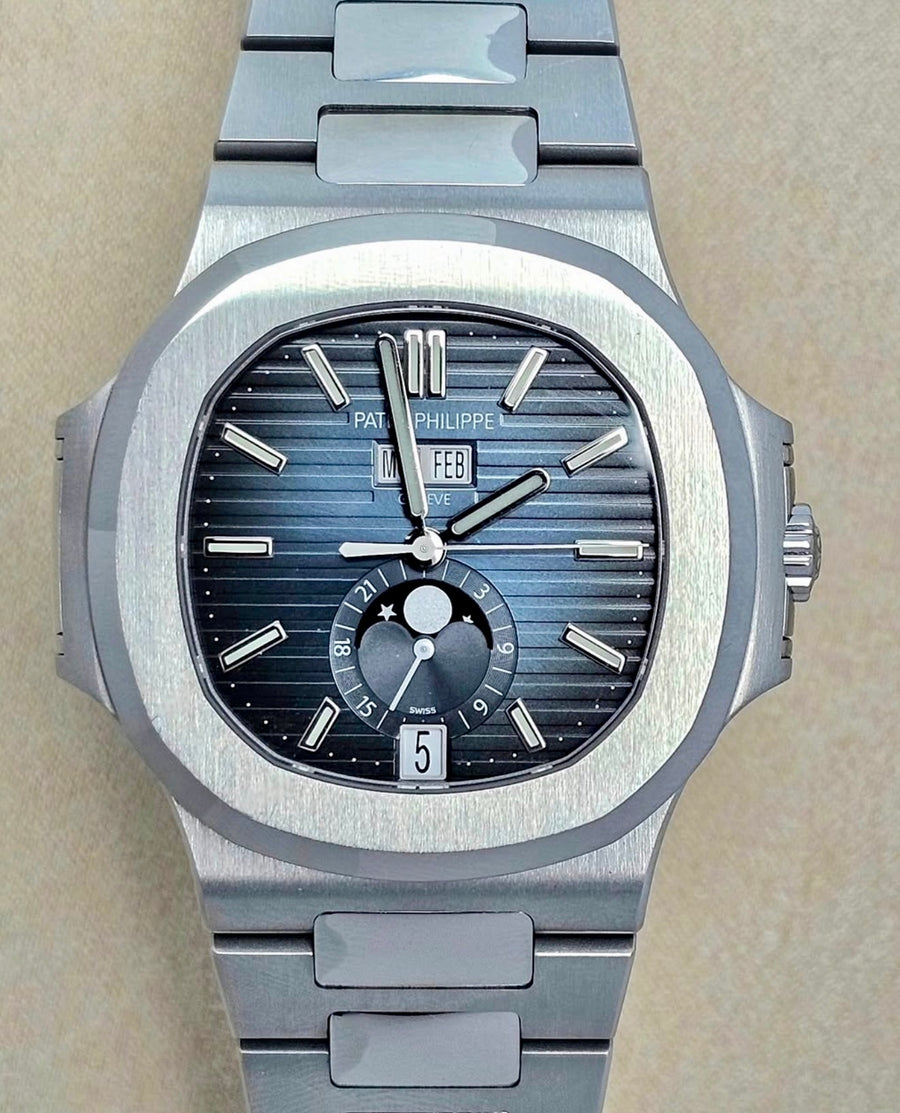
Annual Calendar, moon phases and 24-hour display; normally one calendar correction per year if kept running.
View exact 57265990
Flyback chronograph plus local and home time, day/night displays and a date tied to local time.
View exact 5990The complete Nautilus reference map
Patek Philippe’s Nautilus finder displayed 44 catalog-listed models when reviewed on August 23, 2026. The list spans regular production, jewelry and high-art references, new 2026 introductions and a Nautilus desk clock. “Catalog-listed” does not mean equally obtainable, equally liquid or interchangeable in specification.
| References listed | Branch | Material / format | Buyer distinction |
|---|---|---|---|
| 5811/1G-001 5811/1460G-001 | Modern Jumbo | White gold; regular and Haut Artisanat | 41 mm time-and-date flagship and artistic special execution |
| 5712/1R-001 | Moon phases | Rose-gold bracelet | Ultra-thin 240 micro-rotor architecture with asymmetrical display |
| 5726/1A-014 5726A-001 | Annual Calendar | Steel bracelet or strap | Same ownership concept, materially different bracelet presence and dial treatment |
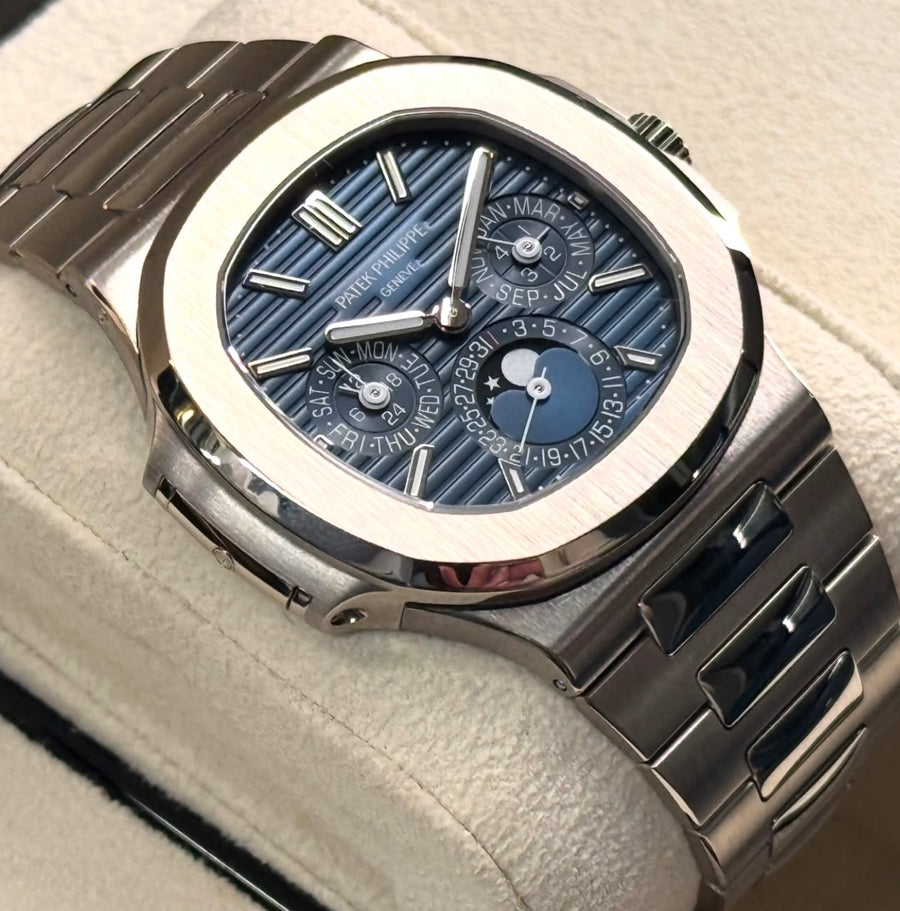
| 5740/1G-001 | Perpetual Calendar | White-gold bracelet | Grand Complication in an exceptionally thin Nautilus case |
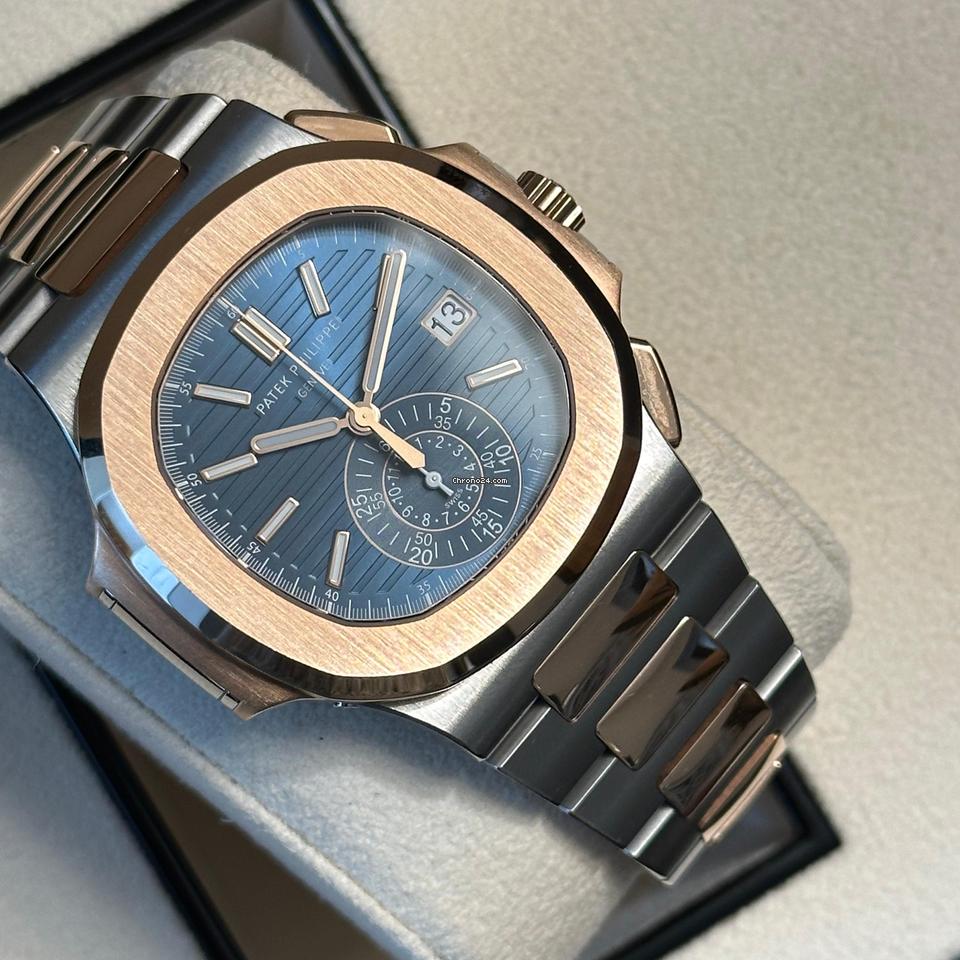
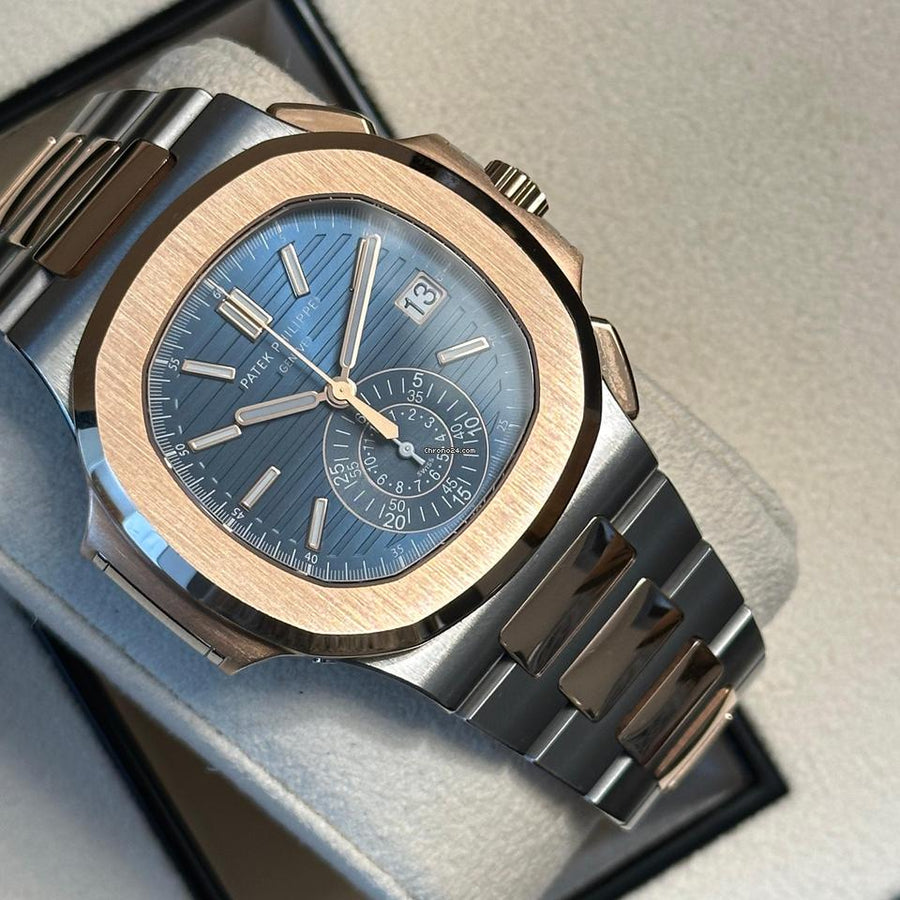
| 5980/60G-001 5980/1400G-010 5980/1400R-011 | Flyback chronograph | White gold or rose gold; strap and jewelry executions | Dedicated chronograph with signature concentric monocounter |
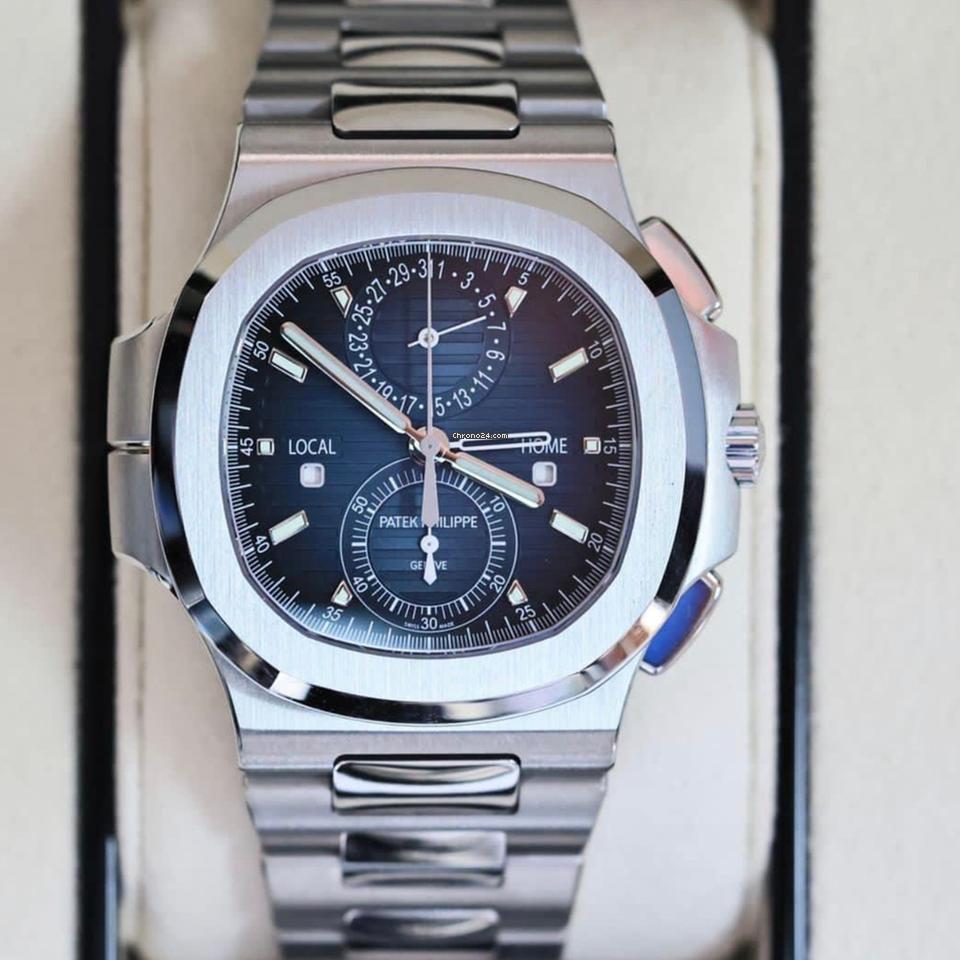
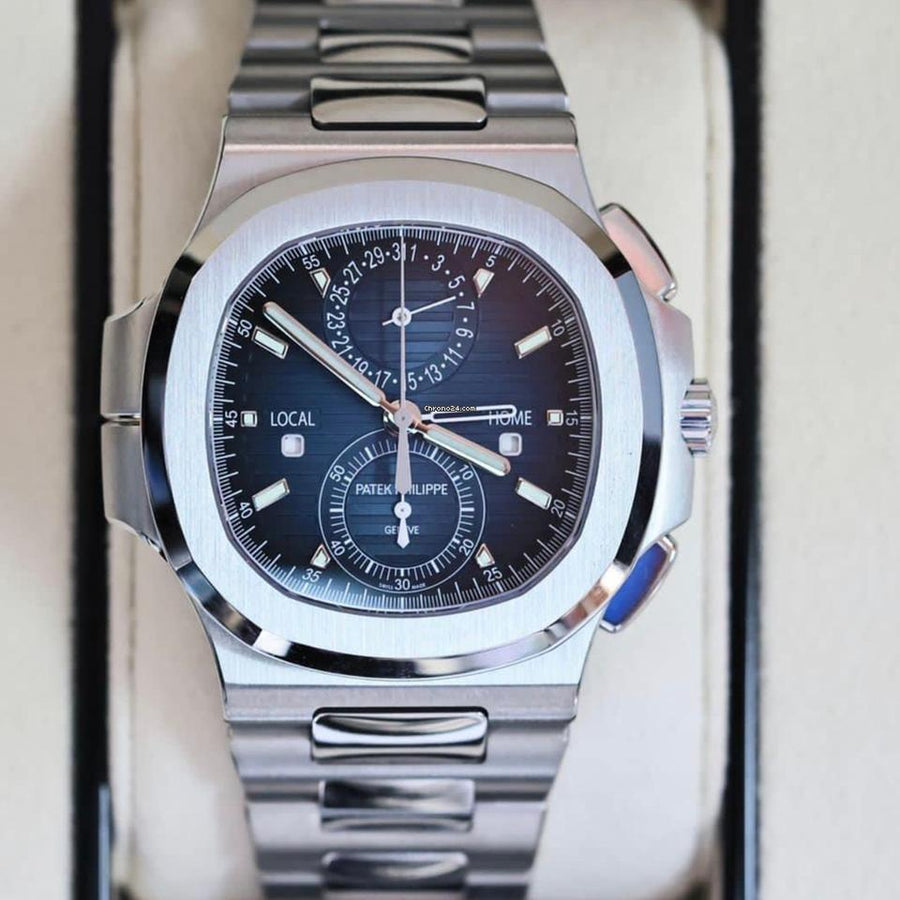
| 5990/1A-011 5990/1R-001 | Travel Time chronograph | Steel or rose-gold bracelet | Most function-dense core sports configuration |
| 5990/1400G-001 5990/1421G-001 5990/1422G-001 5990/1423G-001 | Haute Joaillerie 5990 | White gold with diamonds and colored gems | Travel Time chronograph architecture transformed by factory gem-setting |
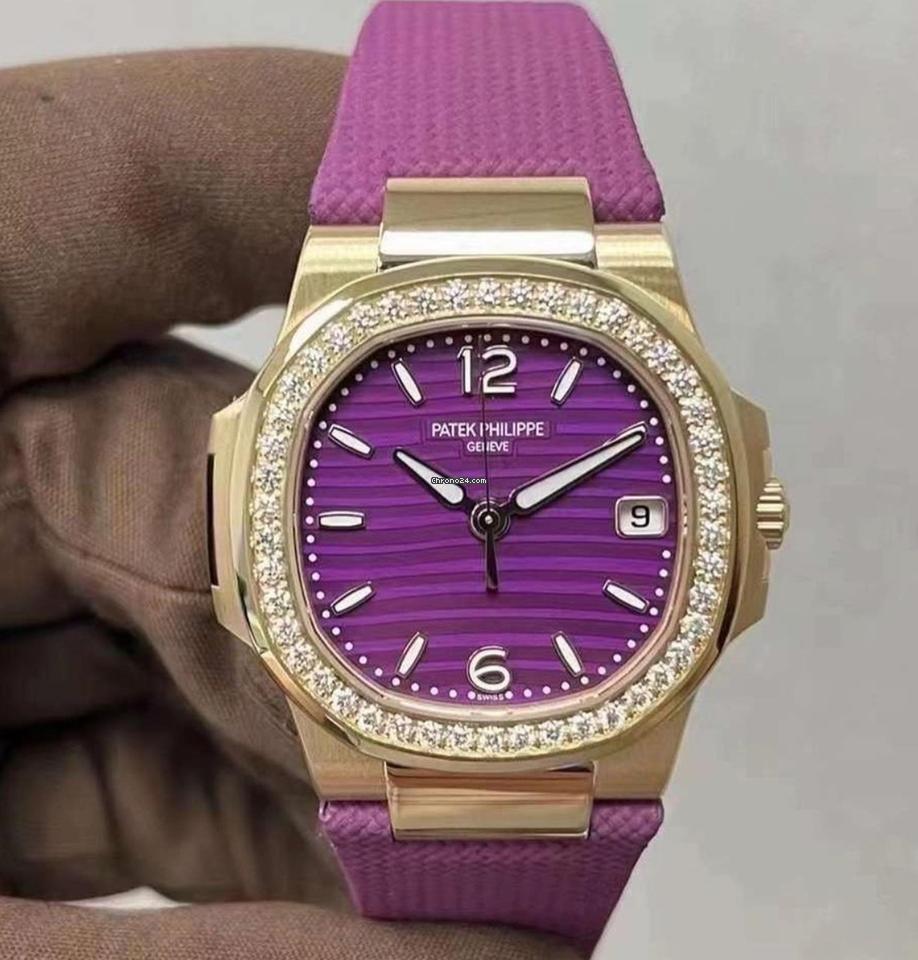
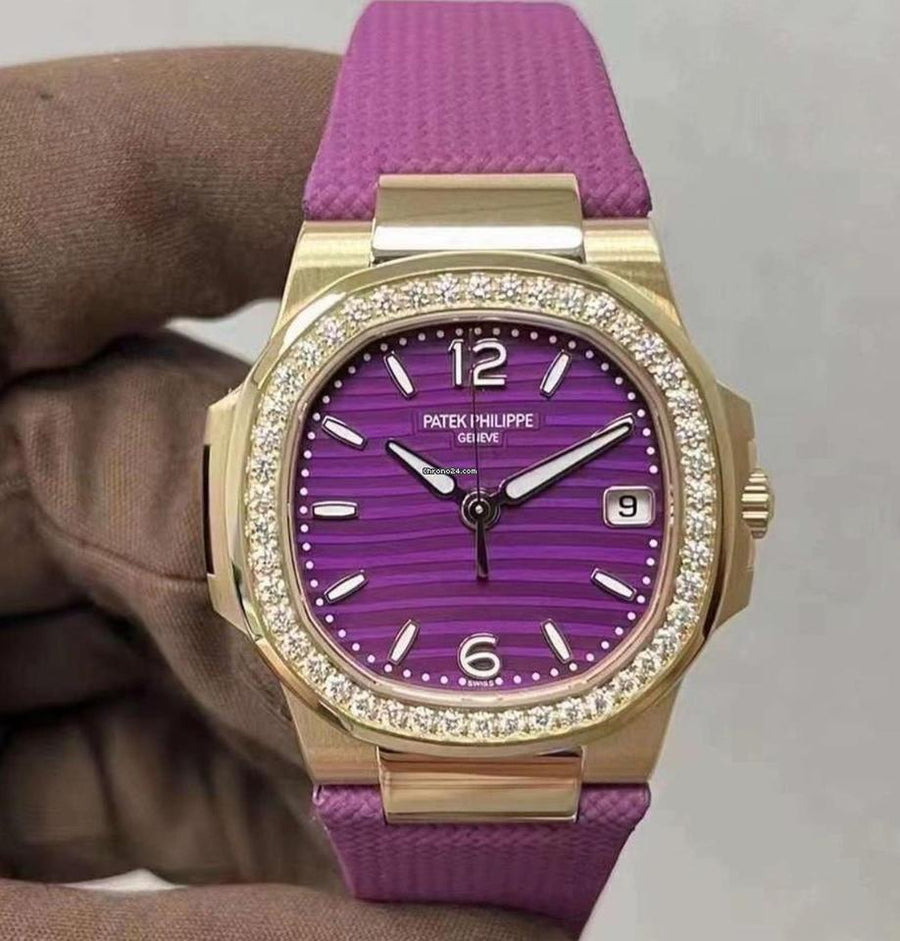
| 7010/1G-013 7010/1R-013 7010G-013 7010R-013 | 32 mm Nautilus | White or rose gold; bracelet or strap | Quartz time-and-date branch with diamond-set bezel and blue or purple wave dial |
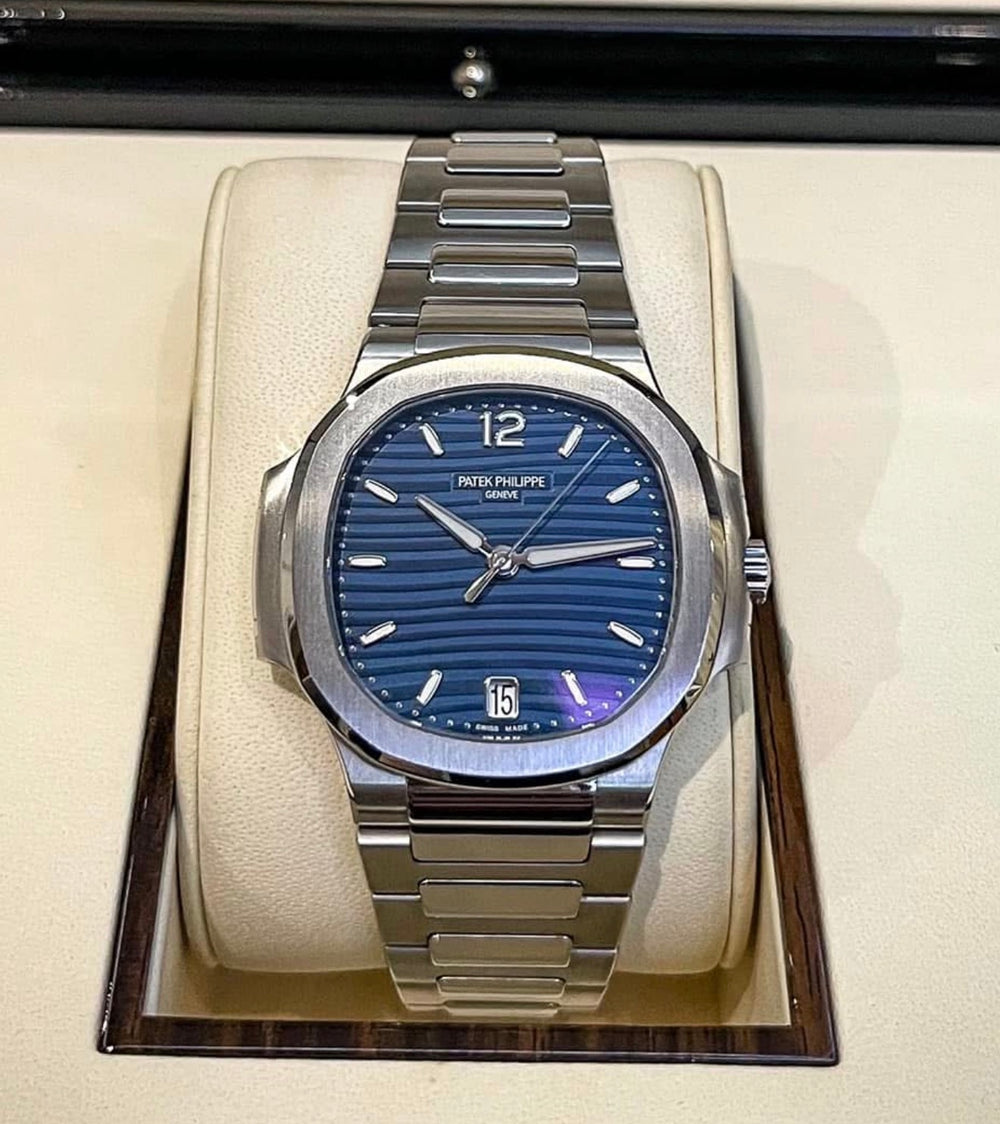
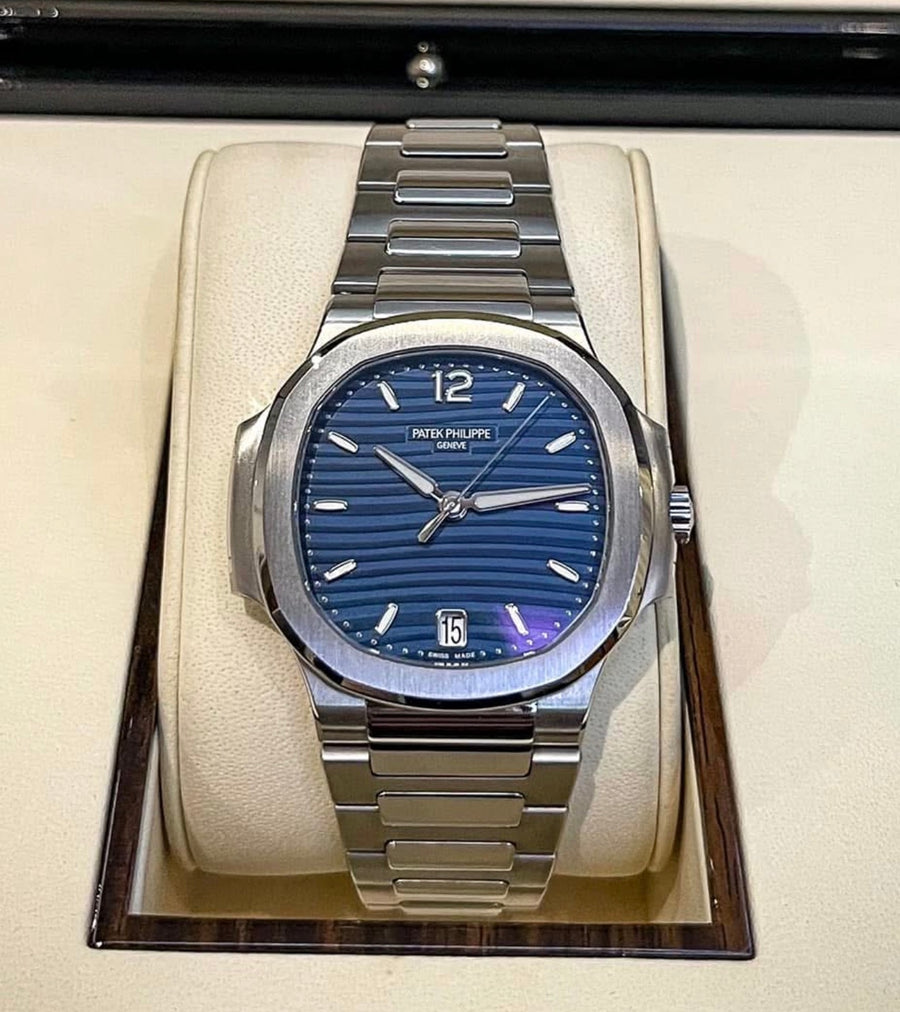
| 7118/1A-001 7118/1A-011 7118/1200A-001 7118/1200A-011 | 35.2 mm steel automatic | Smooth or diamond bezel | Automatic, bracelet-led smaller Nautilus with blue or silvery dial options |
| 7118/1R-001 7118/1R-010 7118/1200R-001 7118/1200R-010 | 35.2 mm rose-gold automatic | Smooth or diamond bezel | More mass and warmth than steel with the same principal automatic architecture |
| 7118/1300R-001 7118/1450G-001 7118/1450R-001 7118/1451G-001 7118/1452G-001 7118/1453G-001 | Joaillerie / Haute Joaillerie | Gold, diamonds, spessartites, sapphires, rubies or emeralds | Factory gem-set references must be verified by exact suffix, stone program and documentation |
| 5723/1R-001 5723/1R-010 5723/112R-001 | Nautilus Joaillerie | Rose-gold bracelet | Jewelry-led configurations outside the ordinary core reference ladder |
| 5711/110P-001 5711/111P-001 5711/112P-001 5711/113P-001 | 5711 Joaillerie | Platinum | Rare factory-set 5711 variants; provenance and factory configuration are central |
| 5810/1G-001 5810G-001 5610/1P-001 | 2026 introductions | White gold or platinum | New references require exact-reference research rather than assumptions based on 5811 naming |
| 958G-001 | Nautilus desk clock | White-gold horological object | Cataloged under Nautilus but not a wristwatch; kept separate from wearable comparisons |
The official finder is a catalog snapshot, not a promise of retail availability. Dimensions and functions below are tied to named references. Vintage 3700, 3800, 3900 and discontinued 5711-era watches require their own period-correct documentation and service history.
The Nautilus families, visually and mechanically
Use these photographs to compare the exact watches offered. Open each listing for the full gallery, condition details, included items and current availability.
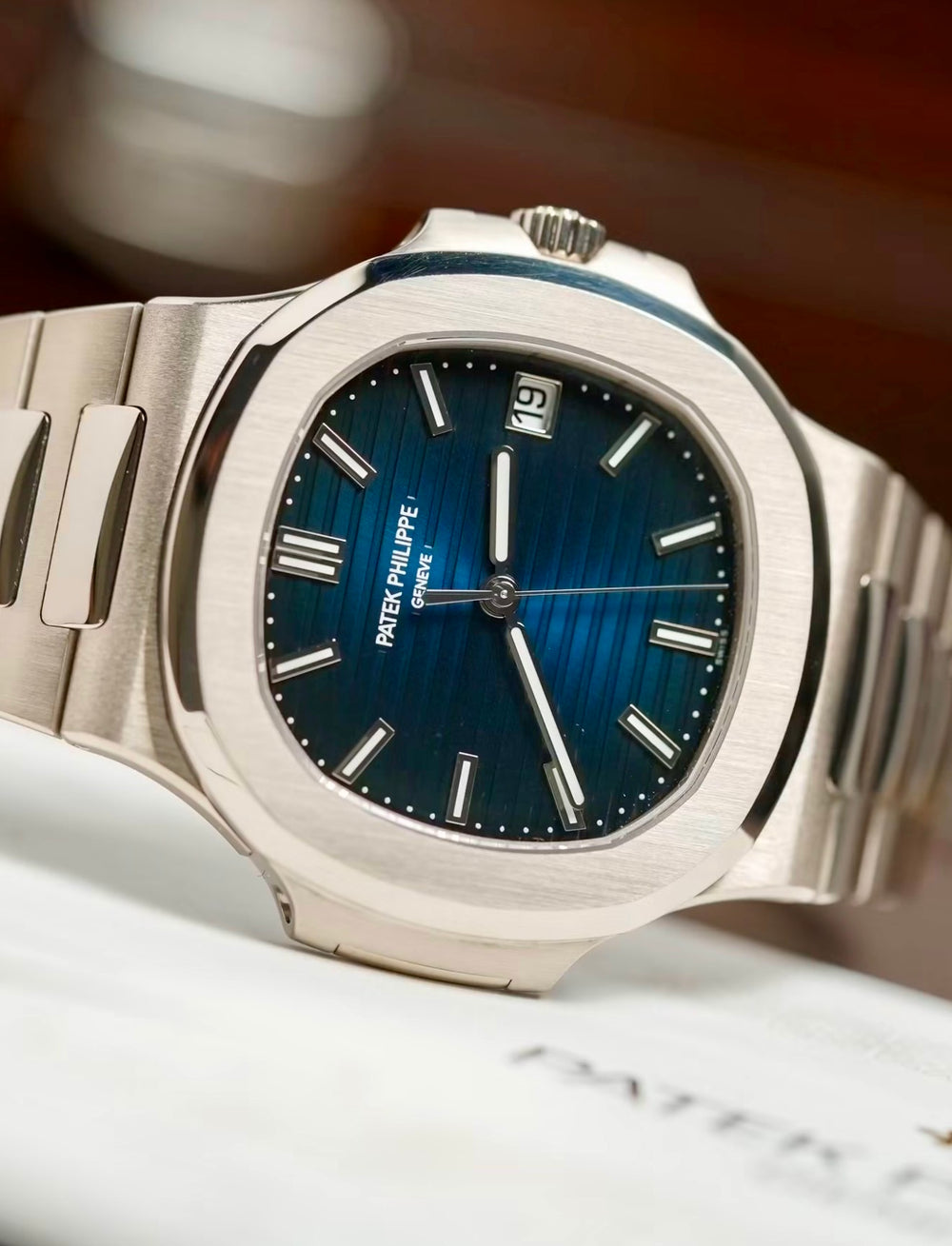
The Jumbo lineage
The 5811 is the modern 41 mm white-gold time-and-date flagship. It preserves the rounded-octagonal bezel, horizontal dial embossing and integrated bracelet language while using the current 26-330 S C movement. The discontinued steel 5711 and original 3700 remain separate collecting propositions, not cheaper versions of the same watch.
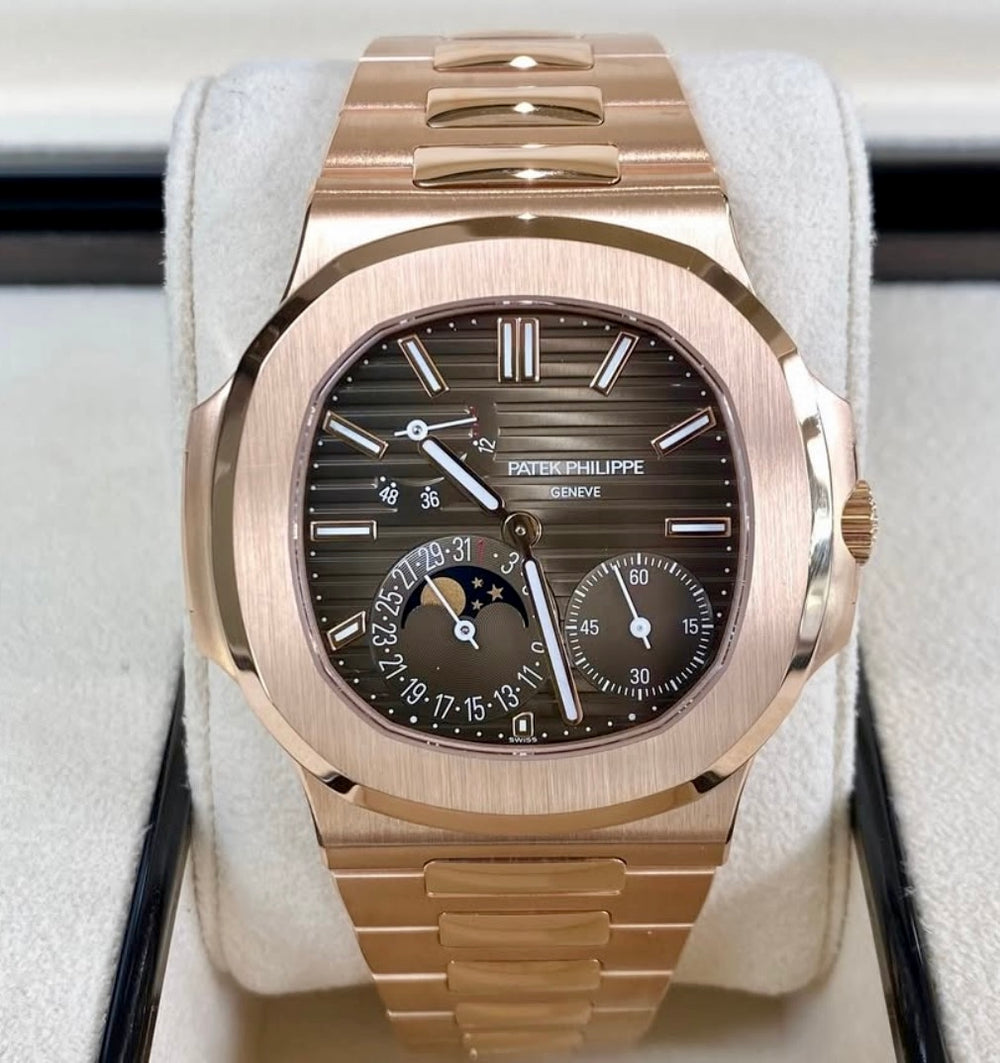
Moon phases and micro-rotor
The 5712 combines moon phases, pointer date, power reserve and small seconds through caliber 240 PS IRM C LU. Its off-center indications are intentionally asymmetrical. Bracelet and strap variants can feel substantially different despite sharing the underlying display concept.
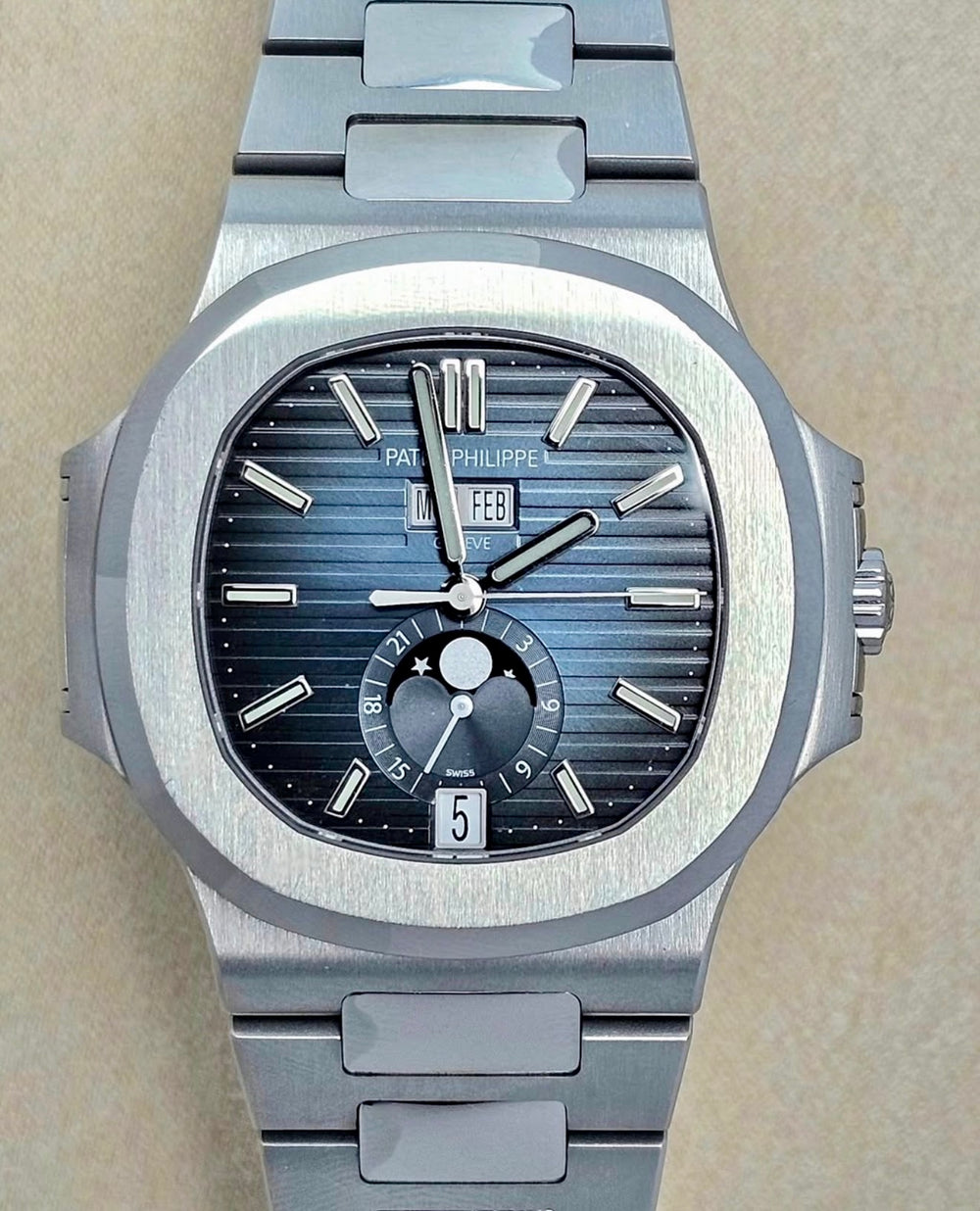
Annual Calendar and moon phases
The 40.5 mm 5726 displays day, date and month in apertures, plus moon phases and 24-hour indication. The bracelet version is the more integrated expression; the strap version visually lightens the watch. If kept running, the calendar normally needs one correction per year at the end of February.
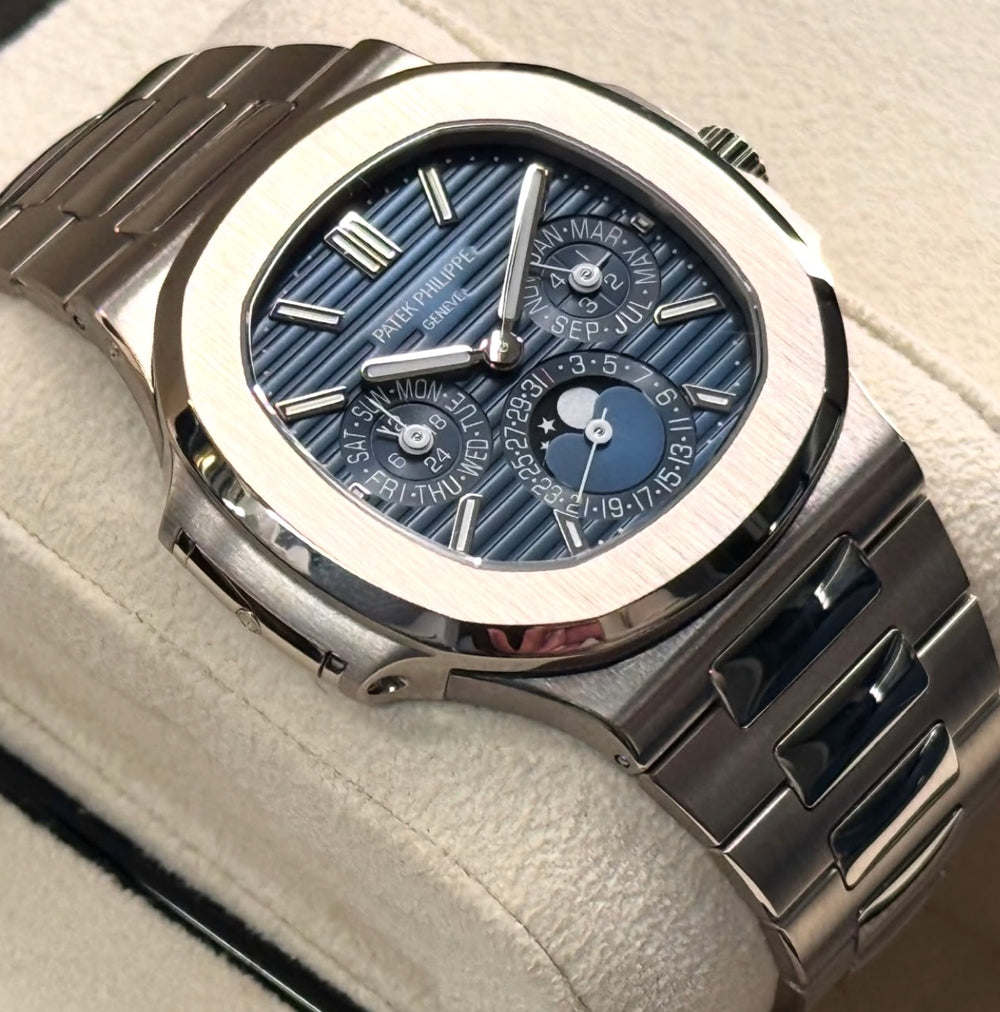
Ultra-thin Perpetual Calendar
The first Grand Complication in the Nautilus collection uses caliber 240 Q to display day, date, month, leap year, 24-hour indication and moon phases. At 40 mm by 8.42 mm, it is thinner than the 5726 even though its calendar is mechanically more complete.
Flyback chronograph
The 5980 is the dedicated chronograph branch, recognized by its large concentric 60-minute and 12-hour monocounter. Older bracelet configurations and the current 5980/60G strap model should not be assigned one universal thickness, bracelet or dial specification.
Travel Time flyback chronograph
The solid hand shows local time while the skeletonized hand shows home time. Day/night apertures, a local-time-linked date and a flyback chronograph make the 5990 the most function-dense core Nautilus. At 12.53 mm in the current rose-gold execution, it also has the strongest case presence.
The 32 mm quartz Nautilus
The 7010 is the smallest current wristwatch branch in the official finder. White- and rose-gold references pair a diamond-set bezel with blue or purple wave-pattern dials, on either integrated bracelets or straps. Quartz is a design choice here, not a lesser version of the automatic 7118.
The 35.2 mm automatic family
The 7118 is larger and mechanical, with alpha-style hands, wave-pattern dials and a bracelet-led profile. Smooth-bezel, diamond-bezel and fully gem-set versions can share the 7118 prefix while differing dramatically in metal, movement detail, finishing and ownership purpose.
Size, bracelet geometry and wrist presence
Diameter alone understates how an integrated-bracelet Nautilus wears. Case width, thickness, first-link articulation, precious-metal mass and bracelet sizing all change the result.
| Format | Representative references | Wrist character | Primary fit question |
|---|---|---|---|
| 32 mm | 7010 family | Compact, jewelry-forward, slim visual footprint | Bracelet or strap, diamond bezel and preferred dial color |
| 35.2 mm | 7118 family | More bracelet presence with automatic movement | Full links, clasp adjustment and smooth versus gem-set bezel |
| 40 mm | 5712, 5740, legacy 5711 | Classic modern Nautilus proportions; thin but visually broad | Strap versus bracelet, metal mass and complication thickness |
| 40.5 mm | 5726, 5980, 5990 | Broader and materially thicker complication platform | Whether the extra height and pusher/corrector architecture suits the wrist |
| 41 mm | 5811/1G | Largest clean time-and-date Jumbo footprint | White-gold weight, first-link drape and bracelet completeness |
Integrated bracelets are not generic accessories. Confirm every removable link, clasp generation, adjustment system, spring bars or proprietary attachment components, and whether refinishing has softened the alternating satin and polished geometry. A watch can be mechanically correct and still be wrong for the buyer’s wrist if the bracelet is short.
Nautilus movement families explained
The caliber identifies how the watch behaves after the case shape has drawn you in. These are the principal architectures buyers will encounter in the modern range.
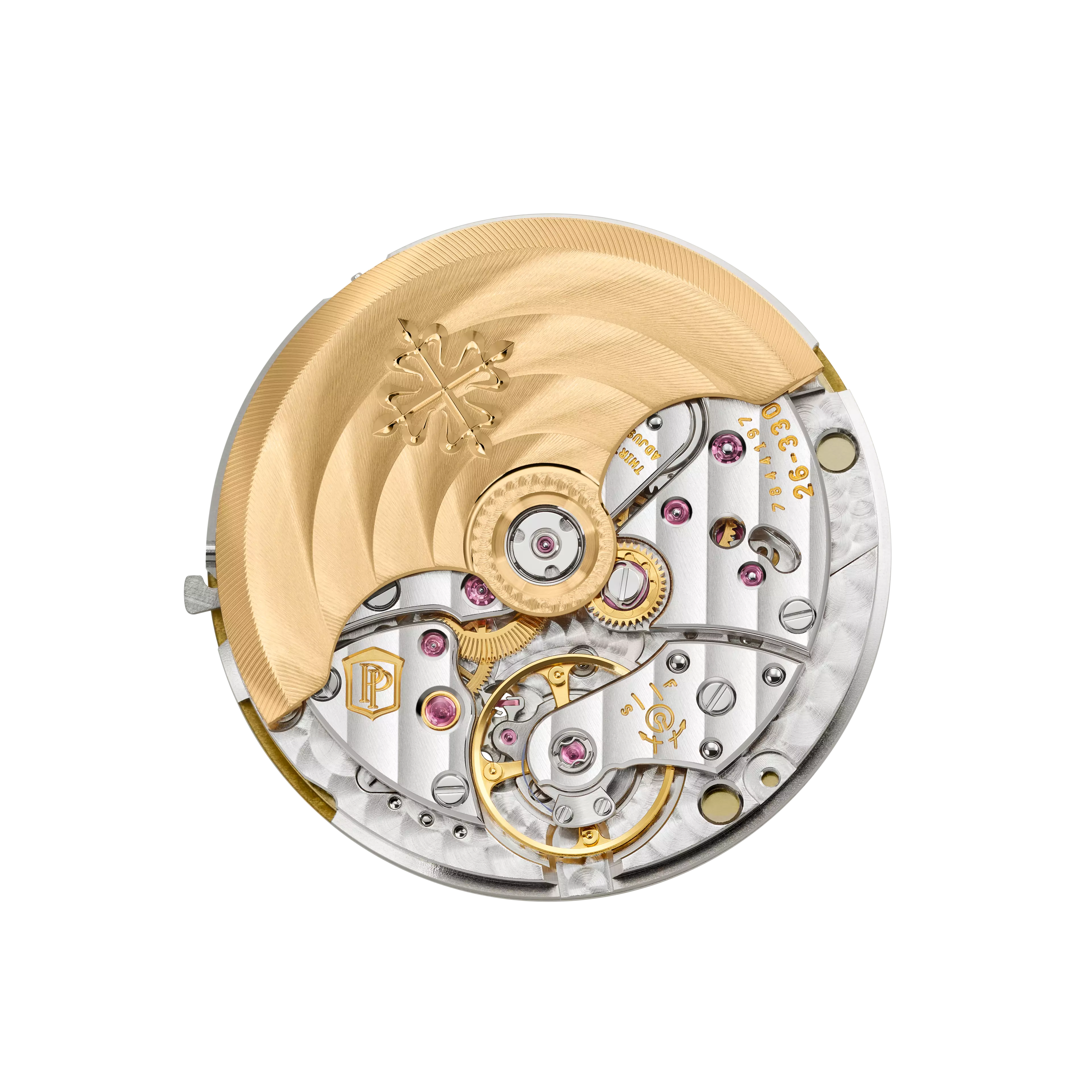
26-330 S C
Self-winding time and date with central seconds, a 21K central rotor and stop-seconds function in current configurations.
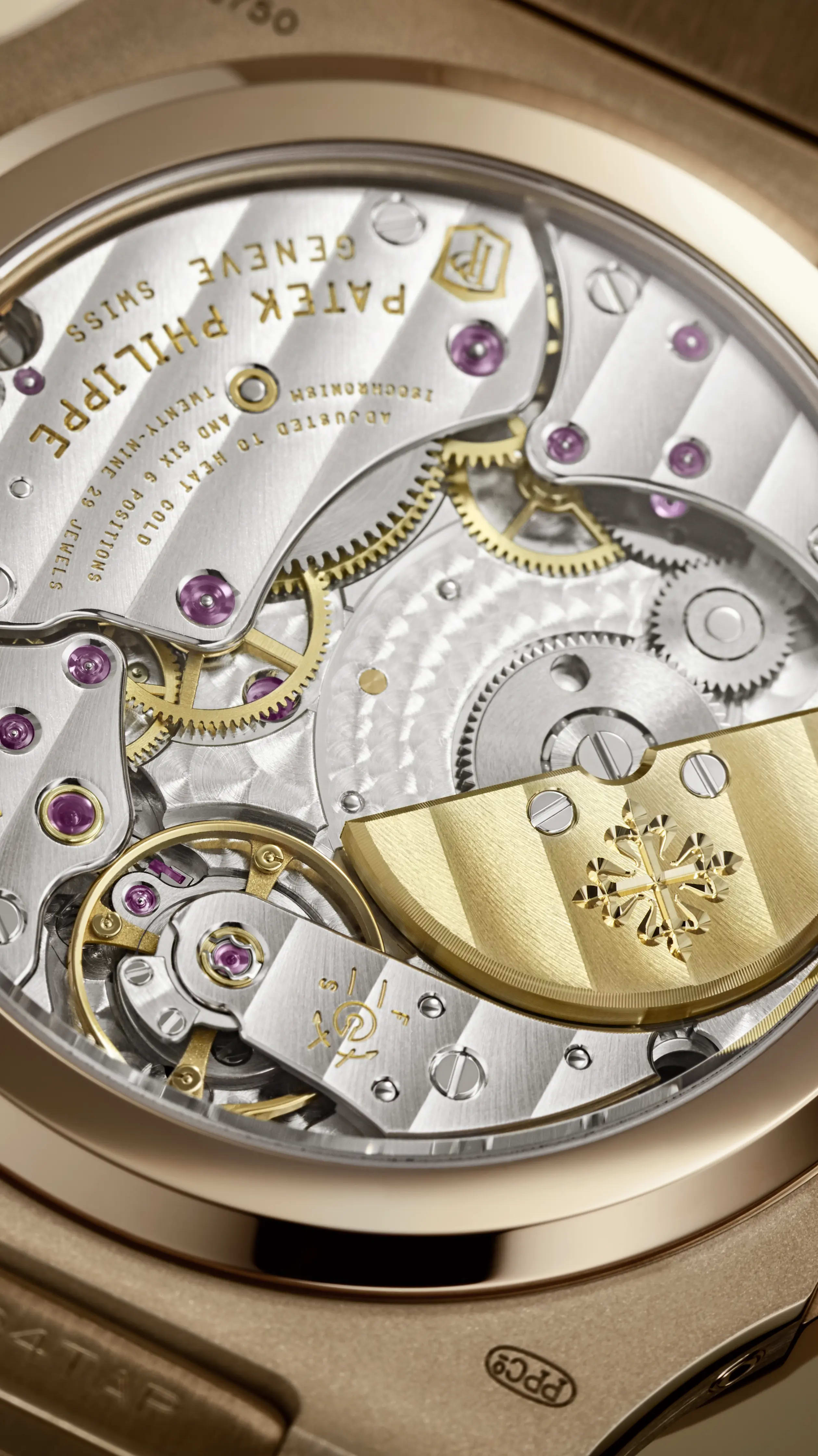
240 PS IRM C LU
Ultra-thin self-winding micro-rotor caliber with moon phases, pointer date, power reserve and small seconds.
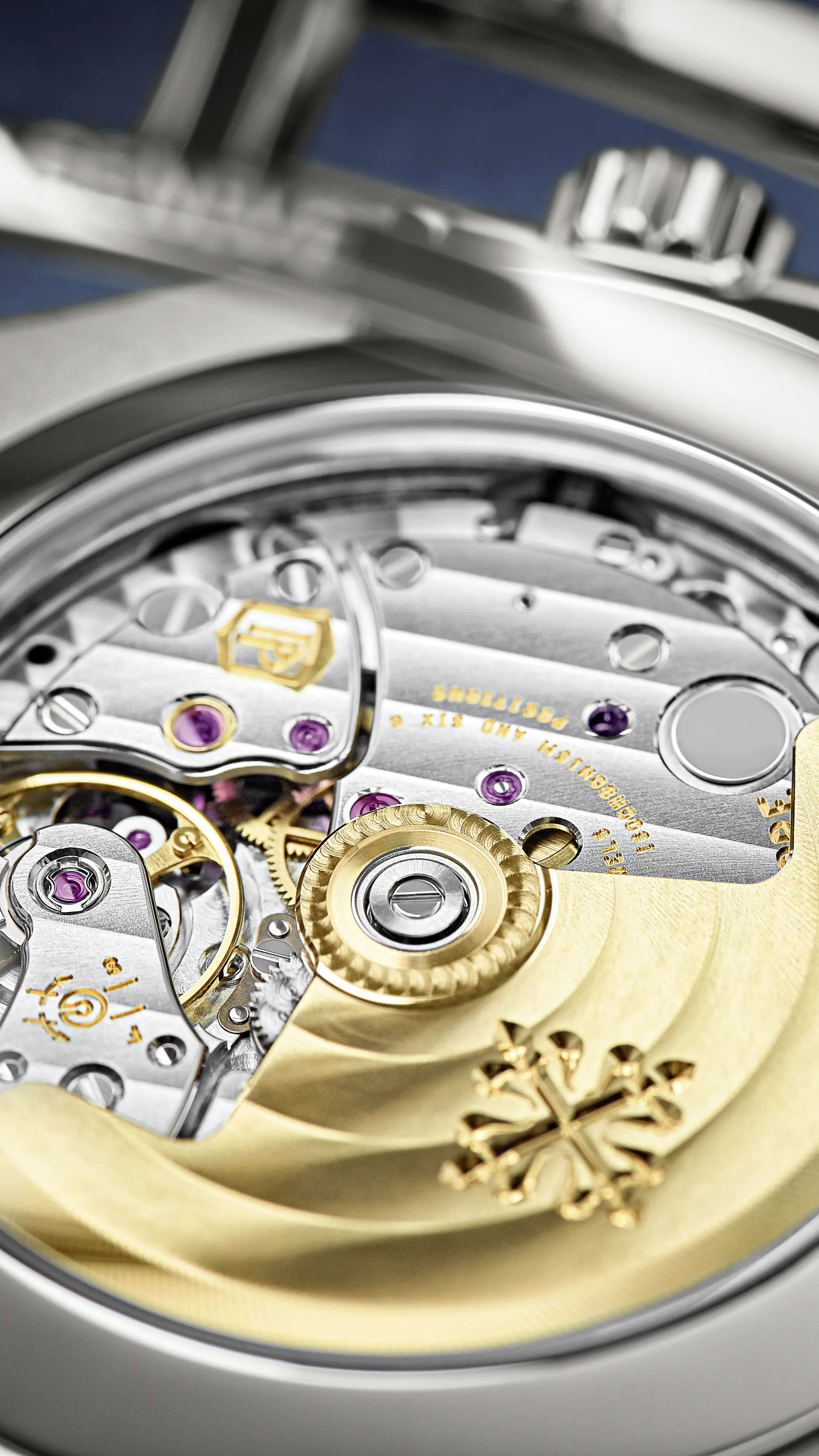
26-330 S QA LU 24H
Annual Calendar with day, date and month apertures, moon phases, 24-hour indication and central seconds.
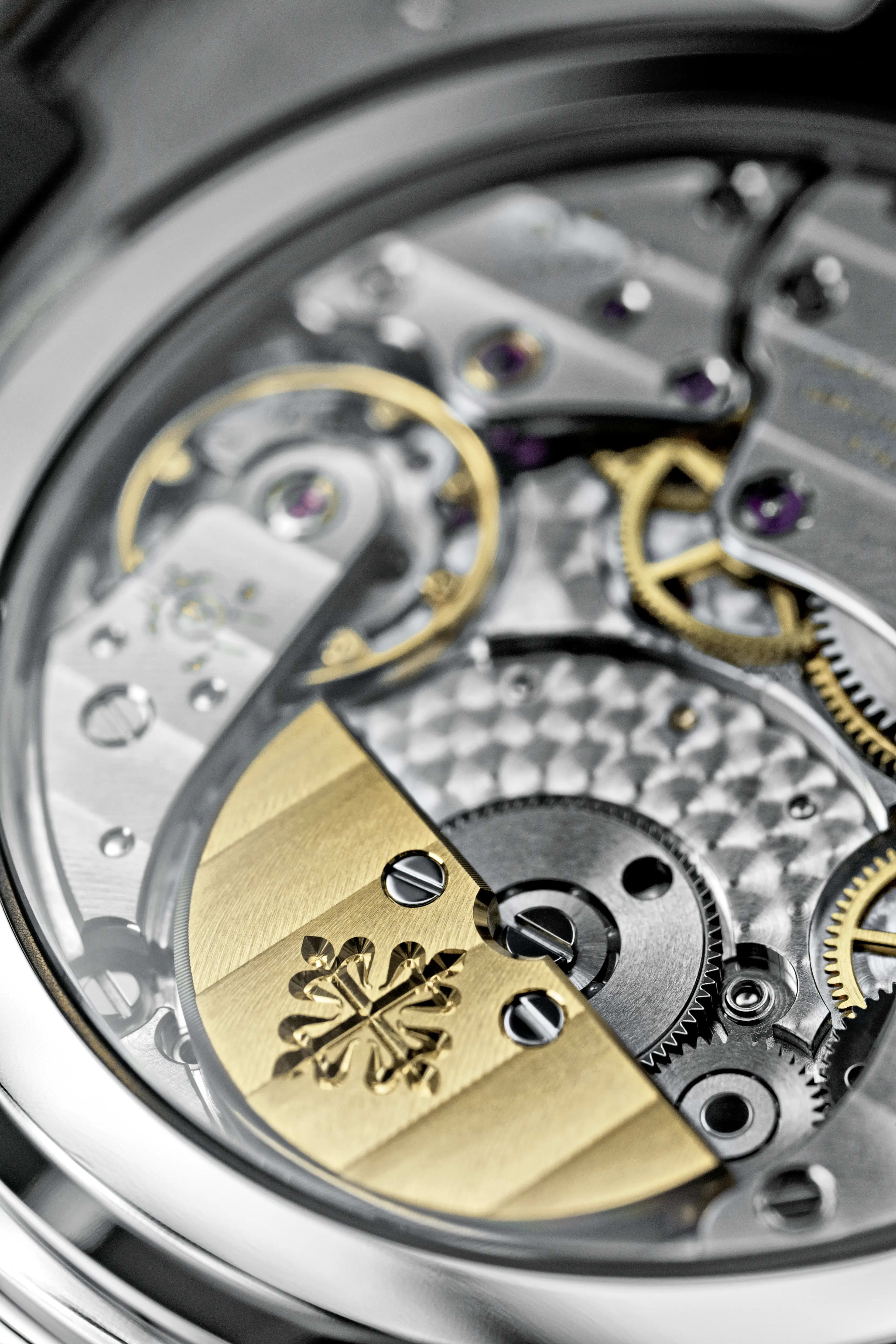
240 Q
Ultra-thin micro-rotor Perpetual Calendar with leap-year and 24-hour indications plus moon phases.
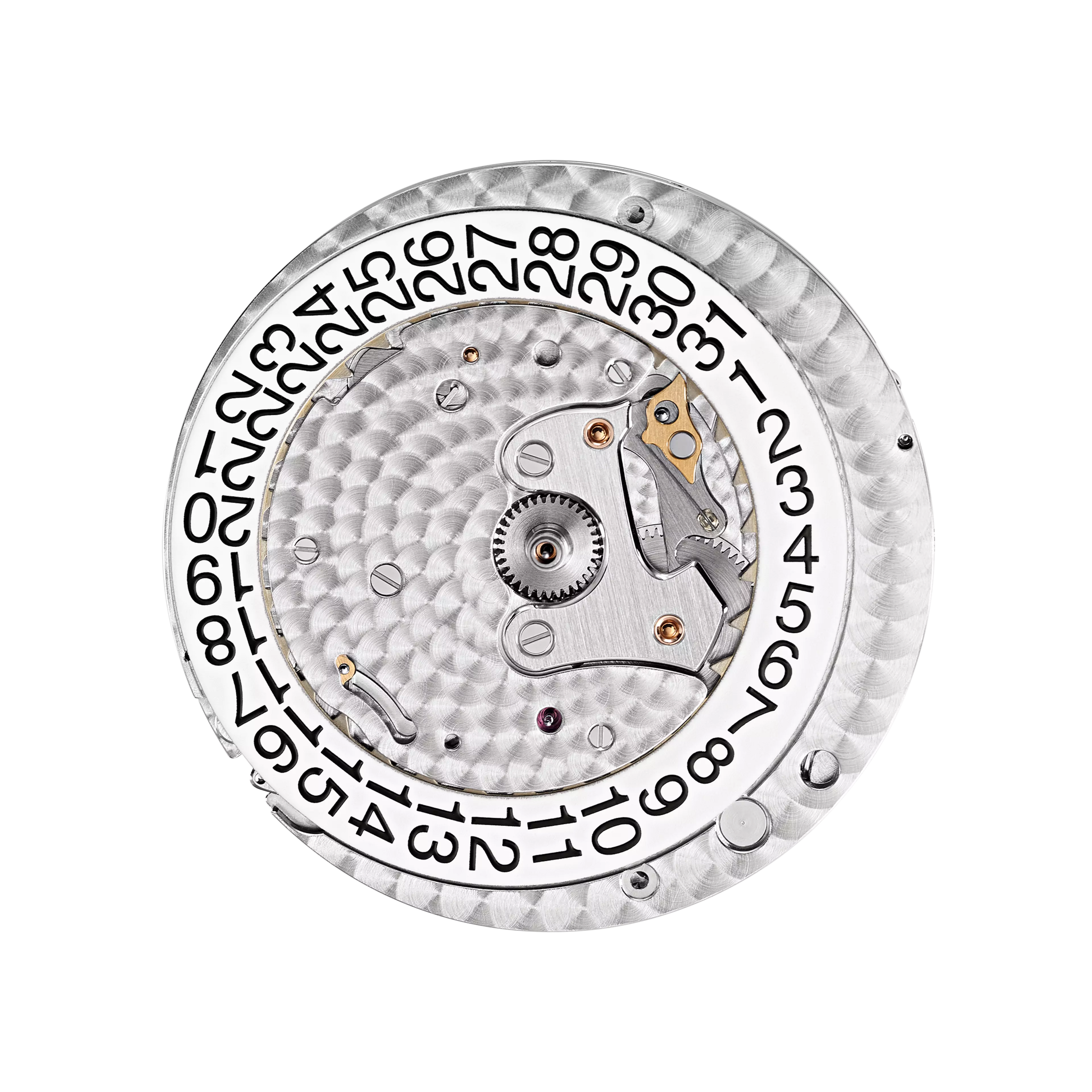
CH 28-520 C
Automatic flyback chronograph with vertical clutch, central chronograph seconds, concentric hour/minute counter and date.
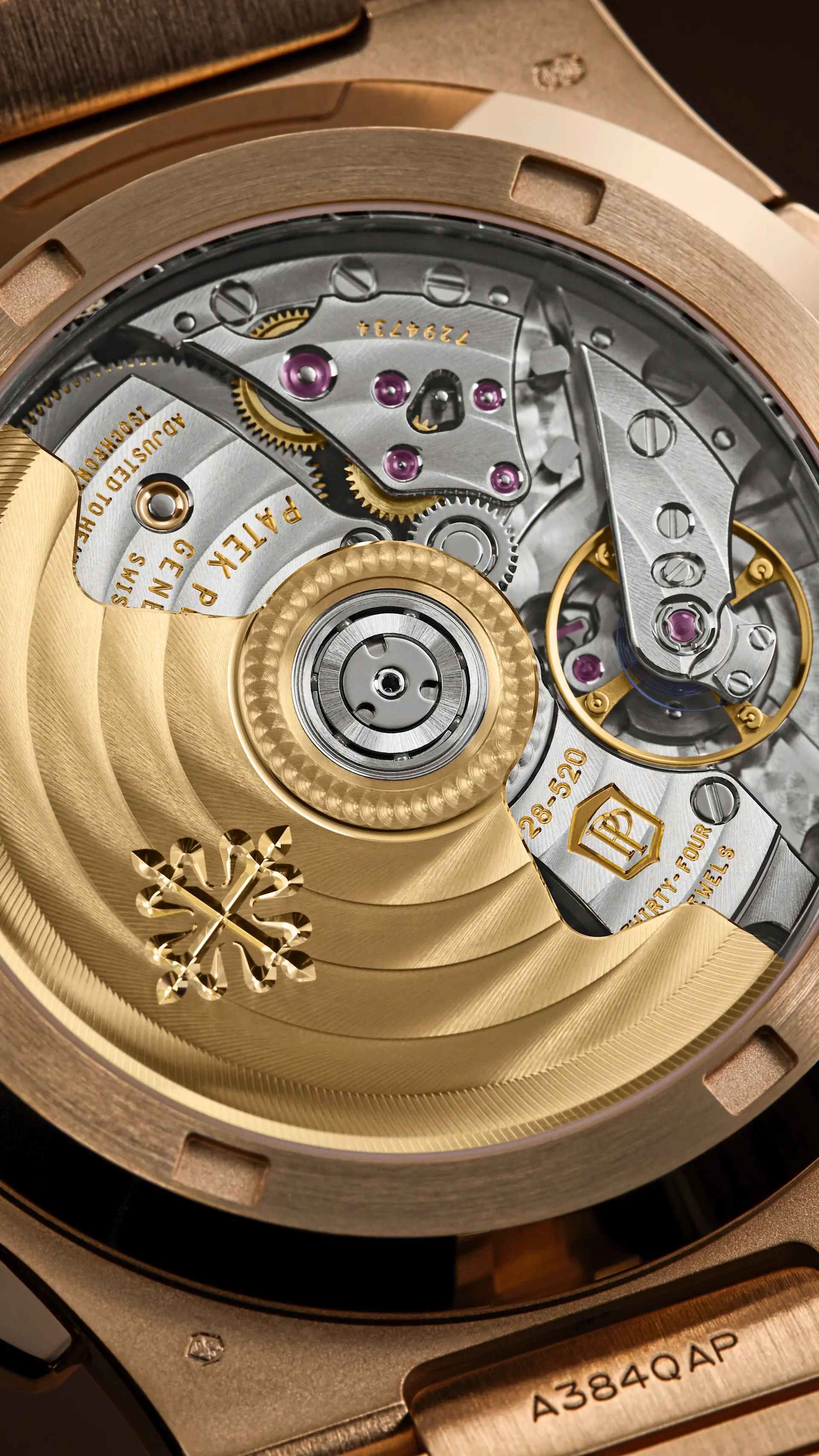
CH 28-520 C FUS
Adds local and home time, twin day-night displays and local-date coordination to the flyback chronograph platform.
Exact Nautilus watches currently available
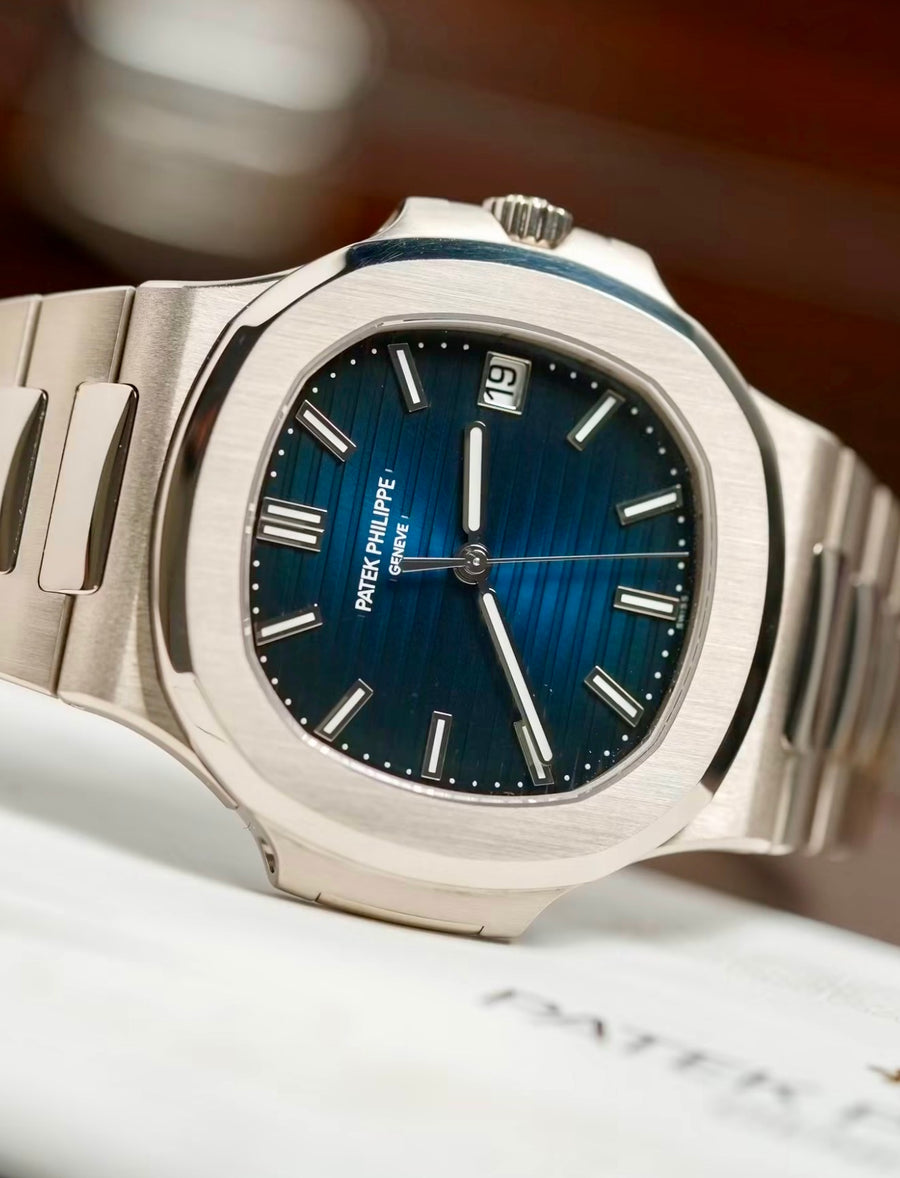
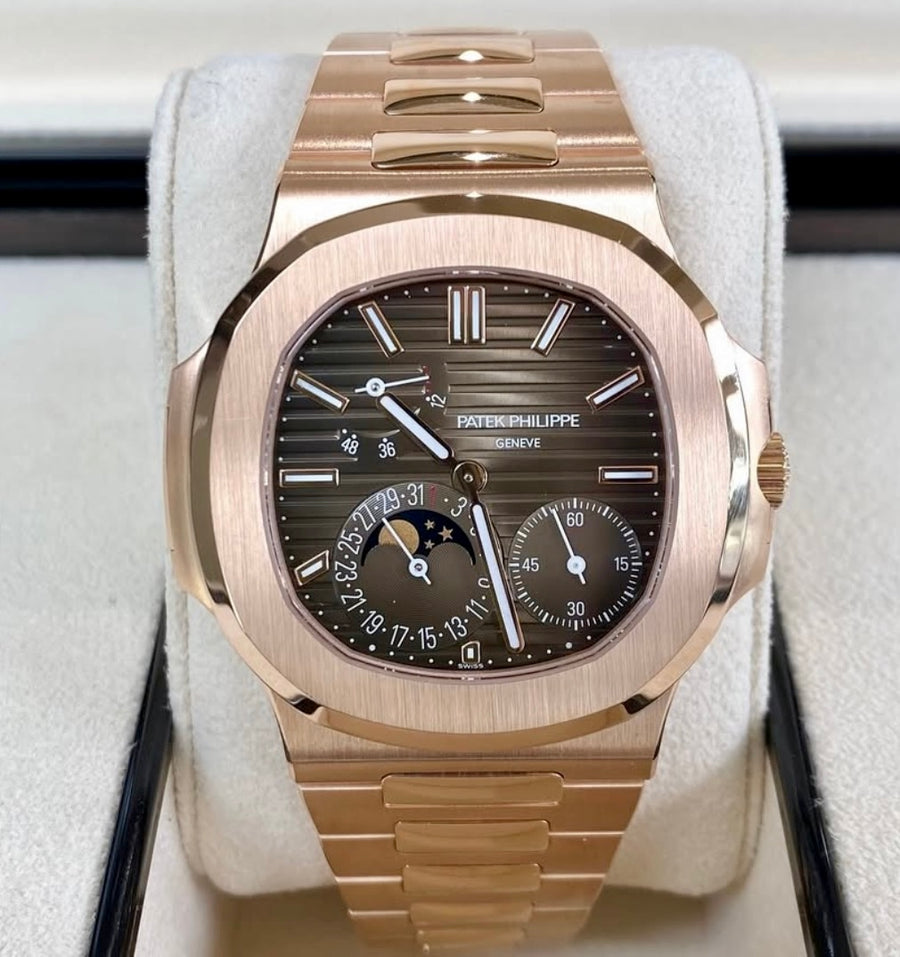
Open a photograph to review the individual watch. Previously sold examples may remain available to view; check the listing for current availability.
From the 3700 to the 5811
| Generation | Why it matters | What to verify | Best internal route |
|---|---|---|---|
| 3700 “Jumbo” | The 1976 origin of the Nautilus design and integrated-bracelet sports-watch thesis | Exact suffix, dial generation, bracelet, clasp, movement, service parts and case geometry | Source a 3700 |
| 3800 | Mid-size automatic lineage with multiple metals, dials and gem-set executions | Reference-specific size, dial originality, bracelet completeness and service history | Source a 3800 |
| 3900 | Smaller quartz Nautilus found in varied metals and configurations | Movement service, dial, bracelet stretch, correct reference and factory setting | Source a 3900 |
| 5711 | The discontinued modern steel icon and direct predecessor in the clean Jumbo line | Dial/reference pairing, full bracelet, refinishing, completeness and movement generation | 5711 vs. 5811 |
| 5811 | The 41 mm white-gold continuation of the time-and-date Jumbo idea | Weight, clasp/adjustment system, full set and current-reference specification | View exact 5811 |
A current 30 m reference-page rating, current clasp feature or current movement specification does not automatically describe a vintage or discontinued watch. For older Nautilus watches, pressure-test status, replacement parts and the latest service work matter more than a family-level claim.
Ownership decisions that matter after the reference
Case and bezel geometry
The Nautilus depends on crisp transitions between polished bevels and satin surfaces. Heavy refinishing can soften the rounded octagon and erase visual tension.
Links, clasp and stretch
Confirm full links, first-link articulation, clasp generation and adjustment system. Vintage bracelet stretch and modern short-link fit require different evaluation.
Test every complication
Operate the 5980/5990 chronograph, both 5990 travel-time pushers, every calendar display and all correctors. Calendar damage can begin with an incorrect setting sequence.
Sport styling is not a dive rating
Current reference pages commonly state 30 m, but the exact watch’s gasket condition and pressure-test result govern real exposure. Vintage examples need extra caution.
Premium is not appreciation
A secondary-market premium is a dated price gap, not a guarantee. Purchase price, condition, completeness, liquidity, service needs and selling costs determine the owner’s result.
Verify at reference level
Case, dial, hands, movement, bracelet, clasp, papers and service evidence must agree. A familiar blue dial and porthole silhouette do not establish originality.
Patek Philippe Nautilus FAQ
What is the difference between the Nautilus 5711 and 5811?
The 5711 is the discontinued 40 mm generation best known in stainless steel, while the current 5811/1G-001 is a 41 mm white-gold time-and-date model. They share the clean Jumbo idea but differ in metal, case construction details, clasp features, dimensions and market context.
Which Nautilus has an Annual Calendar?
The 5726 family combines an Annual Calendar with moon phases and 24-hour indication. The steel 5726/1A is bracelet-mounted; 5726A variants use straps. An Annual Calendar normally requires one manual calendar correction per year if it remains running.
What is the difference between the 5980 and 5990?
The 5980 is a flyback chronograph with date and a concentric chronograph monocounter. The 5990 adds Travel Time, twin day/night displays and a date coupled to local time, making it more functional and visually denser.
Which Nautilus is the thinnest complicated model?
The 5740/1G perpetual calendar is published at 8.42 mm thick, while the 5712 family is also notably thin through its caliber 240 architecture. Exact dimensions should always be checked against the named suffix and period.
Are current Nautilus watches water-resistant?
Many current Patek Philippe Nautilus reference pages reviewed state 30 meters. That is not a dive-watch rating, and a pre-owned watch’s actual pressure resistance depends on the exact reference, gasket condition, service history and a current pressure test.
Does a Nautilus secondary-market premium guarantee future appreciation?
No. A premium only compares two prices at a point in time. Future results depend on purchase price, reference demand, condition, completeness, liquidity, service requirements and selling costs.
Methodology and official sources
Current catalog scope and technical facts were checked against Patek Philippe’s Nautilus collection finder and individual reference pages on August 23, 2026. Wrist-presence, condition and buyer-selection commentary are Superlative Watch Co. Buying Desk analysis. The individual watch listings provide current photographs and availability; manufacturer imagery is used for movement education or is clearly identified as representative.