
Panerai Watch Buying Guide
Compare Luminor, Submersible and Radiomir, then explore the exact watches available.
Representative Panerai watches to compare
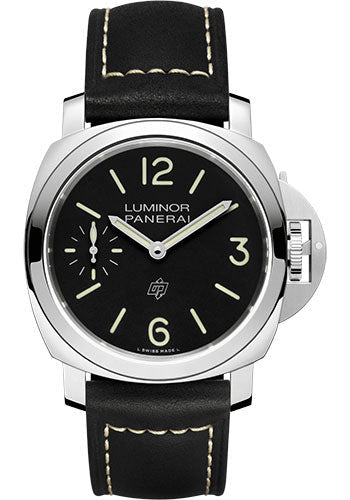
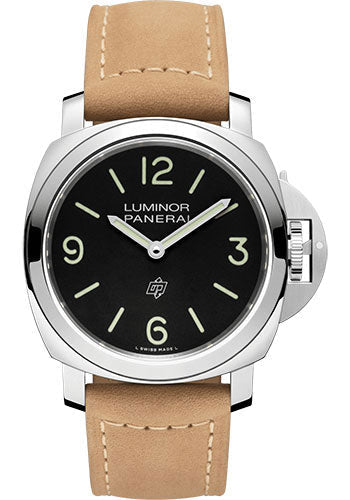
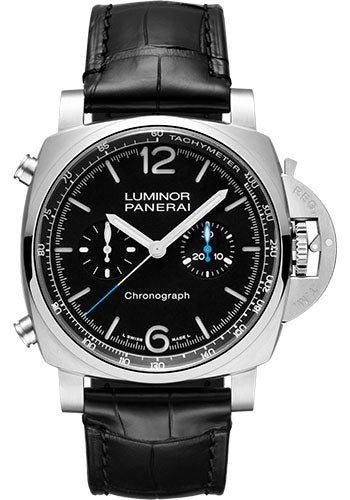
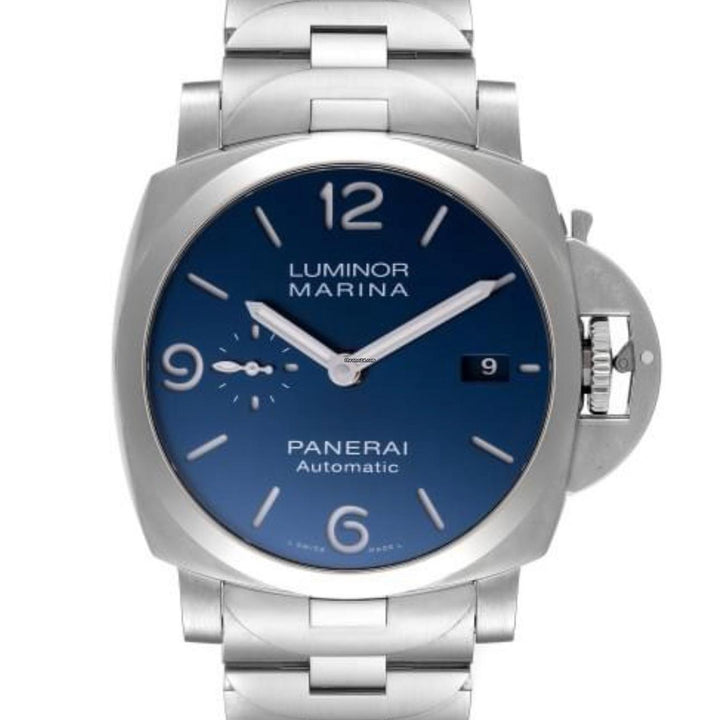
Use these Luminor, Luminor Marina, chronograph and Submersible examples to compare exact PAM references, materials, movements and intended use.
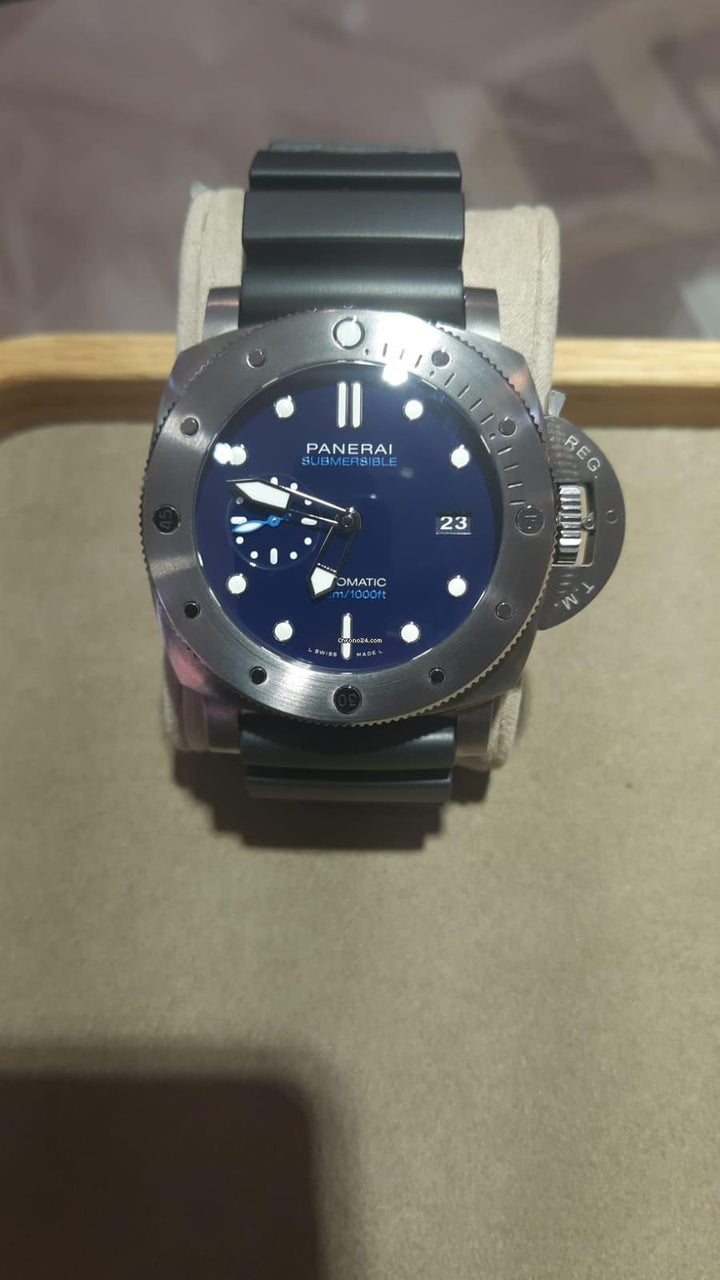
Explore the complete Panerai buying guide
Which Panerai should you buy?
Start by deciding what the watch must do. Panerai offers several watches that can look similar in a photograph yet behave very differently in daily ownership. A 38 mm Luminor Due, 40 mm Luminor GMT, 44 mm Luminor Marina, 44 mm Submersible and 45 mm Radiomir are not simply five sizes of the same watch.
| Buyer priority | Best starting point | Why it fits | What must be verified |
|---|---|---|---|
| Most recognizable first Panerai | Steel Luminor Logo, Base or Luminor Marina | The crown bridge, cushion case and large luminous dial deliver the clearest Panerai identity. | 40, 42 or 44 mm fit; manual or automatic movement; depth rating; strap and buckle completeness. |
| Traditional manual-wind experience | Luminor Base/Logo or Radiomir with P.6000-family movement | Simple display, deliberate winding ritual and a direct connection to Panerai’s instrument-watch design. | Winding feel, crown action, power reserve, service history and exact dial layout. |
| Everyday automatic watch | Luminor Marina | Small seconds, date on many references, broad material choice and strong casual versatility. | Calibre generation, case thickness, water resistance, strap-change system and condition. |
| Smaller full-character Panerai | 40 mm Luminor Quaranta | Retains the integrated Luminor case and crown bridge with less wrist footprint than a 44 mm reference. | Exact function, bracelet or strap articulation, crown clearance and current depth rating. |
| Thinner or dressier Panerai | Luminor Due 38 or 42 | Polished surfaces, slimmer proportions and smaller dimensions make it easier to wear formally. | Lower reference-specific water resistance, P.900 variant, strap width and polished-case condition. |
| Dedicated dive-watch identity | Submersible 42, 44 or 47 | Unidirectional bezel, dot-and-marker dial and stronger technical-material options. | Bezel action, current pressure test, material damage, strap suitability and exact PAM specifications. |
| Vintage-style Panerai without crown bridge | Radiomir | Cushion case, prominent crown, wire-style or integrated lug architecture and strong historical character. | Lug construction, crown and case-back condition, manual-wind operation and strap hardware. |
| Travel function | Luminor GMT/BiTempo or selected Submersible GMT | Second-time-zone capability inside the recognizable Panerai case language. | 12- or 24-hour display, local-hour setting sequence, date behavior and movement reference. |
| Mechanical chronograph | Luminor Chrono or specialist Submersible chronograph | Panerai design with central elapsed-seconds timing and a more technical dial. | P.9200, P.9100 or other exact calibre, pusher operation, reset alignment, thickness and service documentation. |
| Technical case material | Carbotech, BMG-Tech, titanium, ceramic or newer specialist material | Reduced weight, distinctive pattern or color and material engineering are central to the watch’s identity. | Impact damage, reference-correct crown bridge and buckle, replacement history and manufacturer service options. |
The Panerai collection map
Panerai’s current official family architecture centers on Luminor, Submersible, Luminor Due and Radiomir. Labels such as Luminor Marina, Luminor Quaranta, Luna Rossa, Navy SEALs, Marina Militare, Chrono, GMT and “Experience” describe subfamilies, partnerships, functions or programs rather than five additional uniform collections.
| Family or path | Defining architecture | Common ownership role | Important cautions |
|---|---|---|---|
| Luminor | Cushion case, integrated lugs, fixed bezel and patented crown-protecting bridge. | The broadest Panerai path: time-only, small seconds, Marina, GMT, power reserve, chronograph and high complications. | Size, movement and water resistance vary sharply. “Luminor” alone is not a specification. |
| Luminor Marina | Luminor case with small seconds at 9 o’clock and usually a date at 3 on modern automatic references. | Everyday automatic Panerai with strong tool-watch character. | Recent 44 mm P.980 references differ materially from older Marina generations. |
| Luminor Quaranta | Forty-millimeter Luminor interpretation retaining crown bridge and integrated lugs. | Smaller-wrist or bracelet-focused route into full Luminor architecture. | Do not confuse it with Luminor Due; case construction, water resistance and visual weight differ. |
| Submersible | Crown bridge plus unidirectional graduated dive bezel and dot-based timing dial. | Purpose-built sport and dive-watch identity. | 42, 44 and 47 mm models use different movements, materials and ratings. |
| Luminor Due | Thinner, polished reinterpretation of the Luminor silhouette, commonly in 38 or 42 mm. | Dressier ownership, smaller wrists and buyers who want Panerai design with less mass. | Many references are rated to 5 bar rather than tool-watch depths; verify before water use. |
| Radiomir | Crown-bridge-free cushion case with wire-style or integrated lug architecture depending on generation. | Heritage, manual winding, California dials, long-reserve movements and classical complications. | Current and discontinued references differ significantly in lugs, crowns, movements and case sizes. |
| Partnership or special program | Luna Rossa, Navy SEALs, Marina Militare and other identities can appear across families. | Distinct color, strap, engraving, material, function or production context. | Confirm edition status, geographic availability, included accessories and exact PAM rather than buying the partnership name alone. |
Luminor
Best when the crown bridge and clean fixed-bezel silhouette are the emotional reason for buying Panerai.
Submersible
Best when the rotating bezel, technical dial and water-oriented role are essential rather than optional.
Luminor Due
Best when the buyer likes Panerai’s design language but does not want the full mass of a conventional tool watch.
Radiomir
Best when the buyer wants cushion-case heritage without the crown bridge and accepts a more strap-led experience.
Luminor Marina
Best when automatic winding, small seconds, date and recognizable Panerai architecture need to coexist.
Luminor Quaranta
Best when the buyer wants a true Luminor case around 40 mm rather than the thinner Due interpretation.
Older listings may use names such as “Luminor 1950” or “Luminor Submersible 1950.” Those names remain relevant in the pre-owned market, but modern Panerai separates Submersible as its own family. Use the PAM number to resolve ambiguity.
Panerai Luminor: the core crown-bridge family
The Luminor is the visual center of modern Panerai. Its cushion-shaped case, integrated lugs, fixed bezel and lever-operated crown-protecting bridge create a silhouette recognizable from across a room. That consistency can hide major technical differences. A manual-wind Base Logo, an automatic Marina, a 40 mm GMT, a 44 mm chronograph and a 47 mm eight-day reference may share the same basic design language while offering entirely different fit, service and water-use profiles.
Luminor Base, Logo and simple manual-wind references
Simple Luminor references are often the cleanest expression of the brand. A Base layout usually emphasizes hours and minutes, while Logo and small-seconds executions may add the OP emblem or a seconds register. Current and recent manual-wind examples commonly use the P.6000 family with approximately three days of reserve. The appeal is not technical complexity; it is clarity, winding ritual and an uncluttered dial.
- Why buyers choose them: lower dial density, strong historical character and fewer functions to distract from the case and luminous numerals.
- What to test: winding should feel consistent, the crown lever should close securely, time setting should be precise and the watch should deliver credible reserve after a full wind.
- What changes value: correct dial and hands, case geometry, original buckle, supplied straps, box and card, and documented service.
Featured references PAM01084 and PAM01086 illustrate two simple 44 mm routes: both deliver the signature case, but their dial layout and model identity differ. The PAM number—not a seller’s abbreviated title—must control the comparison.
Luminor Marina: the everyday automatic path
Luminor Marina commonly combines automatic winding, small seconds at 9 o’clock and a date at 3. It is the safest broad recommendation for a buyer who wants one recognizable Panerai for frequent wear. The family is not technically frozen. Recent 44 mm references such as PAM03312 use the P.980 automatic calibre, three days of reserve, a sandwich dial with newer luminous material, PAM Click Release hardware and an official 50-bar rating. Earlier Marina references can use different calibres, case backs, depth ratings and strap systems.
Choose an earlier Marina when…
You prefer a discontinued dial, case profile, movement generation or secondary-market price and are prepared to evaluate service and condition reference by reference.
Choose a current P.980 Marina when…
You want the newest 44 mm tool-watch specification, stronger published water resistance, quick-change versatility and current manufacturer support.
PAM01316 is a useful bridge between generations: it represents the blue-dial automatic Marina path and provides a real current-inventory visual example, but it should not be assumed to share every specification of PAM03312, PAM03313, PAM03314, PAM03323 or PAM03325.
Luminor Quaranta and the 40 mm question
Luminor Quaranta compresses the integrated Luminor case and crown bridge into a 40 mm format. Current references can add GMT function and bracelet integration. PAM01640, for example, pairs a 40 mm steel case with the P.900/GMT family, a three-day reserve, a bracelet with the PAM Click Release System and a 10-bar rating. The watch remains visually Panerai, but it does not wear like a shrunken 44 mm Marina; proportions, bracelet articulation and crown-bridge placement must be assessed on the wrist.
Find the Panerai collection that suits you
It compares Luminor, Luminor Marina, Submersible, Luminor Due and Radiomir by PAM reference, case architecture, size, movement, water resistance, material, dial, strap and intended use.
Prepared by the Superlative Watch Co. Buying Desk under the published Editorial Standards. Manufacturer facts and Buying Desk observations are identified separately.
Luminor complications, historic proportions and special configurations
Luminor Chrono
The Luminor Chrono adds elapsed-time function without abandoning the crown bridge or broad Panerai dial. Representative PAM01109 uses the P.9200 automatic chronograph calibre, a 42-hour reserve, central chronograph seconds, a recessed elapsed-minutes register at 3, small seconds at 9 and a tachymeter scale on the rehaut. Its 44 mm steel case is officially rated to 10 bar. Other chronographs may use P.9100-family flyback architecture, monopusher systems or specialist regatta countdowns, so “Luminor Chrono” is not a single movement specification.
- Start, stop and reset the chronograph repeatedly.
- Confirm that the central chronograph hand returns exactly to zero.
- Check that the minute register advances correctly and the pushers feel consistent.
- Ask whether the watch received a full chronograph service or only regulation.
- Account for greater case thickness and future service cost than a simple Marina.
GMT, BiTempo and power-reserve references
Panerai GMT watches can display the second time zone in different ways. Some current references use a 12-hour GMT presentation; older or more complicated models may use different movement families, day/night indications or local-hour setting behavior. Power-reserve indicators can be placed on the dial or movement side depending on the reference. The buyer should ask four questions: how the second time zone is displayed, whether the local hour can be adjusted independently, how the date responds, and how the power reserve is shown.
PAM01360 and PAM01361 provide current featured examples of the 44 mm Luminor Power Reserve GMT path. PAM01404 is a 40 mm Luna Rossa GMT/BiTempo reference, while PAM01408 demonstrates the 40 mm Luna Rossa Quaranta path without applying the same GMT specification. Do not infer one calibre, function set or case dimension from the shared Luminor and Luna Rossa naming.
Eight-day and long-reserve ownership
Panerai’s eight-day references are central to the brand’s modern collector identity. Manual-wind P.2002-family watches and other long-reserve movements can offer an extended winding interval and substantial movement architecture. They also create different service exposure from a P.6000 or P.900 watch. Confirm whether the watch has a linear or dial-side reserve indicator, whether GMT or seconds-reset functions are present, and whether the movement has been serviced by a source equipped to work on that calibre.
Forty-seven millimeters and “1950” case language
Many historically inspired Luminor references use 47 mm dimensions and a more sculpted case associated with the Luminor 1950 vocabulary. These watches can fit surprisingly well on a broad, flat wrist because the cushion case and lugs distribute the footprint, but they remain large watches. PAM00422, PAM00423, PAM00233, PAM00670 and high-complication PAM00767/PAM00768 illustrate how radically function and price can vary inside the large-case universe.
A 47 mm Panerai should be purchased because the size is part of the desired experience—not because a dealer says Panerai is “supposed” to be large.
Left-handed or Destro references
Destro configurations place the crown and bridge on the left side of the case. They can be worn on either wrist, but they alter crown comfort, visual balance and setting ergonomics. Confirm that the case is an original left-handed reference rather than a standard watch shown on the opposite wrist, and verify the dial, case back and movement orientation against the PAM number.
Partnership and special-edition Luminor
Luna Rossa, Navy SEALs, Marina Militare and other special identities can add color, strap, engraving, material, complication or production context. The partnership name does not replace the reference audit. Determine whether the watch was limited, boutique-exclusive, region-specific, experience-linked or merely part of a continuing design program. Missing special straps, certificates, tools or packaging can materially affect completeness.
Panerai Submersible: the dedicated dive-watch family
Submersible is the correct Panerai family when the rotating bezel and purpose-built sport identity are primary purchase reasons. It shares the crown-protecting bridge and cushion-case DNA with Luminor, but the unidirectional graduated bezel, dot-and-marker dial and stronger emphasis on rubber, textile and technical materials create a separate ownership category.
What the dive bezel changes
The bezel adds an external timing function, visual mass and another mechanical component that requires inspection. It should rotate only in the intended direction, have positive reference-correct action and align appropriately at zero. Bezel play, damaged inserts, missing luminous markers or mismatched components can be more consequential than ordinary case scratches.
| Submersible size path | Typical buyer | Ownership effect | Inspection priority |
|---|---|---|---|
| 42 mm | Buyer wanting a more compact dive watch without leaving Panerai design. | Less visual and physical mass; can feel more conventional than 44 or 47 mm. | Exact bezel construction, strap width, P.900-family function and rating. |
| 44 mm / QuarantaQuattro | Buyer wanting modern Panerai scale with a balanced sport footprint. | Strong bezel presence while remaining easier to wear than 47 mm. | Ceramic insert, eSteel or material-specific case, P.900, 300 m rating on representative references. |
| 47 mm | Buyer seeking the full technical statement or specialist material. | Maximum visual presence; reduced weight can be decisive in titanium, Carbotech or BMG-Tech. | 26 mm strap hardware, bezel condition, crown bridge, material edges and movement generation. |
Representative modern 44 mm route
PAM01289 provides a clear modern QuarantaQuattro example: a 44 mm eSteel case, P.900 automatic movement with three-day reserve, date, small seconds, blue ceramic bezel insert, textile and rubber strap set, and an official 30-bar rating. PAM01287 offers a related green execution. The shared size does not guarantee identical dial, material or supplied accessories across the wider 44 mm range.
Representative 47 mm technical route
PAM00692 is a defining BMG-Tech reference. Panerai describes BMG-Tech as a bulk metallic glass created through a process that prevents conventional crystallization, producing a material intended to be harder and lighter than steel with corrosion and shock resistance. The watch remains subject to individual damage and component inspection. PAM01669 demonstrates another 47 mm path using titanium, a Carbotech bezel and P.9010-family movement. Manufacturer pages and listings have occasionally displayed inconsistent case-size text, which is another reason to verify the full technical document and physical watch rather than copy one field blindly.
Bronzo, Carbotech, titanium and precious-metal Submersibles
Submersible is Panerai’s most natural laboratory for material experimentation. Bronze develops patina and should be inspected for corrosion behavior, case-back material and owner cleaning. Carbotech is exceptionally light and visually patterned; each case can look different, but chips and impact history must still be disclosed. Titanium reduces mass and changes surface wear. Goldtech or mixed Goldtech/Carbotech references create a heavier technical-luxury watch whose bezel, buckle and case finishing can be expensive to restore.
Partnership and mission-themed Submersibles
Navy SEALs and Luna Rossa references can add camouflage textiles, specialized colors, GMT or flyback/countdown functions and production restrictions. Current Navy SEALs models span different case sizes, materials and published water-resistance levels. Buy the PAM number and complication—not the military or sailing association alone.
For a closer comparison, read the Panerai Luminor vs. Submersible guide. It examines the fixed-bezel and rotating dive-bezel options in detail so you can choose the right watch for your intended use.
Panerai Luminor Due: slimmer, smaller and more formal
Luminor Due is not simply a smaller Luminor and should not be evaluated as a reduced Submersible. It preserves the cushion silhouette and crown-protecting bridge while using thinner, more polished architecture. Current references commonly appear at 38 and 42 mm, often with the P.900 automatic movement, three days of reserve, date and small seconds.
Choose Luminor Due when…
You want recognizable Panerai design under a cuff, prefer polished surfaces, need a 38 or 42 mm case, or want mother-of-pearl, moonphase, bracelet and Goldtech options that feel more jewelry-adjacent than a conventional tool watch.
Do not choose Luminor Due when…
Your main requirement is professional water use, a deeply rated case, a rotating dive bezel or the thick, instrument-like presence that made the full-size Luminor famous.
Thirty-eight millimeters
A 38 mm Due can be the best Panerai for a smaller wrist, but its visual identity remains bold because of the cushion case and crown bridge. Current examples such as PAM01273 and PAM01311 use the P.900 calibre and are officially rated to 5 bar. The reduced rating is not a defect; it is part of a different design objective. It does mean the buyer must not assume that every crown-bridge Panerai is a deep-water instrument.
Forty-two millimeters
A 42 mm Due splits the difference between compact 38 mm models and the traditional 44 mm Luminor. It can provide more dial presence without the thickness of a Marina or Submersible. Compare the polished bezel, lug shape, strap width and case-back construction. A thin-looking watch can still wear wide because the cushion case occupies more visual area than a conventional round dress watch.
Moonphase, precious metal and bracelet references
Luminor Due supports more decorative and complication-led executions, including mother-of-pearl, Goldtech, moonphase and full precious-metal bracelet options. The P.900/MP or related moonphase movement should be evaluated through exact setting instructions, display alignment and service history. On precious metal, dents and polishing can matter more than fine hairlines.
Due condition checklist
- Inspect polished case and bezel surfaces for rounded edges or excessive refinishing.
- Check that the crown bridge closes evenly without scraping the case.
- Confirm the driven or screwed case-back construction specified for the PAM.
- Verify bracelet links, clasp, click-release components and original buckle.
- Do not expose the watch to water on the basis of case design alone; confirm the rating and current pressure test.
Panerai Radiomir: crown-bridge-free heritage
Radiomir is the Panerai family for buyers who want the cushion case and luminous instrument-dial heritage without the Luminor crown bridge. The name refers to Panerai’s historical luminescent material, but modern Radiomir references span simple manual-wind watches, long-reserve movements, California dials, bronze cases, annual calendars, perpetual calendars, tourbillons and minute repeaters.
Wire lugs versus integrated lugs
Some Radiomir references use removable wire-style lugs, while others use more integrated Radiomir 1940-style architecture. The distinction affects appearance, strap attachment, service and durability. Inspect wire-lug screws or attachment points carefully, confirm that all pieces are reference-correct and never force a strap change with incorrect tools.
Current manual-wind simplicity
Current Radiomir Officine and Tre Giorni references commonly use the P.6000 hand-wound calibre with three days of reserve. PAM01334 and PAM01335 are 45 mm Tre Giorni examples with patina-style steel finishing and degradé dials. PAM01350 and related Officine models also use the P.6000. These watches emphasize case, crown, dial and winding ritual rather than automatic convenience.
Eight-day Radiomir and California dials
Radiomir 8 Giorni references move into longer-reserve movement architecture and can add display backs or more elaborate finishing. California dials alternate Roman and Arabic numerals with bar markers, creating a highly specific visual identity. Confirm that the dial is correct for the PAM and not an aftermarket reinterpretation. “California dial” is a design description, not proof of rarity or originality.
Radiomir complications
Annual calendars, perpetual calendars, tourbillons and minute repeaters place Radiomir in a much higher service and transaction category. The watch may appear visually simple while containing a complex mechanism. Obtain operating instructions, service invoices, correction tools where applicable and written confirmation that every display functions correctly.
| Radiomir buyer | Best path | Why | Risk to manage |
|---|---|---|---|
| First heritage Panerai | P.6000 three-day manual-wind reference | Clear dial, simple mechanics and strong cushion-case identity. | 45 mm visual size, crown/winding condition and lug hardware. |
| Long-reserve collector | Eight-day manual-wind reference | Extended reserve and more movement-focused ownership. | Calibre-specific service, reserve performance and documentation. |
| California-dial buyer | Reference-correct California model | One of Panerai’s most recognizable historical dial arrangements. | Aftermarket dials, incorrect hands and inflated rarity claims. |
| High-complication collector | Annual/perpetual calendar, tourbillon or repeater | Panerai design combined with serious mechanical complexity. | Service cost, setting procedure, replaced parts and specialist liquidity. |
Radiomir often looks elegant in photographs because it lacks the crown bridge, but a 45 or 47 mm cushion case still occupies significant wrist area. It is usually strap-led and can be less stable on a narrow wrist than the clean dial suggests.
Panerai size guide: 38, 40, 42, 44 and 47 mm
Panerai size cannot be reduced to wrist circumference or case diameter. Cushion-case footprint, thickness, crown bridge, lug shape, strap width, material and case-back profile all affect comfort. The correct watch should feel intentional, stable and balanced rather than merely “wearable.”
| Nominal size | Typical Panerai path | How it tends to wear | Best buyer question |
|---|---|---|---|
| 38 mm | Luminor Due | Compact by Panerai standards but visually broad because of the cushion case and crown bridge. | Do I want a refined Panerai, and am I comfortable with a lower tool-watch rating on many references? |
| 40 mm | Luminor Quaranta and newer compact GMT/ceramic paths | Fuller Luminor architecture with reduced footprint; bracelet can add visual mass. | Do I want a smaller true Luminor rather than the thinner Due? |
| 42 mm | Luminor Marina, Luminor Due, GMT and Submersible | Often the most balanced bridge between conventional luxury-watch size and Panerai presence. | Which family and thickness fit my intended use? |
| 44 mm | Core Luminor, Marina, Chrono and QuarantaQuattro Submersible | The modern signature size: substantial but manageable on many medium-to-large wrists. | Does the crown bridge clear my hand, and does the strap center the case? |
| 45 mm | Many current Radiomir references | Broad dial and cushion case can look larger than a round 45 mm watch; no crown bridge reduces side bulk. | Do the lugs and strap hold the case flat rather than letting it rotate? |
| 47 mm | Historic Luminor, specialist Submersible, Bronzo and high complications | Deliberately oversized; material weight can decide comfort. | Am I choosing the size because I genuinely want the full statement? |
Diameter versus footprint
A cushion case fills more square area than a conventional round case. Short lugs can prevent overhang, but the corners and crown bridge still create width. A 44 mm Panerai may fit a broad, flat wrist better than a long-lugged 42 mm round watch while looking substantially larger from above.
Thickness and center of gravity
Chronographs, GMTs, long-reserve movements and rotating bezels add thickness. A tall watch on a stiff new strap can rotate until the strap breaks in. Rubber often stabilizes a heavy Submersible; a soft leather strap can reduce perceived mass on a Luminor or Radiomir.
Crown-bridge clearance
The bridge should not dig into the back of the hand during normal movement. Move the wrist through typing, driving and bending positions rather than judging fit with the arm held straight. A left-handed Destro can solve or create a comfort issue depending on the wrist and wearing position.
Material and weight
Titanium, Carbotech and BMG-Tech can make a 44 or 47 mm watch feel dramatically easier to wear than steel. Goldtech moves in the opposite direction. Lower weight improves comfort but does not reduce visual size; a white, blue or patterned technical case may appear larger because it contrasts strongly with the wrist.
Panerai movements: manual wind, automatic and complications
Panerai uses multiple movement families across current and discontinued references. Two watches with the same case name can differ in reserve, beat rate, barrel count, GMT display, chronograph architecture, seconds-reset behavior, movement visibility and service cost. Confirm the exact calibre printed in the manufacturer specification or service record.
| Calibre family | Typical role | Representative characteristics | Buyer focus |
|---|---|---|---|
| P.6000 | Manual-wind Luminor Base/Logo and Radiomir | Three-day reserve, one barrel, lower beat rate and stop-seconds on current official examples. | Winding feel, full reserve, crown operation and service history. |
| P.900 | Compact automatic Luminor Due and many 42/44 mm Submersibles | Thin automatic architecture, three-day reserve, date and small seconds in common versions. | Exact variant, setting behavior, date alignment and case-specific water resistance. |
| P.900/GMT | Compact Luminor GMT/BiTempo | Three-day automatic movement with second-time-zone display; current 40 mm examples use a 12-hour GMT format. | GMT display, local-hour adjustment, date behavior and strap/bracelet system. |
| P.9010 | Full-size automatic Luminor and Submersible | Three-day reserve, twin barrels and common use in larger sport references. | Generation, quick-setting functions, movement service and case thickness. |
| P.9012 | Luminor Power Reserve GMT | Three-day automatic architecture with two barrels, GMT, power-reserve indication and seconds-reset function on representative PAM01360/PAM01361 references. | Second-time-zone display, local-hour and date setting, reserve-indicator operation, seconds reset and documented service. |
| P.980 | Newest 44 mm Luminor Marina generation | Three-day reserve, one barrel and current high-water-resistance Marina platform. | Reference-specific 2025/2026 generation features, click-release hardware and pressure testing. |
| P.9200 | Luminor automatic chronograph | Representative PAM01109 specification includes 42-hour reserve, central chronograph seconds and elapsed-minutes register. | Pusher feel, reset alignment, reserve and full chronograph service documentation. |
| P.9100 and related | Flyback chronograph, regatta and specialist sport functions | Higher-function automatic chronograph architecture on selected Luminor and Submersible references. | Every pusher and display, countdown/flyback sequence, thickness and service cost. |
| P.2002 / P.2003 and related | Eight- or ten-day GMT and long-reserve references | Extended reserve, multiple barrels and added travel or reserve indications depending on version. | Actual reserve performance, setting sequence, documented service and movement-side displays. |
| P.4000 and micro-rotor variants | Selected automatic Radiomir and higher-finish references | Micro-rotor architecture designed to preserve a more open movement view and thinner profile. | Exact calibre, rotor operation, reserve and specialist service history. |
Manual versus automatic
Choose manual wind when…
You enjoy interacting with the watch, rotate it frequently, want a cleaner historical connection or prefer the movement architecture of a specific Base, Radiomir or long-reserve reference.
Choose automatic when…
You want grab-and-go convenience, date and small seconds, frequent daily wear or a Submersible/Marina platform designed around automatic winding.
Manual winding is not inferior technology, and automatic winding is not automatically more prestigious. The correct choice depends on how the watch will be used and whether the buyer enjoys the winding ritual.
Historical movement architecture
Older Panerai references can use OP-designated movements based on externally sourced architecture as well as earlier manufacture calibres. Do not rewrite history by calling every Panerai movement “in-house,” and do not dismiss a desirable older watch solely because its architecture differs from current production. Originality, execution, serviceability and price paid matter.
Panerai complications and how they change ownership
Small seconds and date
The classic modern Marina arrangement places small seconds at 9 and a date at 3. Alignment, typography and magnification should match the PAM. A date window is useful, but it breaks the symmetry of a simple dial and adds another setting function. Some buyers deliberately prefer a no-date Base or current no-date mission-themed reference.
GMT and local-time adjustment
A GMT hand can be discreet or visually dominant. Determine whether it completes one 12-hour or 24-hour rotation, whether a day/night indicator is present and whether the local hour can be moved independently. Test the date when crossing midnight in both directions according to the movement instructions.
Power-reserve indication
Power reserve can be shown on the dial or movement side. A dial-side linear indicator is practical but changes visual balance. A movement-side display preserves a cleaner dial but is less useful while worn. On a pre-owned long-reserve watch, fully wind it and compare actual running time with the expected performance rather than accepting a seller’s statement.
Chronograph and flyback
A standard chronograph measures elapsed time. A flyback allows reset and restart through a single action while timing is in progress. Regatta/countdown systems add another layer. The more complex the mechanism, the more important operating instructions and service documentation become. Never experiment with unfamiliar pushers or correctors without the exact manual.
Annual and perpetual calendars
An annual calendar requires periodic correction but manages months of different lengths through most of the year. A perpetual calendar tracks the longer calendar cycle when kept running and set correctly. Both can be expensive to correct after long storage or mishandling. Verify every display, check corrector tools, and confirm that prior service did not substitute visible components without disclosure.
Equation of time, tourbillon and minute repeater
Panerai high complications can combine marine-instrument design with equation-of-time displays, GMT, tourbillons or repeaters. These watches belong in a different due-diligence category from a simple Luminor. A large discount to original retail may reflect narrow liquidity and future service cost rather than an obvious bargain.
Panerai dials, lume and reference identity
Panerai’s large numerals and luminous architecture make the dial look simple, but small differences can determine reference, generation and value. Dial construction, typography, date treatment, seconds register, logo placement and luminous color must be checked against the PAM.
Sandwich dial
A sandwich dial uses an upper plate with cut-out numerals or markers over a luminous layer. It creates depth and is closely associated with Panerai, but not every Panerai uses one. Some references use painted, printed, applied or “sausage”-style luminous markers. A seller should not describe every large-numeral dial as sandwich construction.
Base, Marina and Submersible layouts
- Base/time-only: often emphasizes 12, 3, 6 and 9 with minimal interruption.
- Marina: small seconds at 9 and often date at 3.
- Submersible: dot and baton markers designed around minute timing and bezel use.
- Chronograph: recessed registers, central elapsed-seconds hand and timing scale depending on reference.
- GMT/power reserve: additional hands or indicators can be subtle or visually dominant.
California dial
A California dial combines Roman numerals on the upper half, Arabic numerals on the lower half and bars at the cardinal points. It is a legitimate Panerai historical design path, especially in Radiomir, but it is also frequently imitated. Confirm the exact reference, dial printing, hand set and case combination.
Lume color and “vintage” appearance
Ecru or beige luminous material can be a deliberate factory design rather than natural aging. Bright white or green lume can likewise be correct on modern models. Compare hands and dial markers under consistent light. Mismatched glow can indicate service replacement, moisture damage or ordinary production differences; it is a reason to investigate, not automatic proof of fraud.
Super-LumiNova generations
Recent Panerai models can use newer luminous grades, including Grade X2 on the current Luminor Marina generation. Do not apply that specification backward to older models. Luminous performance depends on material, application, charge and age.
PAM numbers and seller titles
The PAM reference is the primary identity. Product names in listings are often shortened, translated or inherited from older catalog conventions. Numeric order is not a reliable year decoder, and a higher PAM number does not automatically mean a newer or better watch. Record the complete reference exactly, including leading zeros when used in official documentation.
| Dial question | Why it matters |
|---|---|
| Sandwich, painted or applied? | Confirms construction and prevents a generic description from replacing the reference specification. |
| Date or no date? | Changes symmetry, movement function and model identity. |
| Small seconds or central seconds? | Helps distinguish Base, Marina, chronograph and specialist configurations. |
| Logo, partnership or military text? | Can identify a subfamily or edition and must match the case and paperwork. |
| Lume color and glow consistency? | May reveal replacement parts, moisture, aging or deliberate factory styling. |
| Correct hands and typography? | Critical for originality, especially on discontinued and collectible references. |
Panerai materials: steel, titanium, ceramic, Carbotech and more
Panerai uses material as part of the watch’s identity rather than as a superficial color choice. Weight, impact behavior, refinishing, patina, replacement cost and visual size can change dramatically. Manufacturer descriptions explain material engineering; the individual watch still requires physical condition inspection.
| Material | How it changes the watch | Condition and ownership questions |
|---|---|---|
| AISI 316LVM steel and conventional steel executions | Traditional Panerai weight, strong brushed/polished contrast and familiar long-term wear. | Are the edges crisp? Has the case been aggressively polished? Are the bridge, bezel and buckle finishes correct? |
| Titanium | Reduces mass and can make 44 or 47 mm watches materially more comfortable. | Is surface wear honest? Was refinishing disclosed? Are crown bridge, buckle and case-back materials correct? |
| Ceramic | Dark or colored technical appearance with very high resistance to ordinary scratches and lower weight than steel. | Inspect for chips, cracks, edge damage and replaced components. Ordinary polishing is not the standard restoration path. |
| Carbotech | Extremely light carbon-fiber composite with a layered pattern that makes each case visually distinct. | Pattern variation is normal; impact damage, damaged lug holes and incorrect hardware are not. |
| BMG-Tech | Bulk metallic glass with a disordered atomic structure, positioned for lower weight, hardness and corrosion/shock resistance. | Confirm the entire component set, inspect edges and ask about replacement history; no material is damage-proof. |
| Bronzo | Develops an individual patina tied closely to Panerai’s marine identity. | Was the case aggressively cleaned? Is corrosion superficial or concerning? What is the case-back material and condition? |
| Panerai Goldtech | Rich red-gold tone using a Panerai alloy with copper and platinum; heavier and more formal. | Dents, polishing and buckle damage matter. Confirm solid-gold versus mixed-material components. |
| Panerai Platinumtech | Proprietary platinum alloy positioned as harder and more scratch resistant than conventional platinum. | High replacement and service cost, narrow liquidity and precious-metal refinishing require documentation. |
| eSteel | A Panerai material designation used on selected modern cases and components, often paired with sustainability messaging. | Confirm the exact official specification and which components are eSteel rather than inferring from the name. |
| Newer specialist materials | Forged titanium, Ti-Ceramitech, Afniotech and other research-led materials can create unique color, weight and engineering. | Production status, repair options, material-specific damage and replacement cost must be verified for the exact PAM. |
Material does not replace fit
A light 47 mm Carbotech or titanium watch may be comfortable but still visually enormous. A 38 mm Goldtech Due may be compact yet substantially heavier than a steel version. Compare total watch weight, strap, buckle and center of gravity.
Material does not replace condition
“Scratch resistant” is not the same as indestructible. Ceramic can chip, Carbotech can suffer impact damage, bronze can be over-cleaned, titanium can be poorly refinished and precious metal can lose geometry through polishing. Request sharp, unedited images of case edges, lugs, crown bridge, bezel, case back and buckle.
Mixed-material watches
Submersible and special-edition references may combine one material for the case, another for the bezel, another for the case back and another for the buckle. The headline material in a listing may describe only the case. Build a component-by-component material map before purchase.
Panerai straps, buckles and bracelet systems
Strap culture is central to Panerai ownership. A single watch can move from vintage leather to rubber, textile or bracelet and change character completely. Compatibility is not universal. Lug width, buckle width, attachment system, screw length, quick-release hardware and case generation must match.
Common widths
Current and recent Panerai references commonly use combinations such as 20/18, 22/18, 24/22 and 26/22 mm, but those examples are not a universal chart. The first number refers to the case-side width and the second to the buckle-side taper. Confirm the exact manufacturer specification before ordering a strap.
Leather
Leather emphasizes heritage and can make a large Luminor or Radiomir feel warmer and less technical. It is not the preferred material for repeated water exposure. Inspect cracking, sweat damage, keeper wear and whether the original Panerai buckle is present.
Rubber and caoutchouc
Rubber is the natural sport choice for Submersible and water-oriented Luminor wear. It can stabilize a heavy case and tolerate moisture better than leather. Check cracking around holes, discoloration, keeper condition and correct buckle fit.
Textile and bi-material straps
Luna Rossa, Navy SEALs and other programs often use textile/rubber combinations or distinctive color schemes. These can be reference-defining accessories rather than generic replacements. Missing special straps can reduce completeness even when the watch accepts a standard alternative.
Bracelets
Panerai bracelets add mass and create a more integrated contemporary appearance. Confirm every link, clasp adjustment, end-link fit and click-release component. A missing proprietary link can be more expensive and inconvenient than a worn leather strap.
PAM Click Release System and traditional screws
Selected current references use tool-free PAM Click Release hardware on straps and, in some cases, buckles or bracelets. Older or other current models may use screws, bars or different systems. Never assume tool-free removal because another Panerai of the same size has it. Protect the lug holes and use the correct tool.
Water resistance and real-world use
Panerai’s crown bridge creates a strong visual association with water, but the bridge is not a universal depth-rating guarantee. Current examples range from dress-oriented Luminor Due references at 5 bar to Luminor Chrono at 10 bar, Submersible at 30 bar and the newest Luminor Marina platform at 50 bar. Historical and discontinued references vary further.
| Representative reference | Published rating | Practical interpretation |
|---|---|---|
| Luminor Due PAM01273 / similar 38 mm P.900 references | 5 bar / approximately 50 m | Dressier daily resistance; verify exact watch before swimming and avoid assuming tool-watch use. |
| Luminor Chrono PAM01109 | 10 bar / approximately 100 m | More robust than a dress watch, but chronograph pushers and seals still require current testing and correct use. |
| Submersible PAM01289 | 30 bar / approximately 300 m | Purpose-built dive specification, subject to individual gasket, crown, case and bezel condition. |
| Luminor Marina PAM03312 | 50 bar / approximately 500 m | Current-generation high-resistance Marina; do not project the same rating onto older Marina references. |
- Obtain a current pressure test when the watch will be used in water.
- Confirm that the crown lever closes fully and the crown, tube, crystal and case back are undamaged.
- Use rubber or another water-appropriate strap rather than aged leather.
- Do not operate chronograph pushers or correctors underwater unless the exact manufacturer instructions permit it.
- After saltwater use, follow appropriate rinsing and care guidance for the exact material and strap.
- A prior case opening, polishing or impact can change sealing performance even when the original rating was high.
Manufacturer pressure testing at production does not replace a current test on a pre-owned or independently sourced watch. The individual watch—not the brochure—enters the water.
Panerai condition, authenticity and service checklist
Panerai’s bold design makes some defects easy to see and others easy to hide. Condition should be evaluated as a complete system: case, bridge, crown, bezel, dial, hands, movement, straps, buckle, documentation and accessories.
Case and crown-protecting bridge
- Inspect the cushion-case corners, lug edges and polished/brushed transitions for over-polishing.
- Check that the crown bridge is aligned, the lever moves smoothly and it closes with appropriate tension.
- Look for scraping where the lever contacts the crown or case.
- Confirm reference-correct material across case, bridge, crown, bezel, case back and buckle.
- On ceramic, Carbotech and BMG-Tech, request angled photographs of every edge and lug opening.
Submersible bezel
- Rotate the bezel through a full cycle and confirm unidirectional action.
- Check zero alignment, click consistency, lateral play and luminous marker condition.
- Inspect ceramic inserts, Carbotech bezels and mixed-material components for chips or replacement.
Dial, hands and lume
- Match the 12-3-6-9 layout, small seconds, date, logo and partnership text to the PAM.
- Confirm sandwich versus printed construction from the reference specification.
- Compare lume color and nighttime response across hands, numerals and bezel markers.
- Investigate moisture, corrosion, refinishing, replacement hands and aftermarket dials.
Movement and functions
- For manual wind, test winding feel and credible reserve.
- For automatic movements, test winding, date, small seconds and all setting positions.
- For GMT, confirm the second-time-zone display and date behavior.
- For chronograph, test start, stop, reset and every register.
- For calendars and high complications, use the correct setting sequence and verify every display.
Service language
“Serviced” can mean a full overhaul, regulation, water-resistance work, cosmetic refinishing or simply inspection. Ask for the invoice, service date, work performed, parts replaced and warranty on the work. A recent pressure test is not the same as a movement service, and a movement service is not proof of current water resistance.
Box, papers and accessories
Confirm the warranty card or certificate, box, manuals, movement booklet, straps, buckle, strap tools, correctors and special-edition accessories. For limited or experience-linked references, completeness can materially affect resale and collector confidence. Papers support provenance but do not authenticate a mismatched watch by themselves.
Use the site’s Authentication and Verification Process for the broader transaction framework. Panerai-specific originality still requires exact-reference comparison and physical inspection.
How to read a Panerai listing
A strong listing should let the buyer identify the exact watch without relying on broad words such as “Luminor,” “automatic,” “ceramic” or “limited.” Record the following before comparing price:
Exact PAM reference
Use the complete reference with leading zeros and compare it to card, case and manufacturer material.
Family and case
Luminor, Due, Radiomir or Submersible; fixed or rotating bezel; right- or left-hand crown.
Diameter and thickness
Add lug shape, crown bridge, strap width and total weight rather than relying on diameter alone.
Calibre and functions
Manual or automatic, reserve, date, GMT, chronograph, calendar and service requirements.
Dial and material
Sandwich or printed dial, steel/titanium/ceramic/Carbotech/BMG-Tech/precious metal component map.
Condition and completeness
Service, pressure test, polishing, straps, buckle, box, papers, tools and replaced parts.
Common listing errors
- Using “Luminor Submersible” for every older and modern dive reference without clarifying current family terminology.
- Calling every Panerai dial a sandwich dial.
- Calling every movement in-house without identifying the calibre and generation.
- Projecting one current water-resistance rating onto an older watch with the same family name.
- Describing a case as ceramic when only the bezel or coating is ceramic-like.
- Ignoring the buckle and attachment hardware when calling a watch complete.
- Using a partnership name without stating whether the watch is limited, boutique-exclusive, regional or continuing production.
Reference-specific questions to send the seller
- What is the exact PAM reference and serial/production information available for inspection?
- What movement is installed, and when was it last fully serviced?
- Has the case, bridge, bezel, dial, hands, crown, buckle or movement component been replaced?
- Has the case been polished or refinished?
- What is the most recent pressure-test result?
- Which original straps, buckle, bracelet links, tools, box and papers are included?
- Are there sharp photographs of every case edge, the bridge, crown, bezel, case back and movement where visible?
Panerai value, pricing and resale discipline
There is no useful single “Panerai resale percentage.” A simple steel Luminor, current P.980 Marina, BMG-Tech Submersible, limited Luna Rossa, 38 mm Due, manual Radiomir and perpetual-calendar precious-metal watch have different buyer pools, retail positioning, service exposure and liquidity.
What usually supports value
- A desirable and clearly identifiable PAM reference.
- Original case geometry and disclosed refinishing.
- Correct dial, hands, bezel, bridge, buckle and material components.
- Complete straps, bracelet links, tools and special-edition accessories.
- Documented service on complicated or older movements.
- A purchase price grounded in actual secondary-market transactions rather than original retail alone.
What can make a “cheap” Panerai expensive
- Deferred chronograph, GMT or calendar service.
- Missing proprietary bracelet links or special buckles.
- Damaged ceramic, Carbotech, BMG-Tech or precious-metal components.
- Over-polished case geometry.
- Incorrect replacement dial, hands, bezel or case back.
- Missing limited-edition documentation or accessories.
Use secondary-market price to determine what the buyer may actually pay, but retain original retail position, movement, material and complication as part of the quality assessment. A large discount does not erase future service cost or narrow resale liquidity.
The best first Panerai by buyer profile
| Buyer profile | Recommended starting path | Representative PAM examples | Reason |
|---|---|---|---|
| Wants the purest recognizable Panerai | 44 mm Luminor Base or Logo | PAM01084, PAM01086 and related references | Simple dial, crown bridge and manual-wind or straightforward ownership. |
| Wants one automatic everyday Panerai | Luminor Marina | PAM01316 or current PAM03312/PAM03313/PAM03314 family | Automatic winding, small seconds, date and broad strap versatility. |
| Wants a smaller true Luminor | Luminor Quaranta | PAM01640 and related 40 mm references | Retains full Luminor architecture with reduced wrist footprint. |
| Wants the smallest and dressiest path | Luminor Due 38 | PAM01273, PAM01550 and related references | Polished case, P.900 automatic movement and easier cuff wear. |
| Wants a dive watch first | Submersible 42 or 44 | PAM01287, PAM01289, PAM01595 and related references | Rotating bezel, technical dial and purpose-built sport identity. |
| Wants maximum technical material | BMG-Tech, Carbotech or titanium Submersible | PAM00692, PAM01669 and related references | Reduced mass, material innovation and distinctive visual character. |
| Wants vintage styling without the bridge | Radiomir manual wind | PAM01334, PAM01335, PAM01350 and related references | Cushion-case heritage, prominent crown and simple P.6000 ownership. |
| Wants a chronograph | Luminor Chrono | PAM01109 and related references | Panerai architecture with central elapsed-time function and strong daily presence. |
Who may not enjoy Panerai
Panerai may be the wrong fit for a buyer who dislikes large visual footprints, wide straps, prominent crowns, frequent strap changes or strong military/marine design language. The brand also rewards reference research; buyers who want every watch in a family to share one movement and one water rating may find the catalog frustrating.
Final collection decision
Choose Luminor
For the signature bridge, fixed bezel and broadest range of simple through complicated watches.
Choose Submersible
For the dive bezel, technical dial and the clearest sport-and-material identity.
Choose Luminor Due
For smaller dimensions, polished finishing and dressier ownership.
Choose Radiomir
For crown-bridge-free heritage, manual winding and cushion-case elegance.
The correct Panerai is the one whose case architecture, size and movement still make sense after the dial color and marketing story are removed. Once that decision is made, compare condition, completeness, service history and price within the exact PAM reference.
Shop, source or compare an exact Panerai
Browse the current featured collection, submit a specific PAM reference for sourcing, or ask the Buying Desk to compare two watches by fit, movement, material, condition, service exposure and price.
Official Panerai collection, movement, material and reference sources
Official Panerai pages establish the current family structure and the specifications of representative PAM references. Superlative Watch Co. separately evaluates wrist fit, reference choice, individual condition, service exposure, secondary-market behavior and transaction risk.
Editorial boundary: manufacturer sources establish official specifications. Our Buying Desk adds independent analysis of fit, condition, originality, service history, market value and purchase suitability. Specifications and production status must still be confirmed for the exact watch at the time of purchase.
Panerai buyer questions
What is the best first Panerai?
A steel Luminor Base, Logo or Luminor Marina is the clearest first Panerai for most buyers because it delivers the crown bridge, cushion case and large luminous dial. Choose Luminor Due for smaller or dressier ownership, Submersible for a dive-watch-first purchase, or Radiomir for crown-bridge-free heritage.
What is the difference between Luminor and Luminor Marina?
Luminor is the broader crown-bridge family. Luminor Marina commonly adds small seconds at 9 o’clock and, on many modern references, a date and automatic movement. Exact functions, calibres and water resistance still depend on the PAM.
Is a Panerai Submersible just a Luminor with a rotating bezel?
No. Submersible is a separate dive-watch family with a unidirectional graduated bezel, dot-and-marker dial architecture and a stronger technical-sport role. It shares Panerai case language but should be evaluated as its own collection.
Is a 44 mm Panerai too large?
Not automatically. Cushion cases and short lugs can fit better than the diameter suggests, but thickness, crown-bridge clearance, strap position and wrist shape matter. The watch should sit centered and stable without excessive overhang.
Should I buy a 40 mm or 44 mm Luminor?
Choose 40 mm when you want a smaller full Luminor architecture and easier bracelet or cuff wear. Choose 44 mm when traditional Panerai presence is part of the purchase. Compare crown clearance, thickness and strap width rather than diameter alone.
Can I swim with a Luminor Due?
Only when the exact reference rating and current pressure test support it. Many current 38 mm Luminor Due references are rated to 5 bar, which is materially different from a 30-bar Submersible or 50-bar current Luminor Marina.
What is the difference between Radiomir and Luminor?
Radiomir uses a crown-bridge-free cushion case with wire-style or integrated lugs depending on generation. Luminor adds the signature lever-operated crown-protecting bridge and integrated tool-watch case architecture.
Is manual wind or automatic better for Panerai?
Neither is universally better. Manual wind suits buyers who value simplicity, winding ritual and historical character. Automatic winding is more convenient for frequent wear and commonly supports Marina, Due and Submersible date-and-small-seconds configurations.
Do all Panerai watches have sandwich dials?
No. Panerai uses sandwich, painted, printed, applied and other luminous constructions depending on the reference. Confirm the dial type from the exact PAM rather than assuming every large-numeral dial is a sandwich dial.
Do all Panerai watches use in-house movements?
No blanket statement is accurate across the brand’s history. Current and discontinued references use different manufacture and externally sourced or derived architectures. Confirm the exact calibre, generation and service requirements.
Are Panerai straps interchangeable?
Many Panerai watches are designed for strap changes, but compatibility depends on lug width, buckle width, attachment system, screw or click-release hardware and case generation. Use reference-correct components and tools.
Are box and papers important for Panerai?
They support provenance, resale and confidence, especially for limited, partnership and high-complication references. Original straps, buckle, tools, correctors and special-edition accessories can be just as important as the box.
Which Panerai holds value best?
There is no universal family winner. Exact reference, purchase price, production context, material, condition, originality, completeness, service history and current demand determine the result.
How often should a Panerai be serviced?
There is no single interval that replaces condition and manufacturer guidance. Service need depends on calibre, use, water exposure, performance and history. A current pressure test is separate from a full movement service.
Can Superlative Watch Co. source a specific PAM reference?
Yes. Submit the exact PAM number or describe the family, size, dial, movement, material, strap or bracelet, condition and budget. The Buying Desk can compare current inventory with a targeted sourcing request.
Independent-dealer disclosure: Superlative Watch Co. is an independent online luxury-watch retailer and is not an authorized Panerai retailer or affiliated with Panerai unless expressly stated. Specifications, production status, supplied accessories and warranty terms vary by exact PAM reference and can change. Official Panerai sources establish manufacturer facts; condition, fit, service, market and transaction guidance reflects Superlative Watch Co. research and dealer experience.