
IWC Watch Buying Guide: Pilot’s, Portugieser, Ingenieur & More
A reference-aware guide to choosing an IWC Pilot’s Watch, Mark XX, Big Pilot, Pilot’s Watch Chronograph, TOP GUN, Portugieser, Ingenieur, Portofino, Aquatimer or discontinued Da Vinci—covering movements, complications, materials, dimensions, condition, service exposure, documentation, market value and the buyer profile each family serves.
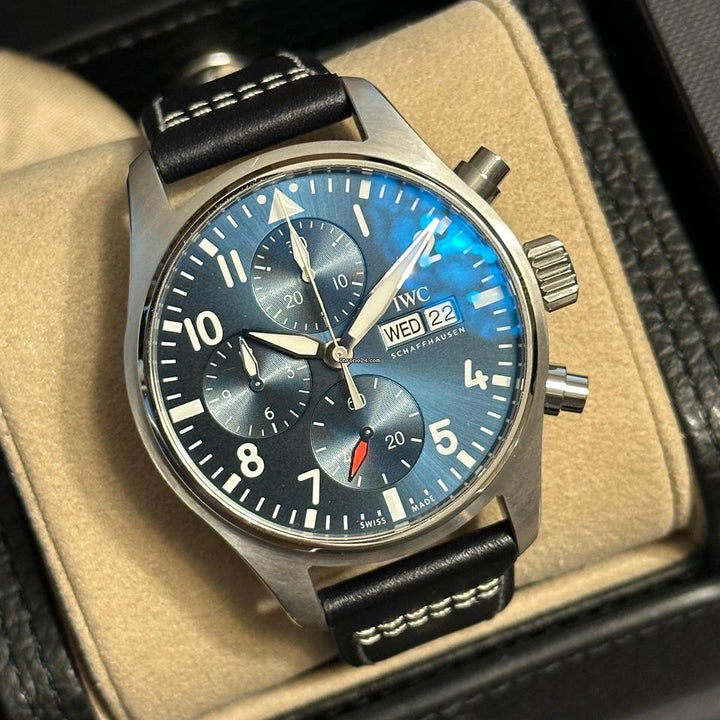
 Sport chronograph pathIWC Pilot’s Watch Chronograph 41 Blue Dial IW388101 UNWORN 2026Use the guide to compare this Pilot’s Watch format with Mark, Big Pilot, TOP GUN and Portugieser alternatives.
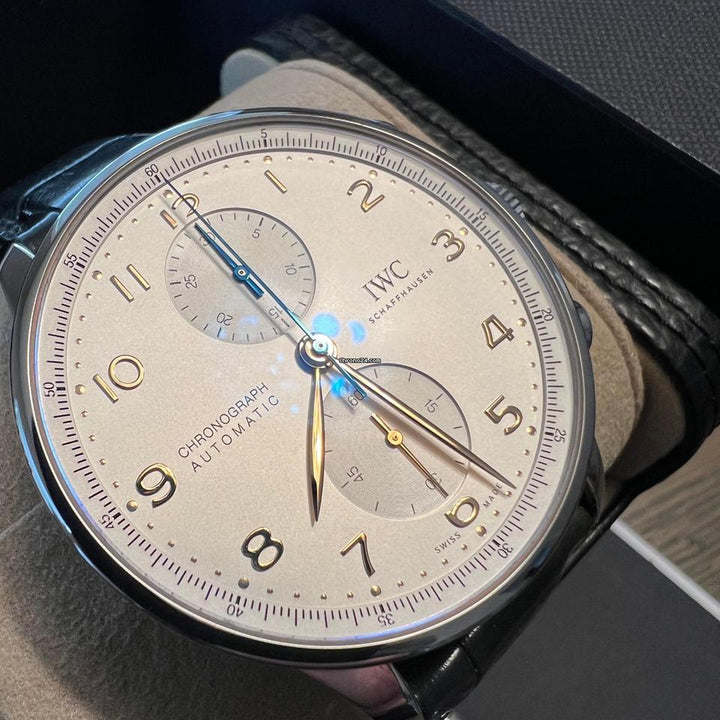
 Dress chronograph pathIWC Portugieser Chronograph White Dial IW371604 UNWORN 2026Compare the open dial, vertical registers and dressier proportions with IWC’s aviation-led chronographs.
The IWC collection map
Begin with the job the watch needs to perform, then move from family to exact reference. IWC’s collections overlap in movement technology, but their case geometry, dial architecture and ownership character can be very different.
This page owns the complete IWC collection decision
It compares Pilot’s Watches, Portugieser, Ingenieur, Portofino, Aquatimer and historical Da Vinci references by collection role, size, movement, material, complication, condition and buyer fit. Narrower IWC comparison pages answer one decision and link back here.
Prepared by the Superlative Watch Co. Buying Desk under the published Editorial Standards. Manufacturer facts and Buying Desk observations are identified separately.
Exact IWC questions specialized buyers ask
IWC buyers frequently search by generation, full IW reference, calibre, bracelet system or case construction rather than by brand alone. This map gives each question a direct answer and routes deeper comparisons to the section or child guide that owns the decision.
| Buyer question | Direct answer | Best next research path |
|---|---|---|
| What does an IWC reference number mean? | The complete IW reference identifies the exact model configuration; collection names and four-digit series shorthand are not precise enough for pricing or specifications. | Read the reference-number explanation |
| IWC Mark XX vs. Mark XVIII | Mark XX is the current utility-led generation with calibre 32111, a 120-hour published reserve and 10-bar case; Mark XVIII is an earlier generation that must be compared by exact reference and condition. | Compare the generations |
| Mark XX vs. Pilot’s Watch Chronograph 41 | Choose Mark XX for simpler ownership and longer reserve; choose Chronograph 41 for elapsed-time function, greater visual density and higher service exposure. | Review the Pilot’s Watch family |
| Big Pilot 43 vs. Big Pilot 46 | Choose 43 for a more wearable current Big Pilot format; choose 46 for the larger traditional seven-day ownership experience. | Read the Big Pilot comparison |
| Pilot’s Watch Chronograph vs. Portugieser Chronograph | Choose the Pilot for sportier construction and aviation identity; choose the Portugieser for an open, dressier vertical-register presentation. | Open the dedicated comparison |
| Portugieser Chronograph vs. Automatic 40 | Choose the Chronograph for function and the iconic two-register layout; choose Automatic 40 for a cleaner dial, longer reserve and lower complication burden. | Compare the two Portugieser paths |
| IWC calibre 69385 vs. 69355 | Both belong to the 69000 chronograph family, but they support different displays and functions in the Pilot’s Watch and Portugieser applications. | Compare the calibres |
| Ingenieur 35 vs. Ingenieur 40 | Choose 35 for compact integrated-bracelet proportions; choose 40 for the central modern format, longer reserve and broader sports-watch presence. | Review current Ingenieur sizes |
| IWC ceramic vs. Ceratanium vs. steel | Ceramic prioritizes surface hardness and color, Ceratanium combines low weight with IWC-specific dark material engineering, and steel offers familiar wear and refinishing behavior. | Open the material comparison |
| Does every IWC have anti-magnetic protection? | No. Soft-iron inner-case protection is reference-specific and should not be inferred from the collection name or an aviation-style dial. | Understand magnetic protection |
| Does every IWC use EasX-CHANGE? | No. Tool-free quick-change hardware appears on selected references and configurations; straps, bracelets, clasps and attachment parts remain reference-specific. | Review strap and bracelet compatibility |
| Do all IWC watches use manufacture movements? | No. Current and historical IWC references use several manufacture and partner-based architectures. The full calibre matters more than a generic “in-house” label. | Review IWC movement families |
How to read an IWC reference number
A complete modern IWC reference is commonly written as IW followed by six digits, such as IW388101, IW371604 or IW328203. The first four digits after IW are often used as convenient series shorthand—IW3881, IW3716 or IW3282—but the final digits identify the exact dial, case, strap or bracelet configuration.
For buying, sourcing, valuation and specification research, use the complete reference. A listing that says only “IWC Pilot’s Chronograph 41” or “Portugieser 3716” can still leave the dial, case material, bracelet, edition and supplied hardware unresolved. Calibre number and serial context are separate identifiers and should not be substituted for the reference.
IWC Mark XX vs. Mark XVIII
Choose Mark XX when current-generation utility is the priority. The modern Mark XX path uses a 40 mm steel case, calibre 32111, a published 120-hour reserve and a 10-bar rating, with EasX-CHANGE compatibility on selected strap or bracelet configurations.
Choose Mark XVIII when the earlier dial execution, production period, secondary-market price or a specific discontinued reference is the attraction. Mark XVIII is not one universal specification: movement version, dial, strap or bracelet and water-resistance details must be confirmed from the full IW reference. Condition and service history may matter more than the generational label.
Portugieser Chronograph vs. Portugieser Automatic 40
Choose the Portugieser Chronograph for elapsed-time function, the recognizable vertical two-register layout and a dress-sport watch with greater mechanical interaction. Current 3716 references commonly use calibre 69355 with an approximately 46-hour reserve.
Choose the Portugieser Automatic 40 for a cleaner time-and-small-seconds dial, calibre 82200 and an approximately 60-hour reserve. It has lower complication burden, but the broad dial still wears visually large and its water-use expectations should be treated as dress-watch rather than sports-watch assumptions.
IWC calibre 69385 vs. 69355
Both are IWC 69000-family column-wheel chronograph calibres with approximately 46 hours of published reserve in representative current applications. Calibre 69385 commonly supports the three-register, day-and-date Pilot’s Watch Chronograph 41 format. Calibre 69355 supports the cleaner two-register Portugieser Chronograph layout.
The difference is not a simple quality ranking. The calibre, dial architecture, case thickness, water resistance, strap or bracelet and intended use must be evaluated together. A buyer choosing between IW388101 and IW371604 is choosing between two complete watches, not merely two movement suffixes.
IWC anti-magnetic protection and soft-iron inner cases
IWC’s technical history includes soft-iron inner-case construction that helps shield a movement by redirecting magnetic fields. Current Ingenieur 35 and 40 references are important examples, but anti-magnetic construction is not universal across every Ingenieur, Pilot’s Watch or IWC generation.
A transparent display back, movement architecture and case design can change the protection strategy. Confirm the exact reference rather than assuming that an engineering name, aviation dial or screw-down crown proves a specific magnetic-resistance rating.
IWC EasX-CHANGE, bracelet vs. strap and completeness
EasX-CHANGE provides tool-free removal on selected current IWC straps and bracelets, but it is not a universal brand-wide interface. Case generation, end-link geometry, strap width, clasp and release hardware must all match the exact reference.
When a watch is available on a factory bracelet, buying the complete bracelet configuration can preserve flexibility because adding the correct bracelet later may be costly. For strap-led watches, verify the original buckle or deployant, correct length and any proprietary quick-change components. A strap that physically fits is not automatically reference-correct.
Which IWC should you buy?
| Primary goal | Best starting point | Why it fits | Critical verification |
|---|---|---|---|
| One versatile everyday IWC | Mark XX | Clean three-hand aviation design, practical date, modern automatic movement and more manageable proportions than the Big Pilot. | Exact IW3282 reference, bracelet or strap, included accessories, water resistance and case condition. |
| Everyday sport chronograph | Pilot’s Watch Chronograph 41 | Modern 41 mm format, strong dial legibility, manufacture 69000-family chronograph and broad strap/bracelet choices. | Calibre, pusher action, chronograph reset, bracelet sizing, quick-change hardware and service history. |
| Iconic oversized aviation watch | Big Pilot 43 or 46 | Oversized conical crown, cockpit-instrument dial and substantial case presence; 43 and 46 mm versions serve different wrists and preferences. | Lug coverage, crown comfort, thickness, reference-specific power reserve, water resistance and complete link/strap set. |
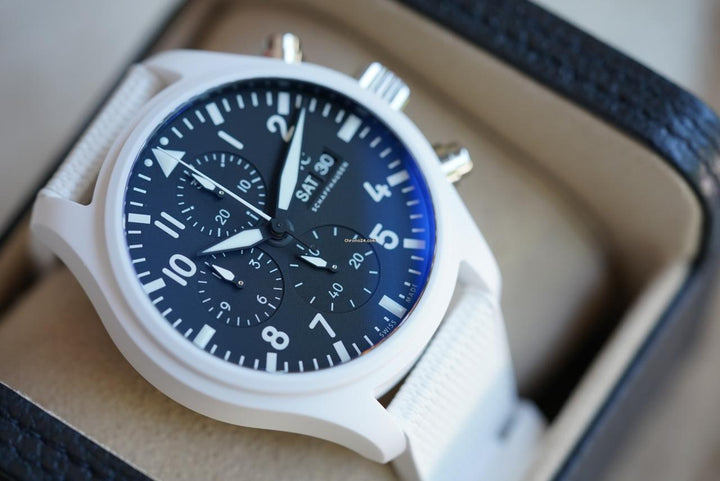
| Technical-material Pilot’s Watch | TOP GUN | Black or colored ceramic, Ceratanium and aviation-inspired execution create a distinctive modern IWC identity. | Impact damage, chips, crown/pusher material, case-back condition, correct strap and replacement history. |
| Dressier chronograph | Portugieser Chronograph | Open dial, vertical subdials and a thinner-looking bezel produce a more formal visual result than a Pilot’s Watch chronograph. | Exact 3716 reference, case finish, dial and hand correctness, calibre 69355 operation, strap/bracelet completeness and water exposure. |
| Simple open-dial dress watch | Portugieser Automatic 40 | Time-and-small-seconds layout with classical proportions and modern manufacture movement architecture. | Exact reference, 40 mm fit, strap/clasp, movement service and the relatively modest water-resistance rating. |
| Integrated-bracelet luxury sports watch | Ingenieur Automatic 40 | Genta-derived design, integrated H-link bracelet, current manufacture calibre, soft-iron protection and 10-bar case. | Bracelet links, screw and bezel condition, case refinishing, clasp operation and grid-dial condition. |
| Smaller integrated IWC | Ingenieur Automatic 35 | Compact current interpretation with integrated bracelet and anti-magnetic inner-case architecture. | 35 mm visual scale, bracelet taper, exact calibre and whether the smaller dial/case relationship suits the buyer. |
| Quiet formal or business watch | Portofino Automatic | Restrained round case and less aggressive design than the Pilot’s, Ingenieur or Aquatimer families. | Diameter, movement generation, strap wear, clasp, case polishing and service documentation. |
| Calendar complication without a sport-watch case | Portofino Complete Calendar or Portugieser calendar | Calendar displays in a classical case, with different levels of complexity and ownership cost. | Every display, corrector, safe-setting instructions, service history and whether all indications advance correctly. |
| IWC dive watch | Aquatimer | Dedicated timing-bezel architecture and purpose-built water-use identity. | Exact reference depth rating, pressure test, bezel operation, crown/seals, quick-change system and recent service. |
| Discontinued complication or unusual design | Da Vinci | Historically important IWC complication family with distinctive generations and potentially strong secondary-market value. | Case generation, movement, calendar/chronograph operation, originality, service cost and parts availability. |
IWC Pilot’s Watches: Mark XX, Chronograph, Big Pilot, TOP GUN and more
Pilot’s Watches are the broadest IWC family. A buyer must separate the simple Mark line from chronographs, oversized Big Pilot references, technical-material TOP GUN models and specialized complications.
Mark XX: the most direct everyday Pilot’s Watch
The current Mark XX continues the Mark-series idea of a highly legible, time-and-date aviation watch without the scale or complexity of a Big Pilot or chronograph. IWC’s current Mark XX generation uses a 40 mm steel case, calibre 32111 and a published 120-hour power reserve. Current references are water-resistant to 10 bar, and selected strap or bracelet configurations use the EasX-CHANGE system.
The Mark XX is usually the strongest first-IWC answer for a buyer who wants an uncomplicated watch that can move between casual, travel and business use. Its main purchase risks are not complication-related; they are fit, case refinishing, bracelet completeness, strap/clasp condition and whether the buyer actually prefers the clean aviation dial over the more expressive Portugieser or Ingenieur.
Pilot’s Watch Chronograph 41: the modern sport-chronograph center
The Pilot’s Watch Chronograph 41 is the natural step up when a buyer wants the Mark design language with a mechanical chronograph. Current references use IWC-manufactured 69000-family movements such as calibre 69385, with a column-wheel chronograph architecture and approximately 46 hours of power reserve. The 41 mm case is more wearable than many older or larger Pilot’s chronographs, but thickness and pusher/crown projection remain important.
Reference and configuration matter. Steel bracelet, calfskin, rubber and textile options can change the watch’s visual weight and comfort. Before buying, test start, stop and reset several times; inspect the central seconds hand for clean zero alignment; check day/date alignment where present; and confirm every supplied strap, buckle and bracelet link.
Big Pilot 43 versus Big Pilot 46
The Big Pilot is defined by deliberate scale, an oversized conical crown and a cockpit-instrument dial. Current IWC materials distinguish 43 and 46 mm paths rather than treating “Big Pilot” as one size. The 43 mm time-only generation uses calibre 82100 with 60 hours of power reserve and a 10-bar case; the larger 46 mm Big Pilot Automatic family uses 52000-family movement architecture with a seven-day, 168-hour reserve in the principal automatic format.
Choose Big Pilot 43 when…
You want the Big Pilot crown and dial identity in a more wearable current case, with a transparent back, shorter power reserve than the classic seven-day format and stronger everyday versatility.
Choose Big Pilot 46 when…
You want the historic modern Big Pilot experience: larger dimensions, seven-day power reserve, power-reserve display and maximum wrist presence. The crown and lugs should be evaluated in person or from precise wrist measurements.
TOP GUN: ceramic and Ceratanium are ownership decisions, not colors
TOP GUN is not merely a black-dial subcollection. It includes black and colored zirconium-oxide ceramic cases, titanium components, Ceratanium executions and multiple case sizes and complications. High-tech ceramic is highly resistant to ordinary surface scratching, while Ceratanium combines a titanium-based substrate with a dark ceramic-like surface. Neither material eliminates condition risk.
Inspect every hard edge, lug, crown, pusher, bezel and case-back junction under strong light. Ask whether any case component was replaced. A ceramic case that looks cosmetically fresh may still have suffered impact; a steel case that shows scratches may remain structurally sound but have been heavily refinished. The correct choice depends on how the owner wears watches, not on which material sounds more advanced.
Continue with the dedicated IWC TOP GUN vs. steel Pilot’s Watch comparison.
Spitfire, Performance Chronograph, Timezoner and high complications
Military-inspired colors, bronze or steel cases in selected references and a more historically inflected alternative to standard Pilot’s Watches. Patina and case material require reference-specific inspection.
Tachymeter bezels, technical cases and motorsport partnerships create a more aggressive sports-chronograph format than the standard Pilot’s Chronograph 41.
Bezel-controlled time-zone adjustment is genuinely useful but mechanically specialized. Test the full setting sequence and consider service exposure before purchase.
IWC combines its aviation design language with Kurt Klaus-derived crown-controlled perpetual calendars in selected Big Pilot references. Correct setting and service documentation are essential.
Big Pilot tourbillon references combine large aviation cases with high complications. Buy only after confirming movement condition, service history and the economics of future maintenance.
Partnership editions may add titanium, colors, engravings and limited-production context. Verify exact production status and full original accessories rather than relying on the edition name.
IWC Portugieser: Automatic, Chronograph, calendars and high complications
The Portugieser combines dress-watch refinement with instrument-watch clarity. Its expansive dial and narrow-looking bezel can make a 40 or 41 mm reference appear larger than the same diameter in a sportier case.
Portugieser Automatic 40
The Automatic 40 is the clearest entry into the family. Current references such as IW3583 use IWC’s 82200 manufacture calibre with a 60-hour power reserve. The small seconds at 6 o’clock and open dial preserve the collection’s identity without adding chronograph or calendar complexity.
This is an excellent choice for a buyer who likes the appearance of a large classical watch but does not want the thickness or service exposure of a high complication. Its dressier case and lower water-resistance rating than many Pilot’s or Ingenieur references mean the buyer should treat it differently around water and physical activity.
Portugieser Chronograph
The modern 3716 generation is one of IWC’s most recognizable designs. IWC uses calibre 69355, a column-wheel chronograph movement with approximately 46 hours of power reserve, displayed through a transparent case back. The vertical arrangement places chronograph minutes at 12 o’clock and small seconds at 6 o’clock, while the inner flange carries a quarter-second scale.
Steel references are available on leather, rubber or bracelet depending on model and production period. The bracelet can make the watch feel more contemporary and substantial; leather preserves the classical appearance. Because the case is visually open and polished, scratches and refinishing are conspicuous. Check pusher feel, hand reset, dial alignment and strap/clasp originality.
Portugieser Automatic, calendar and complication hierarchy
| Portugieser path | What it adds | Why a buyer chooses it | Main ownership caution |
|---|---|---|---|
| Automatic 40 | Time and small seconds | Cleanest current entry and lower complication burden. | Open dial wears visually large; confirm water-resistance expectations. |
| Chronograph 41 | Column-wheel chronograph | Iconic vertical-register layout and dress-sport balance. | Chronograph service, polished-case condition and strap/bracelet completeness. |
| Automatic 42 / seven-day formats | Extended reserve, date and power-reserve display on selected generations | Traditional large Portugieser ownership and movement presence. | Larger case, movement service and generation-specific specifications. |
| Annual Calendar | Month, date and day with annual correction requirements | Readable calendar information with less complexity than a perpetual calendar. | Correct setting, calendar synchronization and future service cost. |
| Perpetual Calendar | Mechanically coordinated calendar that accounts for month length and leap years | IWC complication heritage and a highly informative dial. | Never force correctors or crown; verify every indication and obtain service history. |
| Tourbillon / flyback chronograph | High-complication movement architecture | Technical and collector-level IWC ownership. | High acquisition and service cost; condition and provenance are decisive. |
Choose Pilot’s Watch Chronograph when…
You want higher-contrast lume, a sportier case, stronger water-use versatility on many current references and a more casual overall identity.
Choose Portugieser Chronograph when…
You want a cleaner, dressier dial, vertical subdials and a chronograph that reads as classical rather than military or aviation-led.
The dedicated IWC Pilot’s Watch vs. Portugieser comparison goes deeper into case geometry, wrist fit, water resistance, movements and daily ownership.
IWC Ingenieur: current 35, 40 and 42 mm paths
The Ingenieur began as a technical anti-magnetic watch and is now most strongly associated with Gérald Genta’s Ingenieur SL design. Current references preserve that bracelet-led identity while using different movements, dimensions and materials.
Ingenieur Automatic 40
The current Ingenieur Automatic 40 is the central modern reference. In stainless steel, the 40 mm case, integrated H-link bracelet and five functional polygonal bezel screws create the visual identity. Current steel references use calibre 32111 with a published 120-hour power reserve. A soft-iron inner case protects the movement from magnetic fields, and the screwed crown and 10-bar water-resistant case support everyday sports-watch use.
Condition must be evaluated differently from a conventional watch on leather. The case, bezel and bracelet form one continuous design. Heavy polishing can flatten transitions, round the bezel or alter the relationship between polished and satin-finished surfaces. Missing links, damaged screws or a poorly refinished clasp can materially affect both fit and value.
Ingenieur Automatic 35
The 35 mm Ingenieur answers a genuine fit gap rather than functioning only as a scaled-down marketing variant. Current references retain the integrated bracelet, grid-pattern dial, soft-iron inner case and 10-bar case construction. They use calibre 47110 with a published 42-hour power reserve.
Buyers should not assign a gender to the size automatically. On smaller wrists, 35 mm can preserve the intended integrated-bracelet proportions more effectively than a larger case. On larger wrists, the broad bracelet and bezel can still create more presence than the diameter suggests.
Ingenieur Automatic 42 in ceramic
Current ceramic Ingenieur 42 references move the collection into technical-material territory. IWC lists a 42 mm case, approximately 11.6 mm height, calibre 82110 and 60 hours of power reserve for current ceramic executions. The integrated ceramic construction offers a very different tactile and visual experience from the steel 40.
Do not compare the ceramic 42 only by list price or diameter. Inspect every edge and bracelet component for impact damage, verify the exact movement and clasp architecture, and understand that refinishing or component replacement differs from steel.
| Ingenieur decision | Automatic 35 | Automatic 40 | Automatic 42 ceramic |
|---|---|---|---|
| Primary appeal | Compact integrated-bracelet proportions | Core modern Genta-derived sports-watch path | Technical ceramic and larger visual presence |
| Current movement path | Calibre 47110 | Calibre 32111 | Calibre 82110 |
| Published reserve | Approximately 42 hours | Approximately 120 hours | Approximately 60 hours |
| Magnetic protection | Soft-iron inner case | Soft-iron inner case | Confirm exact current reference specification |
| Best for | Smaller wrists or restrained scale | Broadest integrated-sports versatility | Collectors prioritizing material engineering |
| Main risk | Buying by diameter without seeing bracelet scale | Case/bracelet refinishing and missing links | Impact damage and component replacement cost |
Historical Ingenieur generations
Earlier Ingenieur watches should not be valued as simplified versions of the current model. The family includes vintage anti-magnetic references, Genta’s Ingenieur SL, later integrated designs, Ingenieur AMG models, oversized generations and watches using very different movement architecture. Verify reference, production era, dimensions, movement, bracelet and magnetic-protection construction before applying current-model assumptions.
IWC Portofino: simple automatics, chronographs and calendars
Portofino is the quietest major IWC family. Its simple round case, projecting lugs and restrained dial make it useful for buyers who appreciate IWC engineering but do not want the visual assertiveness of a Pilot’s Watch, Ingenieur or Aquatimer.
Portofino Automatic
Automatic Portofino references exist in multiple diameters and movement generations. Current and recent examples commonly occupy the 34-to-40 mm range, but exact dimensions, movement, date layout and strap system vary. The strongest purchase is usually the reference whose lug length and dial scale suit the wrist—not simply the largest or newest model.
Because many Portofino watches use polished cases and leather straps, condition is immediately visible. Inspect lug edges, case-back marks, strap attachment, buckle or deployant clasp, crown operation and dial/hands. A clean simple Portofino can be excellent value; an aggressively polished example can lose the crispness that makes the design work.
Portofino Chronograph
Portofino Chronographs exist in different sizes and movement architectures, including current and recent 39 and 42 mm formats. The 39 mm versions can be especially attractive to buyers who want a classical chronograph without the scale of a Pilot’s Watch. The 42 mm references offer more dial area and presence.
Do not assume every Portofino Chronograph uses the same calibre or service profile. Confirm the exact reference, test the chronograph completely, inspect subdial alignment and ask whether the watch has been serviced or water-damaged.
Portofino Complete Calendar and calendar complications
The Portofino Complete Calendar 41 is IWC’s first watch with its complete-calendar module. The current 3590 generation displays weekday and moon phase at 12 o’clock and date and month at 6 o’clock. IWC uses calibre 32150 with a published 72-hour power reserve; current cases are 41 mm and approximately 11.75 mm high.
A complete calendar is not a perpetual calendar. The owner must correct it in months with fewer than 31 days. Before purchase, verify that every display advances and adjusts correctly. Obtain the operating instructions and never experiment with the calendar near an unsafe setting period.
Best for restrained design, lower complication burden and formal versatility.
Best for buyers wanting a traditional round chronograph with less aviation identity.
Best for buyers who value date, month, weekday and moon phase but understand manual correction.
IWC Aquatimer: timing systems, depth ratings and water-use checks
IWC introduced its first Aquatimer in 1967. Across later generations, the family has used internal rotating bezels, external bezels and combined external/internal systems. The current or historical Aquatimer name alone does not establish the water-resistance rating or bezel architecture.
The SafeDive principle
On references using IWC’s SafeDive system, the external bezel drives an internal dive-time ring and can adjust it only in the counterclockwise safety direction. That architecture combines the legibility of an internal scale with the usability of an external bezel. Other Aquatimer generations use different systems, so operation must be confirmed for the exact reference.
What to test before buying an Aquatimer
| Inspection area | What to test | Why it matters |
|---|---|---|
| Exact reference | Confirm case material, depth rating, movement and bezel generation. | Aquatimer specifications vary dramatically, including standard divers and extreme deep-sea references. |
| Bezel system | Rotate through the full range; verify direction, alignment, feel and internal-ring response where applicable. | The timing system is a defining safety and usability function. |
| Crown and seals | Check threading, crown tube, gasket/service history and signs of corrosion. | Published water resistance assumes a correctly maintained case. |
| Pressure test | Obtain a current test before swimming or diving. | Age, impact and service history can change water resistance. |
| Quick-change system | Test strap removal and locking; inspect supplied straps and adapters. | Missing proprietary components can make replacement difficult. |
| Lume and dial | Check hands, markers, timing scale and moisture damage. | Legibility and originality affect both function and value. |
Do not treat a historical 2,000-metre Aquatimer as automatically better than a more wearable standard reference. Extreme depth rating can add thickness, weight and specialized service needs. Choose the rating and case architecture that match actual use.
IWC Da Vinci: buy the exact generation, not the family name
Da Vinci has included round watches, tonneau-shaped cases, chronographs, perpetual calendars and other complications. It is historically important because Kurt Klaus’s crown-controlled perpetual calendar debuted in the Da Vinci Perpetual Calendar Chronograph in the 1980s.
Because the family changed so much, there is no single Da Vinci fit or movement profile. One reference may be a compact dress watch; another may be a large tonneau chronograph; another may carry a mechanically sophisticated perpetual calendar. Research the complete reference, calibre, case geometry, dial, bracelet or strap and production era.
Da Vinci can offer unusually strong watchmaking for the secondary-market price, but lower asking prices can reflect narrower demand, expensive service or scarce exterior components. A complicated Da Vinci should be purchased only after every indication has been tested and the probable service cost is understood.
IWC movement families: what the calibre number tells you
IWC uses several manufacture-calibre families, and historical references may use IWC-modified or externally based architectures. “In-house” should never be assumed from the dial, collection name or production year alone.
| Movement family | Typical role | Published reserve examples | Buyer implications |
|---|---|---|---|
| 32000 family | Compact and versatile automatic movements used across Mark XX, Ingenieur and selected Portofino references. | Approximately 72 to 120 hours depending on exact calibre; calibre 32111 provides 120 hours in current Mark XX and Ingenieur 40 references. | Confirm exact calibre. Similar-looking watches can have materially different reserves and movement generations. |
| 69000 family | Robust column-wheel chronographs used in Pilot’s Watch and Portugieser chronographs. | Approximately 46 hours in current 69385 and 69355 applications. | Test start, stop and reset. Display layout and case construction differ even where movement-family architecture overlaps. |
| 82000 family | Automatic movements using Pellaton winding, including selected Big Pilot, Portugieser, Ingenieur and complication references. | Approximately 60 or 80 hours depending on calibre and application. | Ceramic winding components and transparent or soft-iron case arrangements vary by reference. |
| 52000 family | Large automatic movements for Big Pilot and larger Portugieser formats. | Seven days / 168 hours in the principal Big Pilot Automatic architecture. | Large movement usually means a larger case. Verify service history and reserve performance over several days. |
| 89000 family | Flyback chronographs and high complications with combined hours/minutes totalizers. | Approximately 68 hours in selected current applications. | More complex chronograph architecture increases the importance of complete functional testing and documented service. |
| Historical / partner-based calibres | Many earlier IWC references, including respected Pilot, Portugieser, Portofino and chronograph models. | Varies by base movement and IWC modification. | Do not dismiss a watch because its architecture is not current manufacture. Judge execution, serviceability, reference importance, condition and price. |
Pellaton winding versus pawl winding
IWC’s Pellaton automatic winding system is central to the brand’s technical identity and appears in several larger manufacture movements. Other current IWC calibres use efficient bidirectional pawl-winding systems. Both can be appropriate; the practical question is which exact calibre is inside the watch, how it performs and whether it has been serviced correctly.
How to test a movement before purchase
- Timekeeping: obtain a recent timing result in multiple positions when possible, but do not treat one timegrapher snapshot as a complete diagnosis.
- Power reserve: fully wind the watch and confirm that reserve is reasonably consistent with the calibre’s specification and condition.
- Winding and crown: feel for roughness, slipping, cross-threading or an unusually stiff setting sequence.
- Date and day: check alignment, quick-set operation and midnight change behavior.
- Chronograph: run the mechanism long enough to observe minute and hour advancement, then stop and reset several times.
- Calendar: test every display through the correct safe procedure. Never advance a complicated calendar casually without instructions.
- Rotor and case: listen for abnormal scraping or excessive noise, while recognizing that movement sounds differ by calibre and case.
IWC complications: buy the function you will understand and maintain
IWC has a long reputation for chronographs and calendar complications engineered for relatively intuitive use. Simplicity at the dial does not remove mechanical complexity underneath.
Available across Pilot’s Watches, Portugieser, Portofino, Aquatimer and historical Da Vinci. Compare standard versus flyback architecture, register layout and service history.
Kurt Klaus’s crown-controlled system is a major IWC signature. It coordinates date, day, month, moon phase and leap year in selected references, but must be set correctly.
Accounts for different month lengths except February. It offers substantial information with less complexity than a perpetual calendar.
Shows multiple calendar indications but generally requires correction in months with fewer than 31 days. Do not describe it as perpetual.
Timezoner references adjust local time through the bezel; other IWC watches use conventional GMT displays. Setting logic and service needs differ.
Collector-level complications can be compelling at secondary-market prices, but future service economics must be part of the purchase decision.
Kurt Klaus perpetual calendars
IWC’s modern perpetual-calendar identity is closely connected to Kurt Klaus, whose mechanically programmed calendar debuted in the Da Vinci Perpetual Calendar Chronograph. In many IWC applications, the calendar indications are coordinated through the crown. That user-friendly concept does not make incorrect setting harmless. If the calendar is advanced too far, the watch may require a watchmaker rather than a simple backward adjustment.
Chronograph buying rules
| Test | Acceptable behavior to look for | Warning sign |
|---|---|---|
| Start | Defined pusher action and immediate hand movement. | Excessive force, hesitation or hand jump beyond normal mechanical behavior. |
| Run | Stable central seconds and correct advancement of minute/hour counters. | Stopping, slipping, inconsistent counter advancement or significant timekeeping disruption. |
| Stop | Clean stop with a consistent pusher feel. | Intermittent engagement or an unusually vague pusher. |
| Reset | Hands return cleanly to zero. | Misaligned hands, partial reset or repeatable bounce away from zero. |
| Case controls | Pushers, crown and seals show no corrosion or impact damage. | Moisture evidence, damaged threads or mismatched replacement components. |
IWC case materials: steel, titanium, ceramic, Ceratanium, bronze and gold
IWC has been an early and visible user of titanium and ceramic in modern watchmaking. Material choice changes weight, scratch behavior, impact risk, refinishing options and replacement cost.
| Material | Ownership character | Condition and service issue | Best fit |
|---|---|---|---|
| Stainless steel | Traditional weight, visible brushed and polished finishing, widest bracelet availability. | Scratches readily; repeated polishing can soften edges, lug geometry and bezel definition. | Daily wearers who want conventional metal and easier cosmetic evaluation. |
| Titanium | Lower density, muted grey appearance and strong comfort in larger cases. | Surface marks differ from steel; refinishing must preserve the original texture and geometry. | Big Pilot, Performance or technical-watch buyers sensitive to weight. |
| Black ceramic | Deep color and high resistance to ordinary surface scratching. | Inspect for chips, cracks, impact marks and damage at crown, pusher or case-back interfaces. | TOP GUN buyers wanting a stealth, modern case. |
| Colored ceramic | Integrated case color such as white, green, blue or sand-toned executions in selected references. | Color matching makes reference-correct replacement components important; photograph and inspect all edges. | Collectors who want a distinctive IWC material identity beyond coating or paint. |
| Ceratanium | Titanium-based, lightweight construction with a hard dark ceramic-like surface created through IWC’s material process. | Not simply black-coated titanium. Verify that case, crown, pushers, clasp and other components are correct to the reference. | Buyers who want technical black material with lower weight. |
| Bronze | Warm tool-watch metal that develops a reference- and environment-dependent patina. | Distinguish natural patina from corrosion or chemical alteration. Original finish cannot be judged like steel. | Spitfire and heritage buyers who welcome visible aging. |
| 18-carat gold / Armor Gold | Greater weight, warmth and formal presence; Armor Gold is used on selected references with enhanced material properties. | Dents, polishing and clasp wear can materially affect value. Verify exact alloy and reference. | Portugieser, Portofino and high-complication buyers prioritizing precious metal. |
Ceramic is scratch-resistant, not damage-proof
Ceramic’s surface hardness helps it resist the hairline scratches that quickly appear on polished steel. The trade-off is that severe point impact behaves differently from a ductile metal. A buyer should not assume that a clean-looking case has never been struck. Examine lug tips, bezel edges, pusher openings, crown guards and case-back transitions under magnification.
Ceratanium is not a coating
IWC produces Ceratanium from a titanium alloy through a process that creates a ceramic-like surface. That distinction matters for identification and repair. Do not describe every black IWC metal component as Ceratanium, and do not assume a black PVD/DLC-coated part is equivalent.
Steel refinishing requires restraint
On a Pilot’s Watch, polishing can soften lugs and erase the contrast between brushed and polished surfaces. On an Ingenieur, it can change the entire integrated case/bracelet design. On a Portugieser or Portofino, polished flanks reveal waves and rounded edges quickly. Original honest wear is often preferable to aggressive cosmetic restoration.
IWC size and fit: why 40, 41, 43 and 46 mm do not tell the whole story
IWC is associated with large watches, but current and historical references span compact dress watches, 35 mm integrated models, versatile 40–41 mm watches and deliberate 43–46 mm statements. Fit is a geometry problem, not a gender label.
| Approximate size band | Typical IWC paths | How it may wear | What to measure |
|---|---|---|---|
| 34–37 mm | Smaller Portofino and Ingenieur 35 references | Compact case but potentially broad bracelet or long-lug presence. | Dial opening, first bracelet link, lug shape and clasp length. |
| 38–40 mm | Portofino 39/40, Portugieser Automatic 40, Mark XX 40 | Often the most broadly wearable IWC range, but large open dials can increase visual scale. | Lug-to-lug, thickness, crown, strap stiffness and dial-to-bezel ratio. |
| 41–42 mm | Pilot’s Chronograph 41, Portugieser Chronograph 41, Aquatimer and calendar references | Modern statement range; chronograph thickness can matter more than diameter. | Case height, pusher projection, bracelet end links and cuff clearance. |
| 43 mm | Big Pilot 43 and selected technical models | Large but intentionally more wearable than classic 46 mm Big Pilot formats. | Crown contact, lug overhang, case-back shape and strap curvature. |
| 44–46+ mm | Classic Big Pilot, larger TOP GUN, Performance and high complications | Deliberate oversized ownership; can be comfortable on the right wrist but should never be bought from diameter alone. | Full lug span, thickness, total weight, crown position and clasp/strap balance. |
Four measurements matter most
- Diameter: useful for basic scale, but it ignores case shape and dial opening.
- Lug-to-lug: the best first indicator of whether the case will overhang the wrist.
- Thickness: determines cuff clearance and top-heavy sensation, especially on chronographs and calendars.
- Bracelet or strap geometry: rigid end links, deployant length and thick new leather can change fit substantially.
Why Portugieser can look larger than Pilot’s Watch
A Portugieser’s narrow-looking bezel and expansive dial produce more visual surface. A 40 mm Portugieser may therefore look larger from above than a sportier 40 mm watch with a broader bezel. Conversely, a thick Pilot’s chronograph may feel larger in profile even when its dial looks more compact.
Why the Big Pilot crown matters
The oversized conical crown is part of the Big Pilot’s identity. On a wrist where the case shifts toward the hand, the crown can press into the wrist. Correct strap sizing and case centering matter. A buyer who loves the design but dislikes crown contact should compare Big Pilot 43, Mark XX and Pilot’s Watch Chronograph 41 rather than forcing the 46 mm format.
IWC straps, bracelets, clasps and quick-change systems
The same IWC reference can feel materially different on leather, textile, rubber or bracelet. Complete hardware matters because proprietary straps, end links and clasps can be costly to replace.
Supports Portugieser and Portofino elegance and can soften a large Pilot’s Watch visually. Inspect cracking, sweat damage, lining and buckle/deployant correctness.
Useful for Pilot, Performance and Aquatimer references. Confirm the correct length, attachment system, clasp and any textile inlay condition.
Creates a technical or military feel on Pilot’s Watches. Check fraying, backing separation, odor and original hardware.
Adds weight and a planted feel. Verify full links, screws, adjustment mechanism, end links and polished/brushed finish.
Not an accessory afterthought: it is part of the case design. Missing links or altered finishing can have a disproportionate value impact.
Allows tool-free changes on selected references. Test both release and positive locking; do not assume every strap fits every case.
Bracelet-versus-strap buying rule
When a reference is offered on both bracelet and strap, buying the bracelet version can preserve flexibility because adding the correct factory bracelet later may be expensive. A strap is easier to replace, but the correct IWC buckle or deployant and reference-specific quick-change hardware still have value.
IWC condition, service and authentication checklist
A strong reference can still be a weak purchase if the individual watch has been over-polished, incorrectly serviced, exposed to moisture or stripped of expensive accessories. Evaluate the watch as a complete system.
| Area | What to verify | Why it matters |
|---|---|---|
| Reference and serial context | Full reference, case material, dial, movement, production period and card/invoice consistency. | Collection name alone cannot confirm the correct configuration. |
| Case geometry | Lug edges, bezel, crown guards, polished/brushed transitions and signs of heavy refinishing. | Over-polishing permanently changes design and collector value. |
| Ceramic or Ceratanium case | Chips, cracks, impact points, component matching and replacement history. | Hard surfaces can remain scratch-free while other impact damage exists. |
| Dial and hands | Correct color, printing, lume, date/day alignment, moisture marks and service replacements. | Dial originality can matter more than superficial case scratches. |
| Crystal and coatings | Scratches, chips and antireflective-coating wear. | External coating marks can resemble crystal scratches and affect appearance. |
| Crown and pushers | Threading, winding, setting, sealing surfaces and chronograph feel. | Damage can signal impact, moisture risk or expensive repair. |
| Movement | Timing, amplitude context, reserve, setting, calendar and complication operation. | A watch that “runs” can still have a costly movement problem. |
| Bracelet and clasp | All links, screw condition, stretch, end links, clasp adjustment and finish. | Missing proprietary components affect fit, originality and replacement cost. |
| Straps and buckles | Factory strap, buckle/deployant, length and quick-change hardware. | Original hardware supports both use and resale. |
| Water resistance | Current pressure test for any intended water use. | Published ratings do not survive indefinitely without maintained seals. |
| Service documents | Date, provider, work performed and parts replaced. | Service quality and component replacement can change both value and future risk. |
Polishing: honest wear versus erased geometry
Light professional refinishing can improve a watch, but repeated or aggressive polishing can distort an IWC case. Look for asymmetric lugs, rounded bevels, washed-out brushing, wavy polished flanks and softened engravings. On Ingenieur, integrated bracelet finishing must align with the case; on Portugieser, broad polished flanks reveal distortion; on Pilot’s Watches, lug shape is central to fit.
Service parts and originality
A replacement crystal, crown, hands or dial may be appropriate for function, but it should be disclosed. Collectors may prefer original components even when they show age. Buyers prioritizing daily wear may prefer factory service and renewed water resistance. The correct answer depends on the reference and ownership goal.
Authentication is layered
No single photograph, serial number or movement claim authenticates an IWC. Review seller identity, provenance, reference configuration, movement, case, dial, hands, crown, pushers, bracelet or strap, clasp, card, box and transaction terms together. See our authentication and verification process for the transaction-level framework.
Box, papers, service history and original accessories
Completeness matters differently across the IWC catalog. A current steel Mark XX can remain highly usable without every accessory; a limited TOP GUN, rare bracelet Ingenieur or high-complication Portugieser may lose substantially more context and value when items are missing.
- Warranty card or original sales document: supports reference, date and provenance but does not authenticate the watch by itself.
- Original box: helpful for completeness, especially on limited editions, but condition and storage exposure should be considered.
- Manuals and complication instructions: particularly important for perpetual calendars, annual calendars, Timezoner and other specialized mechanisms.
- Bracelet links: essential for proper fit and potentially expensive to replace.
- Alternate straps and buckles: can materially increase replacement value on quick-change models.
- Service paperwork: identifies work performed and may be more economically important than a pristine box on a complicated watch.
- Limited-edition materials: certificates, special packaging and accessories can matter to collector value.
Do IWC watches hold value?
There is no useful brand-wide percentage. Value retention varies by exact reference, initial retail positioning, transaction price, material, complication, production volume, condition, completeness and current demand.
References that tend to be easier to understand and resell
Current or recent Mark, Pilot’s Chronograph, Big Pilot, Portugieser Chronograph and Ingenieur references generally have clearer market identities than obscure discontinued models. That does not guarantee appreciation; it means buyers and dealers can compare like-for-like examples more easily.
Where secondary-market value can be compelling
IWC often offers substantial movement, complication and case engineering at secondary-market prices below original retail. This can create excellent ownership value in Portofino, Da Vinci, older Portugieser and complicated references. The discount is meaningful only when the watch’s condition and service exposure are priced correctly.
Where a low price can mislead
- Overdue chronograph or perpetual-calendar service
- Missing bracelet links, clasp or proprietary strap hardware
- Heavily polished integrated case and bracelet
- Damaged ceramic or Ceratanium components
- Moisture exposure on an Aquatimer or dress watch
- Incorrect dial, hands or mixed-generation components
- Narrow-demand limited editions bought solely because they were once expensive
What is the best first IWC?
The best first IWC depends on whether the buyer wants aviation, chronograph, dress, integrated-sports or technical-material identity. These are starting points, not rankings.
| Buyer profile | Recommended starting point | Why | Alternative |
|---|---|---|---|
| One versatile daily watch | Mark XX | Simple, legible, modern reserve and 10-bar current case. | Ingenieur Automatic 40 for integrated-bracelet style. |
| First mechanical chronograph | Pilot’s Watch Chronograph 41 | Strong sport identity and current manufacture chronograph architecture. | Portugieser Chronograph for dressier presentation. |
| Business and formal use | Portugieser Automatic 40 | Open dial and classical proportions without calendar complexity. | Portofino Automatic for a quieter round dress watch. |
| Integrated sports-watch buyer | Ingenieur Automatic 40 | Distinctive bracelet-led design, strong current technical specification and 10-bar versatility. | Ingenieur 35 for smaller scale. |
| Large-watch enthusiast | Big Pilot 43 | Captures the Big Pilot identity in the more wearable current size. | Big Pilot 46 for the full seven-day statement. |
| Technical-material collector | TOP GUN ceramic | Immediate IWC-specific modern identity and high scratch resistance. | Ceratanium for lower weight and a metal-based structure. |
| Dive-watch buyer | Aquatimer | IWC’s dedicated water-use family. | Pilot/Ingenieur if actual diving is not part of the use case. |
| Complication buyer | Portugieser calendar or chronograph | Strong IWC complication identity and clear dial architecture. | Da Vinci for a more specialist secondary-market route. |
When IWC may not be the right first watch
A buyer who wants the smallest possible case, the lowest future service exposure, the deepest secondary-market liquidity or a watch that disappears visually may prefer another brand or a very specific IWC reference. That is not a weakness; it is why reference-level selection matters.
Move from IWC research to an exact watch
Compare image-bearing current examples below, browse the full featured IWC collection, or send the Buying Desk the exact reference, material, dial, bracelet, condition and budget you want.
Representative IWC watches to compare
Compare current Mark XX, Pilot’s Chronograph, TOP GUN, Portugieser and Portofino examples after choosing the collection, size, movement, material and complication that fit your priorities.



Final IWC buying verdict
The strongest IWC purchase is the reference whose architecture matches the owner’s real use. Collection prestige, original retail price and complication count are secondary to fit, condition and the ability to maintain the watch properly.
| Choose this IWC | When your priority is… | Do not choose it merely because… |
|---|---|---|
| Mark XX | Daily legibility, current movement reserve, travel and understated aviation style. | It is the simplest Pilot’s Watch; simplicity should match the buyer’s taste. |
| Pilot’s Watch Chronograph 41 | A modern sport chronograph with strong IWC identity and broad strap/bracelet choices. | Chronographs appear more valuable; future service is part of ownership. |
| Big Pilot | Large crown, cockpit-dial presence and the emotional experience of an oversized IWC. | It is more iconic or expensive; poor fit will not improve after purchase. |
| TOP GUN | Technical case materials, matte color and a modern military-aviation aesthetic. | Ceramic never shows wear; impact and component condition still matter. |
| Portugieser | Open-dial elegance, classical chronographs and calendar complications. | It looks thinner or dressier in photographs; verify actual thickness and water-use limits. |
| Ingenieur | Integrated-bracelet design, Genta lineage and a current luxury-sports identity. | Every integrated sports watch holds value the same way; exact reference and price matter. |
| Portofino | Quiet formal design and access to IWC at a less aggressive visual scale. | It is the least expensive option; choose the dial, movement and size deliberately. |
| Aquatimer | Actual dive-watch architecture and IWC’s water-use history. | A high depth rating is automatically useful; pressure testing and wearability matter more. |
| Da Vinci | Discontinued design, complication value and specialist collecting. | Original retail was high; service and narrower demand can dominate the economics. |
Official IWC collection, movement and reference sources
Official IWC pages and press material support current family structure, exact-reference dimensions, movements, power reserves, water resistance, materials and complication architecture. Superlative Watch Co. separately adds fit, condition, service, market and transaction analysis from independent-dealer experience.
Editorial boundary: official sources establish manufacturer facts; our Buying Desk evaluates reference choice, wrist fit, individual condition, service exposure, secondary-market behavior and transaction risk.
IWC buyer questions
What is the best first IWC?
For the broadest everyday use, start with the Mark XX. Choose the Pilot’s Watch Chronograph 41 when a mechanical chronograph is essential, the Portugieser Automatic 40 for a dressier open dial, or the Ingenieur Automatic 40 for an integrated-bracelet sports watch.
Should I buy an IWC Mark XX or Pilot’s Watch Chronograph 41?
Choose the Mark XX for simpler time-and-date ownership, a longer published power reserve and lower chronograph service exposure. Choose the Pilot’s Watch Chronograph 41 for stronger wrist presence, elapsed-time functionality and the visual complexity of a mechanical chronograph.
Should I buy an IWC Pilot’s Watch or Portugieser?
Choose a Pilot’s Watch for higher-contrast aviation styling, sportier cases and broader casual use. Choose a Portugieser for an expansive dial, dressier proportions and stronger emphasis on classical chronographs and calendar complications. Compare the exact references because dimensions and water resistance vary.
What is the difference between the Big Pilot 43 and Big Pilot 46?
The Big Pilot 43 offers the oversized crown and cockpit-instrument design in a more wearable current case with calibre 82100 and approximately 60 hours of power reserve. The principal 46 mm Big Pilot Automatic path delivers the larger traditional format and a seven-day, 168-hour reserve. Exact references and complications vary.
Is IWC TOP GUN ceramic better than steel?
Neither is universally better. Ceramic resists ordinary surface scratches and offers distinctive integrated color, while steel tolerates impact differently, can often be refinished and is more widely available on bracelets. Ceramic still requires inspection for chips, cracks and impact damage.
What is IWC Ceratanium?
Ceratanium is IWC’s titanium-based case material whose manufacturing process creates a hard, dark ceramic-like surface. It combines low weight with strong surface hardness, but buyers must still verify the exact reference and inspect the case, crown, pushers and clasp.
Should I buy the IWC Ingenieur 35 or 40?
Choose the Ingenieur 35 for compact integrated-bracelet proportions and the Ingenieur 40 for the central modern Genta-derived format with calibre 32111, approximately 120 hours of power reserve and a 10-bar case. Wrist shape and bracelet scale matter more than gender labels.
Do all IWC watches use in-house movements?
No. Current and historical IWC watches use different movement architectures, including IWC-manufactured calibres and respected earlier or partner-based movements. Confirm the full reference and calibre instead of assuming movement origin from the collection name.
Do IWC watches hold their value?
Value retention varies by exact reference, price paid, condition, completeness, material, complication, service history and demand. Many IWC watches can offer strong secondary-market watchmaking value, but no model is guaranteed to appreciate or preserve a fixed percentage.
How often should an IWC be serviced?
There is no responsible universal interval for every IWC. Use the manufacturer’s current guidance, the exact calibre, age, water use, performance and service history. A chronograph, perpetual calendar or frequently immersed watch may require different attention from a simple dress watch.
Can I swim with an IWC watch?
Only when the exact reference has a suitable water-resistance rating and the individual watch has passed a recent pressure test. Do not infer water resistance from the collection name, screw-down crown or appearance, and do not operate pushers underwater unless the exact manufacturer instructions permit it.
Are box and papers important for IWC?
They support provenance, reference confidence and resale, especially for limited editions and complications, but they do not replace watch-level inspection. Bracelet links, correct buckles, alternate straps and service documents can be equally important.
Does IWC make watches for smaller wrists?
Yes. Current and recent IWC options include the Ingenieur Automatic 35, smaller Portofino references, the 40 mm Mark XX and Portugieser Automatic 40. Lug-to-lug length, thickness, crown position and bracelet geometry still determine fit.
Can Superlative Watch Co. source a specific IWC reference?
Yes. Send the Buying Desk the exact IW reference or the preferred collection, size, dial, case material, bracelet or strap, condition, year, complication and budget. Current inventory can be compared with targeted dealer-network sourcing.
Independent-dealer disclosure: Superlative Watch Co. is an online-only independent luxury-watch retailer and is not an authorized IWC retailer or affiliated with IWC Schaffhausen unless expressly stated. Manufacturer specifications, model availability, warranty eligibility and production status can change. Confirm the exact reference and current official specifications before purchase. Buying Desk observations regarding fit, condition, service exposure, market behavior and transaction risk are independent editorial analysis and are not financial advice.