Best Dive Watches Compared: Rolex, Omega, Tudor, Breitling, Blancpain and Panerai
A serious dive-watch comparison should explain more than water-resistance numbers. This guide compares the leading luxury divers by case geometry, bezel design, movement, materials, pressure capability, bracelet or strap, service exposure, market liquidity and the kind of owner each watch actually suits.
Direct answer: the Rolex Submariner is the safest all-around luxury-diver choice; the Omega Seamaster Diver 300M is the strongest feature-rich alternative; Tudor’s Black Bay 54 and 58 are the clearest compact-value choices; the Rolex Sea-Dweller and Omega Planet Ocean serve buyers who want a heavier professional specification; the Rolex Deepsea is the extreme-production choice; Blancpain offers the most elevated traditional watchmaking in this group; Breitling separates refined Superocean Heritage B31 ownership from the more overtly technical Superocean; and Panerai Submersible is the strongest choice for bold dimensions and unusual case materials.
Quick verdicts: the best dive watch for each buyer
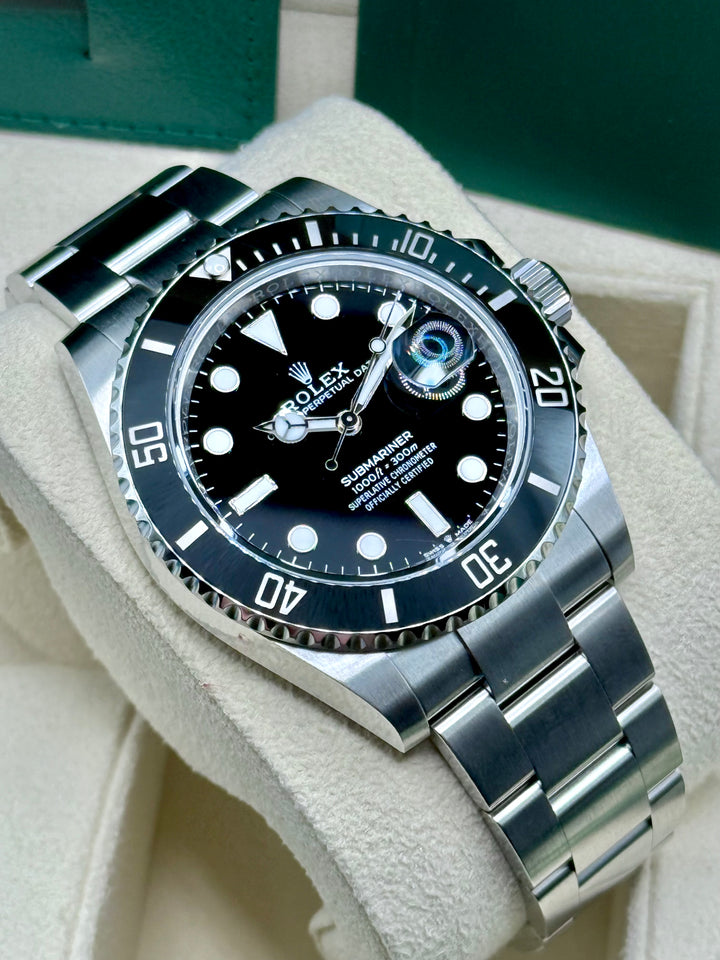
Rolex Submariner
It combines manageable dimensions, 300-meter water resistance, a highly usable bracelet, strong market recognition and unusually broad daily versatility.
Omega Seamaster Diver 300M
Choose it for Master Chronometer-era movement technology, multiple bracelet and rubber options, a helium valve and a wider range of visual configurations.
Tudor Black Bay 54 or 58
The 37 mm Black Bay 54 is the compact answer; the 39 mm Black Bay 58 is the more universal middle ground.
Rolex Sea-Dweller
It is substantially more capable and more substantial than a Submariner without reaching the Deepsea’s extreme case architecture.
Blancpain Fifty Fathoms
It combines foundational dive-watch history with calibre 1315’s five-day reserve and a noticeably more artisanal movement-and-finishing proposition.
Panerai Submersible
Steel, titanium, Carbotech, BMG-Tech, bronze and Goldtech give the line a material range that most traditional divers cannot match.
Breitling Superocean Heritage B31
The current B31 generation prioritizes a slim 200-meter case, manufacture three-hand movement and mesh-derived styling over maximum depth.
Rolex Deepsea
Its 3,900-meter rating and Ringlock architecture are impressive, but the 44 mm case should be chosen because it fits—not because the number is largest.
Omega Planet Ocean 600M
It is the thicker, heavier and more pressure-oriented Seamaster path, suited to buyers who want 600-meter identity rather than the Diver 300M’s easier everyday profile.
What makes a watch a real dive watch?
A serious dive watch normally combines a unidirectional elapsed-time bezel, high-contrast time display, meaningful water resistance, a crown and case system designed for immersion, and an attachment that can tolerate the intended environment. Some manufacturers submit particular references to an external dive-watch standard; others build to their own published specifications. A marketing name alone is not enough.
| Feature | Why it matters | What to verify on the individual watch |
|---|---|---|
| Unidirectional timing bezel | Helps track elapsed time without an accidental turn falsely adding remaining time. | Alignment, click security, insert condition and resistance to accidental movement. |
| Legible hands and markers | Time and bezel readings must remain easy to distinguish in poor visibility. | Lume condition, dial originality, hand alignment and whether refinishing changed the display. |
| Published water resistance | Defines the manufacturer’s designed pressure capability for that exact reference. | A current pressure test; the printed rating is not proof that an older watch still seals correctly. |
| Secure crown and case | The crown, tube, crystal, case back and gaskets form the practical sealing system. | Crown threading, tube wear, prior case opening, gasket service and impact damage. |
| Water-capable attachment | Bracelet, rubber and suitable textile handle water differently from leather. | Clasp security, extension system, complete links, rubber age and reference compatibility. |
| Serviceable movement | A dive watch is still a mechanical watch whose oils, seals and regulating performance age. | Service history, timing, power reserve, winding, date function and replacement-part availability. |
The Ingenieur is a water-resistant sports watch, not a rotating-bezel dive watch. IWC’s official catalog still lists Aquatimer references, but this commercial comparison intentionally excludes Aquatimer and does not rank IWC in the core field requested for this guide.
Master comparison: leading luxury dive-watch families
Specifications vary inside every family. The table below is a buyer’s map of the representative current or commercially important three-hand paths discussed in this guide—not a substitute for checking the exact reference.
| Family | Representative size | Published water resistance | Representative movement | Best suited to |
|---|---|---|---|---|
| Rolex Submariner | 41 mm | 300 m | 3230 or 3235; approximately 70 hours | One-watch luxury-diver ownership and maximum market familiarity |
| Rolex Sea-Dweller | 43 mm | 1,220 m | 3235; approximately 70 hours | Buyers who want a helium valve and a larger professional Rolex without Deepsea scale |
| Rolex Deepsea | 44 mm | 3,900 m | 3235; approximately 70 hours | Large-wrist owners who specifically value extreme case engineering |
| Omega Seamaster Diver 300M | Commonly 42 mm | 300 m | 8800/8806 family by exact reference | Technical features, visual variety, rubber or mesh choices and strong secondary-market value |
| Omega Planet Ocean 600M | Generation dependent; current core includes 42 mm | 600 m | Master Chronometer family; verify exact calibre | A heavier, more pressure-oriented Omega dive-watch experience |
| Tudor Black Bay 54 / 58 / 41 | 37 / 39 / 41 mm | 200 m | MT5400 or current METAS variants by reference | Vintage-derived proportions, strong value and multiple wrist-size paths |
| Breitling Superocean Heritage B31 | 40 / 42 / 44 mm family | 200 m | B31 manufacture; approximately 78 hours | Refined sea-watch styling and a slimmer manufacture-movement proposition |
| Breitling Superocean | 36–48 mm across generations | Exact reference required; current paths vary materially | Breitling 17 on many models | More overt tool-watch styling, rubber or bracelet and wider size choices |
| Blancpain Fifty Fathoms | 42.3 or 45 mm core paths | Commonly 300 m on cited references | 1315; 120 hours on cited references | Dive-watch heritage, movement finishing and high-horology ownership |
| Blancpain Bathyscaphe | 43 or 43.6 mm steel/ceramic core paths | 300 m | 1315; 120 hours | Modern minimalism, ceramic or steel and elevated movement quality |
| Panerai Submersible | 42 / 44 / 47 mm | Commonly 300 m on the cited core references | P.900 or P.9010 by size/reference | Bold presence, crown-bridge identity and unusual materials |
Rolex: Submariner vs. Sea-Dweller vs. Deepsea
Rolex offers a clear three-step progression. The Submariner is the broadest daily wearer. The Sea-Dweller adds a larger case, substantially greater pressure rating and helium escape valve. The Deepsea moves into extreme-production engineering with a much thicker and heavier architecture. The correct decision is therefore not “which Rolex dives deepest?” but “how much professional specification can the owner comfortably wear?”
Rolex Submariner: the safest all-around answer
The current 41 mm Submariner platform is rated to 300 meters. The no-date 124060 uses calibre 3230, while the Submariner Date 126610 family uses calibre 3235; Rolex publishes approximately 70 hours of power reserve for both. The Oyster bracelet and Glidelock adjustment are major ownership strengths because they allow meaningful fit adjustment without changing the watch’s original identity.
The no-date model is visually cleaner and historically closer to the earliest time-only Submariner idea. The date model is more convenient for daily use and usually attracts buyers who want the archetypal modern luxury sports-watch package. Neither is mechanically “better” in a universal sense. The date complication adds convenience and Cyclops identity; the no-date removes one display and one setting task.
Rolex Sea-Dweller: the professional middle ground
The current Sea-Dweller 126600 uses a 43 mm case, calibre 3235 and a published 1,220-meter rating. It adds a helium escape valve and has more wrist mass and visual presence than a Submariner. It is the logical Rolex for a buyer who wants genuine professional-diver architecture without accepting the Deepsea’s full thickness and weight.
The Sea-Dweller is not simply a “larger Submariner.” Case proportions, bezel scale, bracelet relationship, crystal and pressure architecture change the wearing experience. On a flatter wrist it can feel stable; on a narrow or sharply curved wrist it may feel tall or broad. Try it sized correctly rather than judging an unsized watch with every bracelet link installed.
Rolex Deepsea: extreme engineering with a real fit cost
The current Deepsea 136660 is a 44 mm watch rated to 3,900 meters. Its Ringlock system and very thick sapphire crystal create a different case architecture from the Submariner and Sea-Dweller. Calibre 3235 provides the same broad modern movement family and approximately 70-hour reserve as the Sea-Dweller, but the ownership decision is dominated by case height, mass, bracelet balance and wrist geometry.
The Deepsea is excellent when the owner actively wants the engineering and the watch remains stable through a full day. It is a poor purchase when chosen merely because its rating is the largest. A watch can technically fit between the wrist edges yet still be too top-heavy, press into the hand, or rotate because the bracelet cannot balance the case.
| Decision | Submariner | Sea-Dweller | Deepsea |
|---|---|---|---|
| Daily versatility | Highest | High for larger wrists | Specialized |
| Pressure capability | 300 m | 1,220 m | 3,900 m |
| Representative diameter | 41 mm | 43 mm | 44 mm |
| Helium escape valve | No | Yes | Yes |
| Primary buying risk | Paying too much for an ordinary example | Underestimating size and mass | Choosing engineering over actual comfort |
| Best buyer | One-watch luxury-diver owner | Professional-specification buyer | Extreme-case enthusiast with the wrist to support it |
Omega: Seamaster Diver 300M vs. Planet Ocean 600M
Omega’s two central modern dive-watch paths serve different owners. The Seamaster Diver 300M is the easier everyday platform with 300-meter water resistance, wave-dial or modern no-date variations, bracelet, rubber and mesh choices, and a visible helium escape valve. Planet Ocean is the more substantial 600-meter family, with greater case mass and a more overt professional-diver personality.
Seamaster Diver 300M: bracelet, rubber and mesh change the watch
The familiar 42 mm Diver 300M is one of the strongest Submariner alternatives because it offers a distinct design rather than imitating Rolex. Skeletonized or sword-style hands by reference, scalloped bezel geometry, twisted lugs, wave-dial configurations and the helium valve make it immediately identifiable. Current and recent movements vary by reference; common date models use calibre 8800, while the modern no-date and special mesh-bracelet paths use calibre 8806.
Omega’s recent no-date Diver 300M releases intentionally changed the visual formula. Official launch material identifies 42 mm steel models with aluminium dials and bezels, calibre 8806, and either integrated mesh-style steel bracelets or rubber straps. Those references appeal to buyers who prefer a cleaner dial and the visual character of the Bond-era mesh configuration.
Standard bracelet vs. mesh bracelet
The conventional multi-link steel bracelet distributes weight broadly and provides the most familiar modern Seamaster identity. Mesh wraps differently: it can feel softer and more flexible around the wrist, but the clasp, minimum sizing, overlap and thickness beneath the wrist must be checked. Mesh is not automatically more comfortable, and two owners with the same wrist circumference can have different results because their wrist shapes differ.
- Choose the standard bracelet for the conventional contemporary Seamaster look and predictable link-based sizing.
- Choose mesh when the historical/naval appearance and flexible wrap are central to the purchase.
- Choose rubber for the lightest water-oriented configuration and less case-plus-bracelet mass.
Planet Ocean 600M: greater pressure identity and greater case commitment
Planet Ocean is the heavier-duty Seamaster path. Its 600-meter rating, thicker case architecture and robust bezel-and-crown presentation create a more substantial watch than the Diver 300M. Omega introduced a fourth Planet Ocean generation in late 2025 with a redesigned 42 mm core and black, blue and orange-accented options on bracelet or rubber. Exact movement, thickness and attachment should still be checked by reference rather than assumed from the family name.
Planet Ocean makes sense when the owner likes the weight and visual depth of a serious professional instrument. It should not be chosen because 600 meters sounds objectively better than 300 meters. For most owners, fit, thickness and daily balance matter more than the additional rating.
| Decision | Diver 300M | Planet Ocean 600M |
|---|---|---|
| Everyday wear | Easier for most wrists | Heavier and more substantial |
| Published depth | 300 m | 600 m |
| Attachment variety | Steel bracelet, mesh and rubber across current/recent references | Bracelet and rubber; exact generation matters |
| Movement path | Commonly 8800 date or 8806 no-date by reference | Master Chronometer family; verify exact calibre |
| Visual identity | Wave dial, helium valve and scalloped bezel | More conventional heavy-duty professional diver |
| Primary buying risk | Assuming every bracelet, mesh and no-date configuration wears alike | Underestimating thickness and mass |
Tudor: Black Bay 54, Black Bay 58 and Black Bay 41
Tudor’s strongest advantage is not simply a lower purchase price than Rolex. It is the ability to choose among genuinely different proportions while retaining a coherent vintage-derived dive-watch identity. The Black Bay 54, 58 and current 41 mm paths should be treated as three separate fit decisions, not small, medium and large versions of an identical watch.
Black Bay 54: the compact answer
The Black Bay 54 uses a 37 mm case, is approximately 11.2 mm thick, carries a 200-meter rating and uses manufacture calibre MT5400 with an approximately 70-hour reserve. Its compact scale and T-fit clasp make it one of the clearest mechanical luxury-diver choices for smaller wrists, vintage-proportion enthusiasts and buyers who dislike tall sports watches.
Do not assume 37 mm means visually delicate. The rotating bezel, luminous dial and broad bracelet relationship give it more presence than a 37 mm dress watch. The critical test is whether the bezel and dial provide enough visual scale for the owner’s preference.
Black Bay 58: the universal middle ground
The 39 mm Black Bay 58 is the easiest Tudor recommendation for buyers who find 37 mm too restrained and 41 mm too assertive. Current METAS-certified references use calibre MT5400-U, and Tudor publishes a 200-meter rating and approximately 65 hours of power reserve for the cited generation. Bracelet and clasp details vary by reference and year, so confirm the exact configuration.
Black Bay 41: the modern full-size path
The current 41 mm Black Bay family offers greater dial and bezel presence, a 200-meter rating and modern METAS movement options. Representative current specifications include a 13.6 mm case height and approximately 70 hours of reserve. It is the right choice when the owner wants Tudor’s design at contemporary sports-watch scale rather than as a compact vintage reinterpretation.
| Model path | Representative diameter | Representative thickness | Movement path | Best buyer |
|---|---|---|---|---|
| Black Bay 54 | 37 mm | About 11.2 mm | MT5400; approximately 70 hours | Compact-wrist and vintage-proportion buyer |
| Black Bay 58 | 39 mm | Reference dependent; current cited path about 11.7 mm | MT5400-U on cited current METAS path; approximately 65 hours | Most universal Tudor fit |
| Black Bay 41 | 41 mm | About 13.6 mm on cited current path | Current METAS path; approximately 70 hours | Modern full-size sports-watch owner |
Where Pelagos fits
Pelagos belongs beside the Black Bay as Tudor’s more overtly technical dive-watch alternative. The Pelagos 39 brings a lightweight titanium case and bracelet to a 39 mm format, while larger Pelagos references pursue greater professional-tool identity. It is worth considering when titanium, clasp engineering and a less nostalgic design matter more than Black Bay heritage styling.
Breitling: Superocean Heritage B31 vs. Superocean
Breitling now offers two commercially distinct dive-watch personalities. Superocean Heritage B31 is the cleaner, thinner and more refined waterfront watch, built around Breitling’s manufacture three-hand calibre. The regular Superocean is the more overt tool-watch line, with stronger dial contrast, rubber or bracelet configurations and water-resistance specifications that vary materially by exact generation and case size.
Superocean Heritage B31: manufacture movement and restrained proportions
The current Superocean Heritage B31 family is offered in multiple sizes. A representative 42 mm reference measures 12.03 mm thick, is rated to 200 meters and uses manufacture calibre B31 with an approximately 78-hour reserve. Breitling describes B31 as its first exclusive three-hand manufacture calibre. The unidirectional bezel, screw-locked crown and mesh-derived bracelet or rubber design preserve dive-watch function while the overall profile remains dressier than the regular Superocean.
The B31 generation should not be confused with earlier Superocean Heritage B20 references. B20 models use a different movement architecture and remain legitimate, commercially interesting watches, but they are a separate generation. When comparing an online listing, verify whether the watch is B20 or B31 rather than assuming “Superocean Heritage 42” identifies the movement.
Regular Superocean: greater tool-watch emphasis
The regular Superocean family uses broader hands, bolder dial architecture and a more overt dive-instrument presentation. Many references use Breitling calibre 17 with approximately 38 hours of reserve. Water resistance cannot be summarized with one number: representative current and recent references range from 300 meters to 500 meters or 1,000 meters depending on generation, diameter and construction.
That variation is commercially important. A seller who writes “Superocean Automatic” without the complete reference has not given enough information to establish the depth rating, case material, buckle, movement generation or original attachment. Verify the reference from the warranty card and case information.
Bracelet vs. rubber
Bracelet gives the regular Superocean more visual mass and everyday versatility. Rubber lowers weight, tolerates water well and often makes a 44 mm case easier to stabilize. The correct answer depends on clasp quality, wrist shape and whether the owner wants the watch to move beyond aquatic or casual use.
| Decision | Superocean Heritage B31 | Regular Superocean |
|---|---|---|
| Core identity | Refined heritage sea watch | Bold modern tool watch |
| Representative movement | B31 manufacture; approximately 78 hours | Breitling 17 on many references; approximately 38 hours |
| Representative water resistance | 200 m on cited B31 42 mm reference | Generation/reference dependent; verify exact watch |
| Attachment character | Integrated mesh-metal or mesh-rubber look | Conventional bracelet or Diver Pro-style rubber |
| Best buyer | Movement- and design-conscious owner | Buyer who wants higher visual contrast and tool-watch personality |
| Primary buying risk | Confusing B20 and B31 generations | Assuming one family-wide depth rating |
Blancpain: classic Fifty Fathoms vs. Bathyscaphe
Blancpain occupies a different position from most of this comparison. It combines foundational dive-watch history with a movement-and-finishing proposition closer to traditional high horology. Blancpain traces its history to 1735 and describes itself as the world’s oldest watch brand; it also identifies the 1953 Fifty Fathoms as the first modern diving watch. Those claims should be understood as the manufacturer’s documented historical position, while the individual watch still needs the same reference, condition and service scrutiny as any other luxury diver.
Why the original Fifty Fathoms matters
The classic Fifty Fathoms uses a more rounded, historically recognizable design language: a prominent sapphire-covered timing bezel, highly luminous markers, broad hands and a case intended to feel like a luxurious version of a professional instrument. The long-running 45 mm family includes titanium, steel and precious-metal configurations with blue or black dial paths. More recent 42.3 mm titanium and steel references broaden the fit range without erasing the collection’s identity.
Representative 45 mm titanium references use automatic calibre 1315, a 300-meter rating and a five-day, 120-hour reserve. Current 42.3 mm core references can also use calibre 1315, but not every Fifty Fathoms size uses the same movement. Exact-reference confirmation remains essential—especially as smaller-diameter models may use a different calibre.
Bathyscaphe: modern, angular and materially adventurous
Bathyscaphe is not a lesser Fifty Fathoms. It is the more minimalist, modern and angular branch of the family. The hands, rectangular markers, flatter visual surfaces and restrained bezel give it a less overtly vintage appearance. Steel, titanium and ceramic configurations make it particularly attractive to buyers who want Blancpain movement quality without the classic Fifty Fathoms’ rounded 1950s instrument aesthetic.
Steel Bathyscaphe
A representative steel 43 mm Bathyscaphe such as reference 5000 1110 71S uses calibre 1315, offers a 120-hour reserve and is rated to 30 bar, or 300 meters. Steel is the lower-anxiety material choice because impact behavior, refinishing expectations and bracelet service are more familiar. It also gives the watch more conventional metallic weight and visual presence.
Ceramic Bathyscaphe
Representative ceramic Bathyscaphe references measure approximately 43 to 43.6 mm and use the same calibre 1315 five-day platform. Ceramic offers excellent ordinary scratch resistance and a distinctive low-reflection, technical appearance. Blancpain also offers hand-finished ceramic bracelet configurations. The tradeoff is impact behavior: ceramic should not be evaluated like steel, and chips or cracks are not ordinary polishing problems.
Calibre 1315: why the movement changes the comparison
Blancpain’s calibre 1315 is an automatic movement with three barrels, 120 hours of reserve, a 4 Hz frequency, 35 jewels, a silicon balance spring and 227 components on the cited current specifications. The movement is visible through sapphire backs on many references and is finished to a level that materially changes the ownership proposition relative to a more industrially finished tool-watch calibre.
“Hand-finished” does not mean fragile or decorative-only. It means that movement surfaces, bridges and components receive aesthetic and technical attention beyond merely meeting functional tolerances. It also means service quality, replacement components and prior intervention matter. A poorly handled or incorrectly serviced high-grade movement is not rescued by the brand name on the dial.
| Decision | Classic Fifty Fathoms | Bathyscaphe |
|---|---|---|
| Design language | Rounded, highly luminous, historically recognizable professional instrument | Minimalist, angular and contemporary |
| Representative sizes | 42.3 and 45 mm core paths | 38, 43 and 43.6 mm paths by reference/material |
| Representative movement | Calibre 1315 on cited core references | Calibre 1315 on cited 43/43.6 mm three-hand references |
| Representative reserve | 120 hours on cited 1315 references | 120 hours on cited 1315 references |
| Material range | Steel, titanium and precious metal | Steel, titanium, ceramic and precious metal |
| Best buyer | Collector who values the original Fifty Fathoms identity | Buyer who wants modern design or ceramic ownership |
| Primary buying risk | Underestimating 45 mm scale or assuming every size shares one calibre | Treating ceramic like refinishable steel or buying the wrong attachment configuration |
Panerai Submersible: 42, 44 and 47 mm, from steel to Carbotech
Submersible is Panerai’s dedicated rotating-bezel dive-watch family. It should be distinguished from the broader Luminor line: many Luminor watches have meaningful water resistance, but Submersible adds the unidirectional graduated bezel and a more overt professional-diver dial architecture. The collection is especially useful for buyers who want unusual materials and large-scale case design rather than a conventional Swiss steel diver.
42 mm Submersible: the most approachable size
Representative 42 mm steel references use calibre P.900, provide approximately three days of reserve and carry a 300-meter rating. This is the most accessible Submersible scale, but it still wears larger than a typical 42 mm round watch because the cushion-shaped case, bezel width and crown-protecting bridge create additional visual and physical presence.
44 mm Submersible: the modern center of the range
The 44 mm QuarantaQuattro platform offers a middle ground between 42 and 47 mm and appears in steel, Carbotech, Goldtech-and-composite combinations and special configurations. Representative P.900 references retain a three-day reserve and 300-meter rating. For many buyers, 44 mm is the size that feels recognizably Panerai without the full scale of a 47 mm case.
47 mm Submersible: full Panerai presence
Many 47 mm references use calibre P.9010, an automatic three-day movement with two barrels. Titanium, Carbotech, BMG-Tech and other technical materials can reduce weight relative to an equivalent steel case, but they do not make the watch look or wear small. Crown-bridge clearance, case-back contact and strap angle must all be tested.
Panerai materials explained
Stainless steel
Predictable weight, familiar impact behavior and conventional refinishing expectations. The easiest material for a first Submersible.
Titanium
Reduces weight on large cases and gives a darker technical appearance. Surface marks and refinishing should still be evaluated carefully.
Carbotech
Very light with a unique layered pattern. Inspect bezel and case edges for impact damage and confirm all dark components match the reference.
BMG-Tech
A distinct material from ceramic or titanium, used for lightness and surface properties. Verify case and bezel history rather than relying on material marketing.
Bronze
Develops patina and should be purchased with clear expectations about oxidation, skin contact and restoration preferences.
Goldtech
Creates a very different luxury proposition. Case dents, clasp wear, service history and total replacement exposure become more important.
P.900 vs. P.9010
P.900 is the thinner automatic three-day movement commonly used in current 42 and 44 mm paths. P.9010 is a larger automatic three-day movement used in many 47 mm references and uses two barrels. Neither movement is automatically superior for every buyer. The correct question is which calibre belongs in the exact PAM reference, whether its functions operate correctly and whether service documentation supports the seller’s claims.
| Path | Representative movement | Representative rating | Primary ownership advantage | Primary fit risk |
|---|---|---|---|---|
| 42 mm | P.900 | 300 m on cited core references | Most approachable Submersible dimensions | Cushion case still wears larger than diameter suggests |
| 44 mm | P.900 on cited references | 300 m on cited core references | Recognizable Panerai presence with broad material choices | Crown bridge and strap angle |
| 47 mm | P.9010 on many cited references | 300 m on cited core references | Full-scale professional identity and technical materials | Case span, height and crown contact |
Steel, titanium, ceramic, bronze, gold and composites
Material is not a cosmetic afterthought. It changes weight, impact behavior, scratch visibility, refinishing options, replacement cost and how confidently the watch can be worn. The same model family can feel like a different product when moved from steel to titanium or ceramic.
| Material | Strengths | Risks and tradeoffs | Inspection priority |
|---|---|---|---|
| Stainless steel | Familiar weight, impact behavior and service ecosystem | Scratches, dents and over-polishing | Case geometry, bezel edges, bracelet stretch and refinishing history |
| Titanium | Lower mass and darker technical appearance | Surface marks can look different from steel; refinishing depends on grade and finish | Uniform finish, dents, edge definition and reference-correct bracelet |
| Ceramic | Exceptional resistance to ordinary surface scratches and stable color | Hard impacts can chip or crack components; not conventionally polished like steel | Lugs, bezel, crown-side edges, bracelet links and clasp interfaces |
| Bronze | Distinctive evolving patina and maritime character | Oxidation varies; owner preferences differ; case-back material matters | Corrosion versus normal patina, bezel action, crown threads and cleaning history |
| Gold / proprietary gold alloy | Precious-metal presence and unusual sport-luxury contrast | Dents, higher replacement exposure and greater visible wear | Case mass, polishing, clasp, hallmarks and completeness |
| Carbotech / composite | Very low weight and a unique pattern | Impact damage is not handled like a scratch in steel | Edges, case layers, bezel interface and component matching |
| BMG-Tech | Low mass and distinctive technical-material identity | Less familiar repair and replacement expectations | Impact history, surface consistency and exact PAM configuration |
For a first high-value dive watch, steel is the lowest-friction ownership material. Titanium is often the best answer when a large case feels too heavy. Ceramic makes sense for buyers who value scratch resistance and accept impact-specific risk. Precious metal and exotic materials should be bought only after replacement exposure and the owner’s tolerance for visible wear are understood.
How the movements compare
Power reserve is useful, but it does not rank movement quality by itself. Architecture, regulation standard, magnetic resistance, service access, finishing, component availability and complication load all matter. A well-maintained 38-hour movement can be a better purchase than a neglected five-day movement.
| Movement family | Representative reserve | Ownership strength | What to verify |
|---|---|---|---|
| Rolex 3230 / 3235 | Approximately 70 hours | Modern Rolex platform, broad service familiarity and stable daily performance | Date change where applicable, amplitude, winding, prior intervention and genuine components |
| Omega 8800 / 8806 | Reference dependent; commonly about 55 hours | Co-Axial Master Chronometer-era technology and strong anti-magnetic specification | Exact calibre, service documentation, date/no-date distinction and timing results |
| Tudor MT5400 / MT5400-U | Approximately 65–70 hours by version | Strong value, modern free-sprung architecture and current certification paths | Exact suffix, certification, service and whether the listed model matches the actual case |
| Breitling B31 | Approximately 78 hours | First exclusive three-hand manufacture calibre in current Heritage generation | B31 versus older B20 generation, date function, display-back condition and warranty history |
| Breitling 17 | Approximately 38 hours on many references | Established automatic platform and practical service proposition | Exact depth-rated reference, timing, reserve and crown/date operation |
| Blancpain 1315 | 120 hours | Three-barrel five-day architecture, silicon spring and elevated finishing | Service quality, rotor/bridge condition, reserve performance and correct movement for the size |
| Panerai P.900 | Approximately three days | Thinner modern automatic platform for many 42/44 mm references | Exact PAM, date, small seconds, winding and service history |
| Panerai P.9010 | Approximately three days | Two-barrel automatic platform used in many larger references | Exact PAM, generation, service, setting functions and reserve |
How to judge dive-watch fit
Dive watches concentrate visual and physical mass in the bezel, crystal, crown, case back and clasp. A nominal 42 mm diver can wear smaller than a 41 mm watch with long rigid end links—or much larger than a 43 mm cushion case on a flexible strap. The correct fit assessment uses several measurements and a fully sized attachment.
- Check lug-to-lug or case span. The lugs or first rigid bracelet links should remain controlled by the top of the wrist.
- Check thickness and center of gravity. A tall watch that sits high can rotate even when its diameter appears acceptable.
- Check crown contact. Rolex crown guards, Panerai’s crown bridge and large Breitling crowns can press into the hand on some wrists.
- Size the bracelet correctly. Every spare link installed can make a heavy watch look and feel unstable during a try-on.
- Test wrist articulation. Bend the hand backward, type, reach into a pocket and wear the watch for at least several minutes.
- Evaluate the clasp. A long clasp can dominate a narrow wrist even when the watch head fits.
37–39 mm
Black Bay 54, Black Bay 58, Pelagos 39 and selected smaller Bathyscaphe paths.
40–42 mm
Submariner, Diver 300M, current Planet Ocean 42, Superocean Heritage B31 and many regular Superoceans.
43–45 mm
Sea-Dweller, Bathyscaphe 43/43.6, Fifty Fathoms 45 and Panerai 44.
47 mm and beyond
Many Panerai Submersibles and selected oversized tool-watch references; material can reduce weight but not visual scale.
Water resistance, helium valves and real swimming use
A 300-meter or 1,220-meter published rating describes the watch as designed and tested by its manufacturer. It does not prove that a particular used watch still seals correctly after years of wear, impact, service or gasket aging. Before meaningful water use, obtain a current pressure test from a qualified service provider and confirm that the crown, crystal, case back, helium valve and pushers—where applicable—are appropriate for the intended activity.
Do ordinary owners need a helium escape valve?
Usually not. A helium escape valve is designed for saturation-diving environments where helium can enter the case under prolonged pressurization and later require controlled release during decompression. It is historically and technically important on the Sea-Dweller, Deepsea, Seamaster Diver 300M and Planet Ocean families, but it does not make ordinary swimming safer by itself.
Bracelet, rubber, mesh and leather around water
- Steel or titanium bracelet: durable, easy to rinse and often the most complete ownership package, but check clasp and extension security.
- Rubber: light, comfortable and water-oriented, but age, cracking, keeper condition and proprietary fit matter.
- Mesh: water-capable and flexible, but verify clasp security, sizing range and whether the mesh belongs to the exact reference.
- Textile or sail canvas: appropriate when manufacturer-specified, but drying time and odor depend on construction and use.
- Leather: generally the weakest choice for repeated immersion even when the watch head has a strong rating.
Condition, pressure testing and service exposure
Condition should be separated into four categories: cosmetic condition, mechanical condition, water-resistance condition and configuration completeness. A watch can look excellent and fail a pressure test; another can be mechanically healthy but heavily polished; a third can have the correct head but an incomplete or incorrect bracelet.
| Area | What to inspect | Why it matters |
|---|---|---|
| Reference identity | Full reference, serial/document relationship, dial, bezel, case material and original attachment | Family names hide major specification differences. |
| Case geometry | Lugs, crown guards, bevels, bezel edge, case back and polishing symmetry | Over-refinishing can permanently change value and appearance. |
| Bezel | Alignment, click action, insert, luminous pip and accidental movement | The bezel is a functional timing component and expensive cosmetic part. |
| Crown and tube | Thread engagement, winding, setting, crown seating and guard/bridge operation | Damage can compromise both usability and sealing. |
| Crystal and valve | Chips, scratches, gasket area, helium-valve condition where present | Pressure integrity depends on more than the case rating. |
| Movement | Timing, amplitude where available, reserve, date change, winding noise and service record | Movement repair can outweigh a small purchase-price advantage. |
| Bracelet or strap | Links, end links, screws, clasp, extension, rubber age and correct signed hardware | Missing proprietary components can be costly or difficult to replace. |
| Pressure test | Recent test details and whether the watch was opened afterward | A prior test loses relevance after service or impact. |
A “full service” should not be assumed to include a pressure test, cosmetic refinishing, replacement of every gasket or restoration of bracelet components. Ask for the invoice and exact work performed. Likewise, “pressure tested” does not mean the movement was serviced.
Value, liquidity and resale
No dive watch is guaranteed to appreciate or preserve a fixed percentage. Resale depends on exact reference, purchase price, condition, completeness, service history, production context and current demand. Brand-level assumptions can be directionally useful, but they do not replace reference-level pricing.
Rolex
Submariner has the largest general buyer pool in this group. Sea-Dweller and Deepsea are more size-dependent.
Omega and Breitling
Secondary-market discounts can produce compelling ownership value, but the original retail discount alone does not establish a bargain.
Tudor
Black Bay demand is broad, while color, certification generation and bracelet configuration affect liquidity.
Blancpain
High movement quality and lower mainstream recognition can create substantial value for a knowledgeable buyer and a smaller resale audience.
Panerai
PAM number, case size, material, special-edition context and completeness strongly influence demand.
Always calculate total delivered ownership cost: purchase price, tax, shipping, payment cost, missing links, replacement strap or clasp, pressure testing, service and any condition correction. A cheaper watch can be more expensive once those exposures are added.
Which luxury dive watch should you buy?
Choose the Rolex Submariner for the safest all-around ownership and strongest market familiarity. Choose the Sea-Dweller when you genuinely want the larger professional Rolex. Choose the Deepsea only when its 44 mm Ringlock construction fits and excites you.
Choose the Omega Seamaster Diver 300M for technical character, mesh/rubber/bracelet variety and strong value. Choose Planet Ocean for a heavier 600-meter Omega. Choose Tudor when fit, vintage proportions and value lead the decision.
Choose Superocean Heritage B31 for a refined manufacture-movement sea watch, or the regular Superocean for bolder tool-watch presentation. Choose Blancpain when movement quality and dive-watch history matter more than mainstream recognition. Choose Panerai Submersible for bold dimensions and unusual materials.
The strongest individual purchase is the correctly identified, correctly priced, pressure-tested example with the best condition, movement health and completeness—not necessarily the family winner on paper.
Luxury dive-watch questions and answers
What is the best all-around luxury dive watch?
The Rolex Submariner is the safest all-around choice because it combines manageable dimensions, 300-meter water resistance, a highly adjustable bracelet, broad daily versatility and the largest general buyer pool. The best individual purchase can still be an Omega, Tudor, Breitling, Blancpain or Panerai when fit, condition, movement or price is stronger.
Should I buy a Rolex Submariner or Sea-Dweller?
Choose the Submariner for easier daily wear and the broadest resale audience. Choose the Sea-Dweller when you genuinely prefer its 43 mm scale, helium escape valve and 1,220-meter professional specification. Do not buy the Sea-Dweller merely because its depth rating is higher.
Is the Rolex Deepsea too large for everyday wear?
It depends on wrist shape, not circumference alone. The 44 mm Deepsea is substantially taller and heavier than a Submariner. It can work as a daily watch when the bracelet balances the case and the crown and case back remain comfortable, but it should be tried on fully sized before purchase.
Should I buy an Omega Seamaster Diver 300M or Planet Ocean?
Choose the Diver 300M for easier everyday wear, greater bracelet and rubber variety and a distinct modern Seamaster identity. Choose Planet Ocean when you want a more substantial 600-meter platform and accept the additional thickness and mass.
Is an Omega mesh bracelet good for diving and daily wear?
Mesh is water-capable and can wrap comfortably around the wrist, but comfort depends on clasp length, overlap, minimum sizing and wrist shape. Compare it with the standard bracelet and rubber on the exact reference rather than assuming mesh is automatically more comfortable.
Should I buy the Tudor Black Bay 54 or Black Bay 58?
Choose the 37 mm Black Bay 54 for compact vintage proportions and the 39 mm Black Bay 58 for the more universal middle ground. The correct answer depends on bezel and dial scale, bracelet fit and whether the owner wants the watch to feel intentionally compact.
What is the difference between Breitling Superocean Heritage B31 and the regular Superocean?
Superocean Heritage B31 is the slimmer and more refined heritage path, with a manufacture B31 movement and a representative 200-meter rating. The regular Superocean is visually bolder and more tool-oriented, often using Breitling calibre 17, with water resistance that varies materially by exact generation and size.
Is the Breitling B31 the same movement as the older B20?
No. B31 is Breitling’s current exclusive three-hand manufacture calibre with an approximately 78-hour reserve. Earlier Superocean Heritage B20 references use a different movement architecture. Verify the complete reference instead of relying on the family name.
What is the difference between the Blancpain Fifty Fathoms and Bathyscaphe?
The classic Fifty Fathoms uses a more rounded, historically recognizable dive-instrument design with a prominent sapphire-covered bezel. Bathyscaphe is more minimalist, angular and modern, with broader steel, titanium and ceramic paths. Many cited three-hand references in both families use calibre 1315, but exact size and reference still matter.
Should I buy a steel or ceramic Blancpain Bathyscaphe?
Choose steel for familiar impact behavior, conventional refinishing expectations and metallic weight. Choose ceramic for excellent ordinary scratch resistance, lower visual reflection and a more technical appearance, while accepting that chips or cracks are not treated like scratches in steel.
What is the difference between Panerai P.900 and P.9010?
P.900 is the thinner automatic three-day movement used in many 42 and 44 mm Submersible references. P.9010 is a larger automatic three-day movement with two barrels used in many 47 mm references. Neither is universally better; the movement must match the exact PAM and function correctly.
Do I need a helium escape valve?
Most owners do not. A helium escape valve is designed for saturation-diving environments where helium can enter the case during prolonged pressurization. It is historically and technically meaningful, but it does not make ordinary swimming safer by itself.
Can I swim with a pre-owned dive watch?
Only after the exact watch has passed a current pressure test and its crown, crystal, case back, gaskets and any valve or pushers have been evaluated. The manufacturer’s original depth rating does not prove that an older individual watch still seals correctly.
Which luxury dive watch holds value best?
Rolex Submariner generally has the broadest liquidity, but no model is guaranteed to preserve a fixed percentage. Exact reference, price paid, condition, completeness, service history, material and current demand determine the result.
Why is IWC not ranked in this dive-watch comparison?
IWC’s official catalog still lists Aquatimer references, but this guide intentionally excludes Aquatimer from the requested core comparison. The Ingenieur is a water-resistant sports watch rather than a rotating-bezel dive watch, so it is not ranked as a diver here.
Is 200 meters of water resistance enough for a luxury dive watch?
For ordinary swimming and recreational water use, 200 meters is more than sufficient when the individual watch has passed a current pressure test and is used within the manufacturer’s instructions. A higher printed rating does not compensate for aged seals, crown damage or an untested case.
Which luxury dive watch is best for a smaller wrist?
The 37 mm Tudor Black Bay 54 is the most intentionally compact choice in this comparison, while the 39 mm Black Bay 58 is the more universal compact option. Lug-to-lug length, thickness, bracelet articulation and clasp position matter as much as stated diameter.
Should I buy a dive watch on bracelet, rubber or mesh?
Bracelet is usually the safest first purchase for versatility, completeness and replacement cost. Rubber is excellent for water use and low weight, while mesh can wrap comfortably but must be checked for clasp length and minimum sizing. Buy the complete bracelet configuration when uncertain, then add straps later.
Official manufacturer sources reviewed
Manufacturer sources establish current reference specifications, movement families, materials and published water resistance. Superlative Watch Co. supplies the cross-brand fit, condition, service, transaction, value and buyer-profile analysis. Specifications should always be reconfirmed for the complete reference because brands revise collections and component generations.
- Rolex Submariner collection and specifications
- Rolex Sea-Dweller collection and specifications
- Rolex Deepsea construction and specifications
- Omega Seamaster Diver 300M no-date and mesh generation
- Omega fourth-generation Planet Ocean
- Tudor Black Bay 54 specifications
- Tudor Black Bay 58 specifications
- Tudor Black Bay current family
- Breitling Superocean Heritage B31 manufacture reference
- Breitling Superocean current family
- Blancpain Fifty Fathoms calibre 1315 reference
- Blancpain Bathyscaphe steel calibre 1315 reference
- Panerai Submersible 42 mm and P.900 specifications
- Panerai Submersible 47 mm and P.9010 specifications
- IWC Aquatimer current official catalog context
- IWC Ingenieur water-resistant sports-watch context
No manufacturer source determines whether an individual pre-owned or unworn watch is authentic, correctly configured, mechanically healthy, pressure-safe or fairly priced. Those conclusions require watch-level inspection and transaction-specific evidence.